16.2 C
Manchester
Saturday, May 2, 2026
Home Blog Page 470

Bolton hairstylist wins the Colour Technician of the Year Award

0

Wesley Martin, professional hairstylist from Bolton, has been named England’s best colour technician in the Hair & Beauty Awards 2020.

The results of these prestigious awards, which seek to recognise the crème de la crème of the industry, were announced back in March but, due to lockdown, Wesley has only recently been able to celebrate his achievement.

The proud Boltonian has hairdressing in his blood, with a long list of family members who have also taken up the comb and scissors before him. As soon as he left school, he joined Bolton College where he earnt his NVQ 1 and 2 qualifications, as well as Level 3 Diploma in hairdressing and barbering.

In 2014, he qualified as the youngest assessor in the North West and now – with fifteen years of experience under his belt – his incredible colouring skills have been acknowledged on a national scale.

Wesley has spent the last three years of his career working at family-owned Platinum Hair Studio in Astley Bridge. During this time, he has honed his technique using the stunning Mydentity Colour line created by internet sensation and renowned hair guru, Guy Tang.

Now, having admired Guy Tang’s work for years, Wesley is currently in discussions with Guy about potentially becoming an ambassador of the brand.

When speaking about the award, Wesley said: “It’s hard for me to express just how happy and grateful I am to be named Colour Technician of the Year. When I first started my training at Bolton College, I would have never dreamt that fifteen years later I would be receiving this accolade – even less so be in with a chance of working with Guy Tang!

“It just shows that hard work pays off – all in all, not bad for a Bolton lad!”

Manager of Platinum Hair Studio, Janet Hunter, added: “Everyone at Platinum Hair Studio is so thrilled for Wesley and what he has achieved in receiving this award. We pride ourselves on our quality and service, but Wesley always goes above and beyond.

“He lives and breathes colour, loves a challenge and amazes the rest of the team every day with his creations. Wesley knows no restrictions with his work – in that way, he is a natural artist.”

Manchester Cleaning Show set to be first major trade exhibition in Manchester after lockdown

0

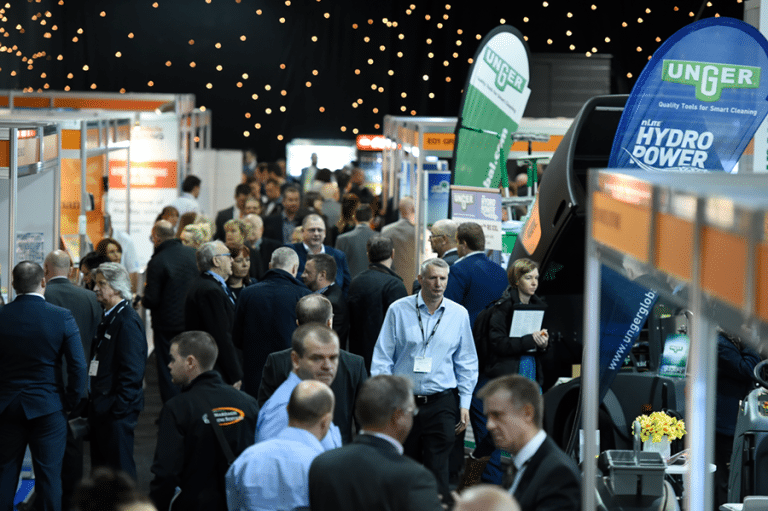
The Manchester Cleaning Show is set to be the first major trade exhibition to take place in the city post-lockdown after it was rescheduled to the 14-15 October this year.

Organisers of the show, which is the premier cleaning and hygiene event in the North of England and attracts over 2,000 visitors, announced the dates after the Government gave the go-ahead for business-to-business events to reopen from October 1 this year.

The Manchester Cleaning Show, which is free and takes place at Event City in Greater Manchester, will showcase the vital role the sector has played in tackling Coronavirus and highlight how the industry can continue to support the economy to reopen safely.
Looking set to be the biggest and best edition so far, the show features national and international exhibitors, an exciting conference programme of talks, a chance to connect with industry colleagues and many opportunities for business deals.

It was originally due to take place on 25 – 26 March this year but was forced to postpone due to the Coronavirus pandemic.

All existing bookings, content and visitor registrations remain in place and will be transferred automatically to the new dates.

Extensive measures are planned to ensure the event remains a safe and quality event experience for all attendees. They include:

· scheduled times for exhibitors to set up their stands
· hand sanitiser stations throughout the exhibition
· an innovative registration process to eliminate human contact
· a one-way system around the exhibition
· face masks to be available for all (dependent on Government guidelines)
· a mobile app where attendees can scan badges to swap digital business cards.

Paul Thrupp, Chairman of show co-producers the British Cleaning Council, said: “The Manchester Cleaning Show will be an important place to be this October. Through challenging times, the cleaning industry has been resilient and innovative.

“We have much to discuss, much to share, and much to showcase. And we must say thank you to those suppliers and cleaning operatives who have played a critical role in keeping our communities safe.

“Only through a physical show will this be possible. It’s time for the cleaning industry to come together and demonstrate that through effective cleaning and hygiene practices, the business community can get back to business”.

Quartz Business Media also produces the Manchester Cleaning Show. Stuart Dacre, Event Director at Quartz said: “We’re so disappointed that we had to postpone the Manchester Cleaning Show, precisely at the moment when the UK’s cleaning industry was being pushed to the forefront of a national crisis.
“But following the Government decision to give a ‘go date’ for business-to-business events to re-start, and after much discussion with the British Cleaning Council and our partners, we are hugely excited to stage the event in October.

“We are working closely with Event City and our partners to ensure that the Manchester Cleaning Show is a COVID-19 safe event and will provide a comfortable and secure environment for our visitors, exhibitors and staff.

“We would like to thank everyone connected with the show for their continued support and patience during this challenging time.”

Announcing that live business to business events could restart on 1 October, the Prime Minister Boris Johnson, said: “We have learnt a lot of lessons during this crisis, about the potential of technology. But I think there are also limits to this technology and is no substitute for face-to-face meetings and interactions.”

Offshoring to Reshoring – time for a change?

The Coronavirus pandemic has exposed gaps in UK supply chains to vital medical supplies. Steve Wilkinson, Specialist Manufacturing Advisor explores how the pandemic could trigger a shift towards reshoring production to the UK.

Offshoring vs Reshoring

As we move through the Coronavirus pandemic an issue which has been front and centre in the psyche of the nation is the lack of Personal Protective Equipment (PPE), ventilators and critical components for medical devices, and the impact which has been seen throughout the NHS and for many key workers, the result of high demand on international supply chains.  

British manufacturing has depended upon overseas production for decades, with financially savvy leaders attracted to the greater value offered, but when demand flexes the distant supply side can be left wanting, with major consequences as have been seen in recent months. An extraordinary event such as the Coronavirus pandemic means that major disruption in supply chains are inevitable for most businesses in the short and midterm and so it is worthwhile and timely to consider the  impact that location of production can have on supplying the basic needs of society.  

Whatever the reason for offshoring production the end result is often the same. Manufacturers are left with reduced control over quality, cost and delivery and are unable to influence or incur any change when problems do occur. Offshoring can provide beneficial links in a new geography and in stable markets is a highly suitable way to produce high unfluctuating volumes. Products or parts are likely to be cheaper but can see cash tied up for extended or unplanned periods, in return for high stock levels that hamper cashflow and reduce stock turns.  


measure smart robots testing gettyimages 980812576

Unpacking “price” as an offshoring driver

Unquestionably, price is the key driver for offshoring and no reshoring will take place without at least some mitigation of this key factor.  Favourable pricing in low cost countries is not only driven by demand but as a consequence of environmental or health and safety factors, as well as the cost and availability of raw materials, presumed production labour content and rate or the location of logistical considerations of suppliers or customers.  

A pivotal point in addressing price is at the product design stage. The means of production and therefore the labour requirement are generally crystallised at the point of design approval. Given that the labour requirement is often the largest cost-component in any product, careful consideration at this point can redefine entire supply-chain decisions.  

Comprehensive Design for Manufacture or Automation exercises can make a labour-intensive product bound for production in low cost countries, into a product which has a UK-viable production destiny for the right supplier who has embraced integrated technology and automation to good effect. These suppliers exist in the UK, and their numbers are growing.  This is of course not easily achievable for all products, but worthy of investigation. 

Additive Manufacturing is another option to explore. It is certainly no panacea to reshoring, but nevertheless it should be given renewed consideration to appreciate what current methods and processes could provide viable production solutions when supported by different and leaner business models.


The social and environmental impact

The environmental and social consequences of offshored manufacturing are well known, particularly when production takes place in less stringently regulated countries. As the sustainable manufacturing agenda take priority for increasing numbers of owners and investors, then it starts to highlight the validity of the moral arguments of retaining work in the UK and investing in appropriate green technologies (often grant funded), which can eliminate or reduce the environmental impacts and allow responsible and commercially feasible production back in the UK. 

Reshoring could potentially contribute to the reduction of a manufacturer’s global carbon footprint. This would not only be attributed to the obvious logistical related reduction but also to the potential use of green energy to fuel the means to production, something that many developing economies have not yet embraced.

jsbailey 3 min

A holistic approach

The phrase of ‘Right-Shoring’ has been discussed over recent years, which aims to take into account the ‘true full cost’ of any potential offshoring or reshoring decision.  From macro issues such as the stability of politics and currencies, to tariff changes, exchange rates, inflationary forecasts, to current and future emerging market locations, to micro issues such as logistical practicalities, skills and material availability.  All these considerations however uncontrollable, should all be made, in order to provide the widest possible viewpoint of any decision.  It may be the case that a product that is currently made in China, should not necessarily come back to UK based production but maybe central Europe as it provides a better ‘all-round’ solution for all sorts of nuanced reasons not least of all reduced lead-time and cashflow advantages. The devil is often in the detail, and the detail needs to be analysed and evaluated thoroughly.

food and drink production line scaled

Thorough evaluation is about applying the widest possible risk management considerations to any decision. The most widespread QA management system ISO 9001-2015 demands that business continuity is thoroughly addressed, and external risks are evaluated in order to provide ‘business as usual’ in the event of leftfield threats.  This issue will doubtless be revisited by many more manufacturers in light of the pandemic and more radical preventive measures around reshoring will likely be proposed instead of dealing with the numerous complexities of managing overseas supplier operations.

An interesting viewpoint on the subject of reshoring, is the re-emergence and extension of the idea of ‘protected status’ of manufacturing products which are considered critical to the country in the event of emergencies. This idea could be extended out selectively to more goods which are needed on a continual national basis, which if designed and manufactured effectively and economically, could allow the commercial benefit to be retained within the country. Some food for thought, in what may be a watershed moment in industrial and international trade policy for the future in light of the pandemic and Brexit. 

Clearly not everything should or indeed could be reshored but imagine the impact for UK business if just 10% of currently offshored products could be reshored on the basis of some of these ideas listed.  As Greater Manchester prepares to Build Back Better, now is the time to reconsider who should have control of our vital supply chains.


247282C4 6DB3 4E56 87F6 682BB49DC3D8 300x282 1
Steve Wilkinson, Manufacturing Advisor

Starting out as an Engineering Technician Apprentice and graduating in Manufacturing Systems Engineering, Steve has worked in and around engineering and manufacturing for over 28 years.

In this time, he has been involved in a multitude of change projects in a wide range of sectors and scale of businesses, in both the UK and in Europe. In roles ranging from operational to strategic levels and in areas spanning:

Technical R&D,Process Development including Process Simulation, Training, Coaching and Mentoring,Strategic Development

He is passionate about people and skills development at all levels in the industry to drive effective change.

To view Steve’s full profile including technical capabilities and industry experience, pleaseclick here.


Deloitte to build up Corporate Assurance Hub

0

Deloitte’s North West Corporate Assurance Hub plans to expand its Manchester office to level up its regional assurance services a year after starting.

Led by partner Tim Grogan and director Saul Wadsworth, the North West Corporate Assurance Hub offers a broad spectrum of services to the firm’s non-audit corporate clients. This includes complex accounting, transactions support and controls and processes advice and implementation.

Having launched in June 2019, with the objective of strengthening its services to North West businesses, the Corporate Assurance Hub has advised on more than 60 deals. This includes supporting on transactions with a number of private equity houses and large national and regional corporates.

Following this success, the team has partnered with its London office to expand its IPO services. Alongside a full suite of reporting accountant services, the Assurance Hub is now collaborating with the firm’s London office to provide Historical Financial Information (HFI) and bond issuance propositions. This will enable the North West Corporate Assurance Hub to offer a broader range of transactions assurance services, designed to support the wider firm.

Tim Grogan, Partner at Deloitte in the North West, said: “The launch of our Corporate Assurance Hub has surpassed all expectations in its first year despite COVID-19, creating valuable jobs and supporting transactions for some of the region’s most significant corporates and private equity houses. We want to expand on this in the next financial year, adding more specialists to the team and working closely with our London office to create a regional centre of excellence for transactions.”

Saul Wadsworth, Director at Deloitte in the North West, said: “We’re really proud to have been able to advise on so many transactions from the North West over the past year. It has been incredibly important to support our clients to continue with their ‘business as usual’ needs during the pandemic. I look forward to strengthening these relationships as we look to build back better as lockdown eases.”

Andy Westbrook, Practice Senior Partner at Deloitte in the North West, said: “There are ambitious future plans for our Corporate Assurance Hub, which highlights the outstanding collaboration that exists within Deloitte in the North West. By creating a centre of excellence, we can offer more high quality services to our clients and further support the UK’s levelling up agenda for the regional economies.”

Thank You to Business Support for Our NHS Staff

0

Manchester Foundation Trust Charity has received more than £1.5million-worth of goods to distribute to staff since the Covid-19 pandemic began earlier this year.
The packages have been distributed to staff working across Manchester University NHS Foundation Trust’s hospitals and community services and were donated by kind corporate supporters including big-name international brands such as Ralph Lauren, The Hut Group, Manchester United, JD Sports, N Brown Group, Unilever and PZ Cussons.

To celebrate the success of the wellbeing package project, the Charity has produced a video to thank everyone who helped support NHS staff and show those supporters just how much went into receiving goods, making up wellbeing packages and distributing them to the Trust’s sites across Greater Manchester and Trafford.

In the video, lorry-loads of boxes can be seen at the Charity’s headquarters off Oxford Road before they are sorted and distributed to staff. The video also includes messages of thanks from NHS staff to the businesses and individuals who made donations of money and gifts-in-kind.
Group Chief Nurse, Professor Cheryl Lenney, said: “We’re incredibly grateful to everyone who has supported our NHS workers across the Trust over the last few months. The generous donations went a long way and have been very well received by our hardworking teams.

“We had a lot of positive comments from staff members who said how much it meant to them to receive a wellbeing package at the end of a busy shift. It provided our teams with a positive boost and was a lovely reminder to colleagues of how grateful people are of the vital work they do.”

Items in the wellbeing packages included toiletries, cold drinks, snacks, tea and coffee, non-perishable food items, such as energy bars and instant noodles, and clothing. There was also a special distribution of self-care products to celebrate Year of the Nurse, Easter Eggs and Eid gift boxes to celebrate those religious holidays and even flowers from the President of Kenya.

Clothing and computer tablets were also provided and were particularly welcomed by staff who were self-isolating from their families and staying in hotel rooms.

Over the course of lockdown, Manchester Foundation Trust Charity was able to distribute:
• 25,000 wellbeing packs to individual staff members
• 226 drinks packages for wards or departments
• 89,460 individual treats including flowers, loaves of bread and hand creams
• 3,540 gifts to nurses to celebrate Year of the Nurse
• 3,000 Iftar boxes for Ramadan

Sarah Naismith, Director of Manchester Foundation Trust Charity, said: “I am incredibly proud of our team and how we were able to turn our offices, and even the Starbucks next door, into a production line for wellbeing pack distribution.
“Like many charities and businesses during lockdown, we really had to adapt and completely rethink how we were going to operate during this ever-changing and difficult times.

“Although we’re now able to celebrate the success of the wellbeing package project now that it has come to a close, the hard work is far from over.

“Many of our normal fundraising events that allow us to continue funding excellence in treatment, research and care at our hospitals, have now been cancelled or postponed. Our next focus is finding new ways to fundraise while still giving personal support to our families that we won’t yet be meeting with in person at organised events.”

With this in mind, earlier this month the Charity launched its #72for72NHS campaign, to celebrate the NHS 72nd birthday.

Throughout July and August, the Charity is encouraging fundraisers to do an activity and raise some money around the theme of the number 72 or raising £72.

Participants have set their own challenges which include: 72 10Ks in July by running group Daddies Escape, two families selling bobble hats and badges, and food eating challenges such as a marshmallow-eating contest and a hotdog-eating challenge. Hollyoaks actor and Royal Manchester Children’s Hospital Charity patron Ashley Taylor Dawson has also taken on a 50km challenge with his friend Jay.

How to connect with clients: the 4 R’s – radar, respect RAP and rapport

Connecting for Success

Never has it been more important to reconnect with clients and forge relationships with new prospects. It’s tough for everyone.  Even more so for smaller businesses with limited capital and resources stretched.  Like Ginger Rogers with Fred Astaire, they are dancing the same steps only backwards and in high heels.

Have you ever had a client cancel a meeting?  Why?  One word: priority. Something else came up that was, at that time, a higher priority.  It bleeped on their radar and mattered more than the meeting you. What we talk about must connect to their radar whether that’s getting a result – reducing costs, growing sales – or something personal, that could boost their reputation or make them look good.

Understand that, and respect and rapport follow.  Seek to understand their priorities before talking about yours.  The courtship rituals of social interaction aren’t just a tick box process – they must be genuine.  We build greater intimacy as we peek into their world and glimpse their sitting rooms, meet their dogs, cats and children and check out their bookcases.And them with us, too.

They say you have to walk a mile in someone’s shoes to understand them. Harper Lee put it more beautifully in To Kill a Mockingbird:

A3970782 C2B9 4810 AC1D 14F0B372874D scaled 1“If you can learn a simple trick, Scout, you’ll get along a lot better with all kinds of folks. You never really understand a person until you consider things from his point of view, until you climb inside of his skin and walk around in it.”


The word rapport stems from the French verb rapporter – literally, ‘to carry something back’. Finding something in common allows us to build rapport more easily. Linkedin and other tools allow us to connect in a natural, authentic way and build greater rapport whilst showing our interest in them.

But we still have to earn the right to ask questions which is why the RAP – it stands for ‘Reason, Agenda, Payoff’ – is so important.  A good RAP when you connect shows you have THEIR interests at heart, you’re there to talk about issues that matter to THEM and from which they could (potentially) benefit.

To make it flow, write out your RAP and practise it out loud.  As Shakespeare said, “Speak comfortable words”.  Also, use the words YOU and YOURS – the RAP is, after all, about them and be clear on what the next steps could be.  Put themin control of the meeting (they were anyway, but we oftenforget) and check in with them with a phrase such as “How does that sound?”   A powerful RAP, delivered with the genuine intention of building rapport and respecting the importance of the relationship, will earn you the right to have productive conversations.

It will also make you and your business memorable – for the right reasons. And we all need to do that right now.

Isobel Rimmer is founder of training and development consultancy Masterclass Training and author of new book Natural Business Development: Unleash your people’s potential to spot opportunities, develop new business and grow revenue


HOUSESIMPLE REBRANDS TO BECOME STRIKE

0

On a mission to make moving easy, Strike is the first agent to sell homes via a mobile app for free. The app is part of a full-service offering helping buyers and sellers from listing to completion.

Strike is the evolution of Housesimple, one of the UK’s first online agents, which sold £1 billion worth of properties after it became the first agent to sell homes for free in 2019. From today Housesimple has re-branded and expanded to form Strike.

Using Strike and avoiding estate agent fees could save sellers in Manchester almost £3,000 in commission, based on the average Manchester house price*. In the last 12 months alone, Strike sellers in the North West, Yorkshire and Nottingham saved a total of £11.4 million in fees.

Sam Mitchell, chief executive officer at Strike, said: “Strike is here to redefine the way we move. Estate agency hasn’t changed for 200 years, we’ve been overcharged and underwhelmed. It’s time for a change.

“We set out to shake up the estate agent industry last year, becoming the first estate agent in the UK to sell homes for free. In the process, we’ve become a market leader across the North, including in Manchester, Liverpool, Leeds and Sheffield. We’ve sold £1 billion of properties and saved our customers over £15 million in total fees since we launched our free service.

“But now it’s time to go even further. With Strike, we’re taking everything customers loved about Housesimple, making it more intuitive and adding a new mobile edge. We’ve launched a new app that lets you sell your home from your phone. And expanding across Tyne Tees, into Newcastle, Sunderland and Middlesbrough, doubles our geographic footprint and makes Strike a real northern powerhouse.”

The enhancement of Strike’s digital services comes at a time when demand for online services has never been higher. New research conducted by Strike found that as a result of the pandemic 43% of those in the North West looking to sell their homes in the next 6 months said they are more likely to consider using an online estate agent. Prospective sellers in the region are more likely to rate a good digital experience (35%) as more important than a high street branch (20%).

Strike’s research also found that 66% of sellers in the North West are now keener to use an agent who sells for free, with 56% saying the choice is a no brainer as they offer the same service.
Strike has created a simple, new way to buy and sell through an app and hub. The new service also allows customers to:

Control the entire process from your phone
Manage adverts before they go live directly from the app
Manage adverts, viewings and offers from our new Strike Hub
Accept, reject and propose new times for viewing requests
Message buyers or sellers directly once they’ve booked a viewing or made an offer
Sam Mitchell continued: “Estate agents are notoriously inflexible. Strike’s mission is to make moving easy. That means we are constantly adapting and improving our service to what people actually want. For our customers, this means saving you money, whether you need stress-free mortgage advice or to sell for free. An intuitive, digital experience that’s safe, hassle-free and puts you in control. Real, friendly experts supporting you at every step. And of course, a jargon-free and straight-talking culture, working together to sell homes quickly, easily and for the best possible price.”
Backed by Sir Charles Dunstone, Strike is available to buyers and sellers across the North of England. Sir Charles Dunstone, majority investor in Strike, said: “We are so excited to be challenging the industry with Strike. We believe the way Strike blends people and technology to sell homes for free is a truly disruptive proposition that will lead to a better deal for customers.”

WHN Solicitors expands with new Ribble Valley office

0

Award-winning Lancashire and Greater Manchester law firm, Woodcocks Haworth and Nuttall Solicitors (WHN Solicitors) has opened a new office in Clitheroe.

The new office is located on King Street and takes WHN Solicitors’ network of offices to eight. Advice on a broad range of legal matters including family law, litigation, wills and probate, conveyancing and commercial property will be available.

Staff will include experienced family lawyer Alison Nolan, litigation lawyer Katie Lofthouse who advises on general litigation matters as well as contentious probate, together with director and head of commercial property, Nicola Phelps, and director and head of conveyancing, Graham Ireland.

The firm has additional offices in Accrington, Bacup, Blackburn, Bury, Great Harwood, Haslingden and Rawtenstall. WHN Solicitors employs 110 staff and provides an extensive range of legal services to individuals, families and businesses across all its offices.

Michael Shroot, CEO of WHN Solicitors, says the firm opening an office in Clitheroe is a natural extension of its regional footprint. He said: “We’ve always had a strong client base in the Ribble Valley and this move will allow us to be closer to those clients. We have some really talented solicitors based in the Clitheroe office who also happen to live in the Ribble Valley.”

The origins of WHN arise from the merger in 2012 of Woodcocks Solicitors – established in 1791 – and Haworth and Nuttall Solicitors – established in 1878 – to become WHN Solicitors. Although created from two historic firms, WHN has embraced up to date technology to provide the best possible service to its clients.

In 2019, WHN Solicitors was awarded the Lancashire Legal Business of the Year accolade by Lancashire Business View Magazine. It has a dedicated fund-raising committee which has donated £45,000 to local charities.

Michael added: “In recent years some legal firms have left the town and more may consider their future as a result of the Covid-19 pandemic but we see Clitheroe and the Ribble Valley as a vibrant Lancashire region with a great future, and we will be investing in growing our team here.”

“Given Covid-19, it will be a carefully managed office opening but we are already taking appointments and have secured a number of new cases from local clients.

“The whole firm is excited to be part of the local community and look forward to helping individuals, families and businesses on a wide range of legal issues important to them.”

THERME GROUP UK APPOINTS CHIEF DEVELOPMENT OFFICER

Global wellbeing organisation, Therme Group, has appointed Richard Land as Chief Development Officer for its UK business.

With extensive experience in the UK and European construction sector, Richard is responsible for Therme Group UK projects, from inception through to development and operation. The role will see him lead on the recently approved c. £250 million Therme Manchester project, due to begin construction next year, which is set to be the UK’s first city-based wellbeing resort. As part of his role, Richard is also working to secure project opportunities throughout the UK and will support the group’s global development programme.

Richard brings with him extensive technical experience, having held roles with global engineering consultancies, including Arup and WSP. He previously worked with a large real estate fund, developing a portfolio across Europe and went on to found his own consultancy company, delivering engineering and project management services.

Richard holds a keen interest in carbon usage and environmental practices in the built environment. His approach focuses on the responsible design, construction and operation of facilities, aligning perfectly with Therme Group’s commitment to long-term sustainability.

“Having worked with Therme Group as a consultant since 2015, I’m delighted to have been officially appointed as Chief Development Officer for the UK. The role will allow me to draw on each aspect of my career to take the Therme Group concept to a new level of excellence in every area, that is true to our belief in accessible wellbeing for all”, Richard said.

“With the construction of Therme Manchester set to begin in 2021 and a number of opportunities across the UK in the pipeline, it’s a really exciting time for the business.”

Speaking on the appointment, Stelian Iacob, CEO of Therme Group UK, commented: “Richard’s approach aligns perfectly with Therme Group’s vision of sustainable projects which bring profound benefits to the health and wellbeing of the communities they serve.

“His role will be pivotal as we focus on bringing the Therme concept to the UK, redefining city wellbeing. His extensive experience will be instrumental in taking the application of sustainable technologies to the next level of excellence within Therme Manchester.”

Therme Group’s unique city-based wellbeing resort concept has been highly successful in Europe for more than 20 years. The group is rolling out a global development programme, with active projects in cities around the world, including Therme Manchester, scheduled to open in 2023.

Therme Manchester is anticipated to be the world’s largest all-season water-based attraction and a major economic driver for the Greater Manchester area. Further projects are planned for development in the UK, mainland Europe, North America and Asia Pacific. All Therme Group resorts deliver Therme Group’s vision of ‘wellbeing for all’ by employing cutting-edge technology to bring accessible and affordable health and wellbeing opportunities to cities worldwide.

Seamark secure Barclays funding to help them through pandemic

One of Europe’s leading processors, exporters and distributors of frozen food, Seamark plc, has secured a seven-figure funding package from Barclays through the Government-backed Coronavirus Large Business Interruption Loan Scheme (CLBILS) in order to maintain the ability to trade through the COVID-19 crisis ensuring the business can emerge stronger after what is a hugely difficult time for the whole industry.

Headquartered in Manchester, Seamark specialise in seafood, particularly Black Tiger shrimps. The business was established in 1991 by the Ahmed brothers (Iqbal, Kamal and Bilal) to supply seafood worldwide and stemmed from their earlier business, IBCO Limited, which was established in 1976.

Seamark is based in Manchester with its head office, warehouse, three cold stores and two processing plants. The substantial premises, which houses the head office, also boast Seamark’s own destination restaurant and banqueting hall vermilion.uk.com and its other UK businesses, IBCO Limited and Restaurant Wholesale which supply the UK retail, wholesale and restaurant market. They employ around 300 people in the UK. To ensure sustainable supply, Iqbal set up Seamark (BD) Limited in Bangladesh in 2000.

In February 2020, Seamark moved their day to day banking, including trade & working capital finance to Barclays with a view to expand its business, just before Covid-19 started to really impact the UK. A large proportion of Seamark’s customer base in the UK and the EU are involved in the catering and food service supply chain which was then directly impacted as countries entered different phases of lockdown from March onwards, and Seamark’s supply chain in Bangladesh, India, Vietnam China, Thailand, EU and the USA has also been hugely affected by Covid-19.

This ultimately provided an additional and unexpected need for financial support, whilst Seamark, like many other businesses in the sector, have effectively seen a 4 month ‘pause’ to a large part of their trade, and probably disruption for the next 6-18 months whilst consumer confidence builds up as countries come out of lockdown

Iqbal Ahmed OBE, Chairman and Chief Executive of Seamark plc, said, “We’re delighted to get this deal over the line – it really illustrates the strength of our business and is a very positive indicator of market confidence in our sector despite the challenges in the global economy. Our business relationship with Matt Ryan has developed over the last 4 years and we finally agreed to move back to Barclays this year.

“We really appreciate the support the bank has given to us in this difficult time, in particular the team that managed the banking transition and the CLBIL funding which has enabled us to pay all our suppliers. We are now sourcing new product and have a dedicated team working hard to service our customers many of which are in the catering and food service sector, and this will help us recover from the Covid-19 crisis and emerge even stronger than before.”

Matt Ryan, Barclays Relationship Director, said, “The Barclays Retail & Wholesale team in Manchester have built a strong relationship and sector understanding with the Ahmed family and Seamark and IBCO management team over the past few years and it was clear that this was strong and successful business before Covid-19 and would continue to be so afterwards. We were therefore able to structure a three-year revolving credit facility, supported by the Government-backed Coronavirus Large Business Interruption Loan Scheme, in addition to the existing trade and working capital products provided to the company to support them through this period.”