11.7 C
Manchester
Thursday, May 7, 2026
Home Blog Page 354

The new technologies you actually need to know about…


Not a week goes by without a headline boldly claiming the invention or discovery of a new technology that will ‘change everything’. With so many new advancements being featured on “Top Ten Technologies You Must Know About” lists, it can be challenging to know what should be of interest and of use to your business.

Alongside this, some technologies have been up-and-coming for so long that it can be confusing to know if they’re ever going to arrive and deliver on all the promises made. Whilst other articles detail near-to-market and recently commercialised technologies like Artificial Intelligence, 5G and the Internet of Things, this blog will talk through three emerging technologies you should expect to arrive over the next 15 years.

We’ll look at what they are, why you should care, and what they could potentially do for your business…

0-5 years: Robotic Process Automation

Undoubtedly, a good proportion of people have heard about robotics, but it is likely fewer people are aware of Robotic Process Automation or “RPA”.

It may sound like the rise of the machines, but RPA doesn’t actually involve physical robots at all. Instead, RPA is a type of business process automation, where software “robots” undertake tasks that would normally include some type of human-computer interaction. The difference is that through RPA, these tasks can be undertaken quicker, at much higher volumes and without that human interaction.

By combining basic learning by the software robots, a logical or structured approach, and repetitive tasks, RPA can remove the need for a human to undertake these actions. This in turn, can free up human resources to be better applied elsewhere, whilst the mundane tasks are completed more efficiently when required.

So, how and where can this be applied, we hear you ask?

Typically, tasks must be structured, have rules and must take a step-by-step approach. Clear outputs are also required i.e., moving a file or piece of information from one specific location to another. Currently, RPA is being applied to several sectors, including Finance and Retail, which typically have high volumes of information being processed at any time.

RPA is available now, and uptake is increasing across industries as organisations look to improve productivity and re-orient human capability to tasks that require greater intelligence.

5-10 years: Quantum Computing

Whilst it may sound like science fiction, quantum computing is real and it’s on its way.

For details on how quantum computers work ‘under the hood’, IBM have provided a guide to their approach, but essentially it allows for the processing of information in a way and at a rate that isn’t currently achievable with our most powerful computers, known as supercomputers.

This is because supercomputers today can only consider things in ones and zeros, or more simply: a state of ‘on’ or ‘off’. A quantum computer can consider problems in a state between ones and zeros, using qubits, allowing a computer of this type to explore challenges that include uncertainty. This means quantum computers can consider problems and explore solutions at a rate and in a way that will allow for the rapid advancement of many things, including autonomous vehicles, medical science, and artificial intelligence.

The battle for quantum advantage or supremacy (the creation of a quantum computer that can outperform a supercomputer) is on, with several organisations already claiming to have achieved this capability. In some cases, these organisations have demonstrated tasks which would take supercomputers several thousand or even millions of years to complete, completed in only tens of seconds.

This combination of skills and experience meant that Dsposal was uniquely well-placed to work on the issue at hand.

But what does it mean for businesses, and what can quantum computing actually deliver?

Firstly, it could offer vast improvements in data analytics.

Whilst speed may be the first benefit that springs to mind, the ability to apply more intelligence to data analytics may be where the true impact lies. Currently, Artificial Intelligence improvements happen slowly, in part because of the limitations of our current computers.

The ability to improve Artificial Intelligence using quantum computing, could allow for more sophisticated analysis of vast quantities of data. This, in turn, could mean an improvement in predictive analytics and forecasting, leading to better planning of resources and operations for businesses.

Secondly, quantum computers could allow for greater use of simulations in the development of new products and services.

Currently, supercomputers are limited in how they can simulate complex situations, particularly those that go down to the molecular level. As a result, scientists today are limited in what they can accurately simulate and are instead forced to physically create and test solutions, which takes time and resources. In the pharmaceutical industry alone, advances in simulations could mean an improvement in outputs and at a much greater speed.

So, when will quantum computing arrive?

Well, it’s not currently clear. Whilst quantum advantage may have been achieved, it was an exercise in capability only, as the problems the quantum computers solved had no practical use at the time.

Alongside this, the reality of what quantum computing could offer is still unknown. Quantum computers are incredibly sensitive, and in an effort to reduce interference, they’re typically kept isolated and chilled to temperatures colder than those found in space. This means the likelihood of having a quantum computer in every business anytime soon, based on today’s methods of manufacturing and use, is quite low.

However, significant funding is being given to the development of quantum computing and a race between research groups and businesses is ongoing. Estimates for quantum computing becoming a multi-billion-pound industry start from around 2027.

10+ years: The Metaverse

Stay with us on this one…

Over the past 12 months, businesses, educators, entertainment providers and individuals have had to adapt a remote existence. Whilst significant attention has been paid to ways this has impacted how people have accessed and continued to work, the transition to a digital life as a whole has received a little less consideration. That could be about to change.

With the lifting of lockdowns and the return to the real-world starting for many locations, big tech is thinking about how to create a long-term way in which to attract users into a much larger, ongoing digital experience, known to many as the “Metaverse”.

First coined in Neal Stephenson’s 1992 novel Snow Crash, the Metaverse is a joining of digital and physical worlds, that allows users to create identities and existences online which can have real-world impact. Through the Metaverse, individuals can have social interactions, educational experiences, enjoy entertainment and generate income.

Alongside this, businesses can host workplaces through the Metaverse, allowing more collaboration between employees and a wider range of cross-business collaborations and partnerships as well.

But why have we estimated this to be 10+ years away?

There are several reasons. As mentioned earlier, big tech are investing heavily in this concept, with several brands expressing interest the Metaverse, including (but not limited to) Facebook, Apple, Microsoft, Epic and ByteDance.

Whilst large investment may bring about quicker development, the Metaverse (using its original framework) should work across platforms and systems, combining capability and IP without branding barriers.

Currently, companies work hard to create digital silos that make it difficult or time-consuming for individuals to move their digital identities from their system to another, even though the business knows this is what users frequently want.

As an example, you may have an email address with a provider, which is also used as a way to sign into online shopping. Your social media accounts may be linked to provide easier access. Your passwords may be stored through a specific online browser. Creating an open, cross-platform system will require agreements between brands that are investing in their own versions of the Metaverse. This may require standards and policies which don’t exist yet.

Alongside this, accessing the Metaverse will require hardware and connectivity, which have initial and ongoing costs, and both of which are a barrier to entry. This is particularly true in the case of Virtual Reality headsets, which require sufficient computing power alongside investment in the headset itself. Making it accessible for all will take time.

If businesses use the Metaverse to host workspaces, how will this impact employee rights and protections, along with corporate approaches to health and wellbeing?

Typically, Metaverse scenarios have been created in fictional worlds that are no longer pleasant places to exist in. For example, in Snow Crash, the Metaverse offers an escape from a corporate franchise controlled, surveillance dominated world. Is it possible for a Metaverse to exist whilst still enabling individuals and organisations to work towards creating dynamic, inviting places to physically live and enjoy experiences?


So, what does it all mean for your business?

As technologies develop at an increasingly rapid rate, our ability to turn scientific theories and works of fiction into reality is becoming increasingly plausible. Some of these may impact businesses, and some may not ever reach fruition. Maintaining agility, flexibility and an open mind when considering what emerging technologies can offer may enable better use of new innovations and could support business growth and development.

Speak to your Innovation Advisor today if you’d like to hear more about new opportunities for technology and innovation in your business.

A challenge shared is a problem solved – Innovate Manchester opens new revenue stream for Dsposal


The idea that to innovate you must collaborate has become an article of faith in the 21st Century global economy.


As we move through a period of intense change driven by advances in digital technology, and with added concerns over our collective impact on the environment, there’s a sense that the most valuable and disruptive ideas can be hatched by small and medium-sized organisations working in partnership with bigger players…


Innovate Manchester: Facilitating Innovation 


Aimed as supporting the region’s forward-looking businesses, Innovate Manchester was created by MIDAS and GC Business Growth Hub.


Taking place across the region and part of GC Business Growth Hub’s wider Innovation Service, Innovate Manchester is a series of unique and pioneering events; aimed at helping its local SME community, as they help overcome whatever challenges are facing our large collaborative partners.


Innovate Manchester consisted of a series of open access webinars featuring expert panel discussions and focused Innovation Labs, where a business’ specific challenges were identified and discussed. The events became an essential platform for both SMEs to also identity collaborative approaches to help potential partners innovate their products, services and business operations


Just one example of successful collaboration, Innovate Manchester initiated and helped accelerate the ongoing collaboration between GC Business Growth Hub collaboration partner and Italian pharmaceutical company Chiesi Farmaceutici S.p.A., which has over 400 people based in their UK affiliate located in Heald Green, and the smart waste software provider Dsposal, an SME also based in Manchester.


An opportunity to make a positive change 


Chiesi came with a compelling challenge for SMEs to discuss: over 70 million inhalers are used in the UK every year to treat respiratory conditions, of which most will be disposed of as household domestic waste.


The majority of inhalers are made from plastic casings and some contain an aluminium canister and fluorinated gas propellant. As there is no separation process for an inhaler’s components at municipal waste processing plants, all the device’s constituent parts often end up in landfill sites. Not only does this constitute a significant amount of waste material, but the propellant that remains in some inhalers can leak into the atmosphere.


Chiesi is committed to reducing the environmental impact of its products and supply chain – and one of its key objectives is to avoid inhaler devices being consigned to landfill. To this end, Chiesi decided to explore how the waste processing system could be managed in order to capture and recycle the inhaler’s component parts after it has been thrown away.


The Innovate Manchester event was the ideal opportunity to share the challenge and draw on the expertise of a wider circle of SMEs that they otherwise wouldn’t have engaged with.


One of the SMEs in attendance that took up the challenge was Dsposal. Chiesi’s problem resonated with the business strongly, as not only does it specialise in modernising waste processes and circular economy service design, but its team have a lot of combined expertise in pharmaceuticals, the healthcare sector and supply chains.


This combination of skills and experience meant that Dsposal was uniquely well-placed to work on the issue at hand.


Facilitating a collaborative approach. 


Through the delivery of immersive Innovation Lab sessions, virtual workshops, expert-led talks and dedicated break-out sessions, Dsposal got to grips with the question posed by Chiesi and worked through how waste management software and behaviour change campaigns could be utilised.


Being embedded in the waste industry, Dsposal was able to advise on how the sector operates and the obstacles that would need to be overcome.


Dsposal considered the problem as part of the bigger system – and how changes to one aspect of the waste system will impact others, helping to ensure that the eventual solution would be fit for purpose.


Consultants at MIDAS and GC Business Growth Hub facilitated follow-up sessions between the two organisations, where a ‘proof of concept’ scheme is now in place and is currently being piloted.


Overcoming the challenges


The new concept was launched in January 2021 and will run for 12 months, at the end of which the results will be evaluated and shared with relevant stakeholders for consideration and to assess the feasibility of upscaling.


The connection built between Dsposal and Chiesi through the Innovate Manchester programme has grown into a strong working relationship. Since the Innovation Lab, supported by GC Business Growth Hub, the two businesses have developed an opportunity with Innovate UK and an additional Manchester-based SME, Reply, on a human-centred research project around designing sustainable plastic solutions


Dsposal’s ability to look at people’s behaviours around waste has been an important aspect of helping Chiesi understand how inhalers are used and how people feel about them. This has highlighted a number of opportunities to make the devices more environmentally friendly by rethinking how they’re designed, operated and disposed of when no longer needed or usable.


At a cultural level, being exposed to Dsposal’s insights expanded Chiesi’s thinking and its appetite to tackle a challenge it had previously believed was too difficult to overcome.


For Dsposal, a key learning has been that, aside from its software development capabilities, its institutional knowledge of the waste industry is a key asset that has value for other businesses. This awareness of how its in-depth understanding of supply chains and waste management, combined with a systemic problem-solving approach, can support other organisations in their circular economy or sustainability ambitions and has encouraged it to engage in similar collaborative projects.


A bright future together 


Moving forward, Chiesi is willing to explore new avenues with Dsposal to further improve the sustainability of inhalers and both businesses are looking forward to an effective long-term collaboration.


Chiesi is particularly aware that navigating the waste and medicines regulations remains a difficulty for pharmaceutical companies and having an established relationship with an expert SME in this area will be highly advantageous.


“The exercise with the team and our relationship with Dsposal has been an extremely positive experience enabling us to accelerate our plans for inhaler recycling which is a key component of our B-Corp programme in the UK,” a Chiesi spokesperson said.


Sophie Walker, founder of Dsposal, commented: “The opportunity that was unlocked through the Innovate Manchester programme has been really beneficial for Dsposal. It established a productive relationship with Chiesi, laid the foundations for our successful Innovate UK bid and opened our eyes to a whole new revenue stream. It’s been brilliant.”


SMEs looking to access specialist support and engage with large organisations to develop new products and services can contact us for more information:


Innovate Manchester is part-financed by the European Regional Development Fund (ERDF) 2014-2020, as part of the GC Business Growth Hub Innovation Support Programme.


SEA expands in Altrincham’s landmark building

0

Altrincham’s iconic building at 1-5 The Downs is one of the town’s office venues of choice and it has certainly proved to be a good one for Signing Enabling Access Ltd (SEA). It has continued to grow its business and has now taken a first floor suite of 500 sq ft in addition to the 1,000 sq ft of office space its parent company already occupies.

Signing Enabling Access Ltd provides care training services that benefit the deaf community, providing staff and services that are fully accessible to people who use BSL as their first or preferred language.

Signing Enabling Access Ltd’s spokesman said: “The business has expanded and grown beyond expectations and we are now able to offer more services to the deaf community. The extended office space provides us with valuable accommodation in which to train our staff to the highest level.”

Daniel Lee, managing director, Regional Property Solutions, responsible for the management and letting of the building on behalf of the landlord TELL Holdings, said: “Any available office suites in this building let very quickly so we are really pleased that this space became available at the right time for this existing occupier’s expansion requirement”.

KOMI Group makes ten new appointments across business

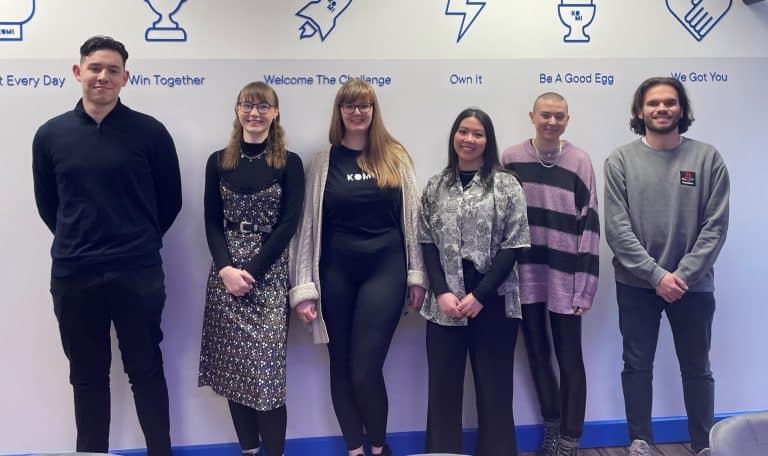
KOMI Group – the Manchester headquartered social media, marketing, and licensing business – has grown its team by 10 since the start of the year. The new appointments are spread across the business and increases its total headcount to 62.

Aban Mechti joins KOMI as a social media manager from LadBible where he worked for two years. Aban’s focus will be on working with the firm’s network of social and viral content creators to manage the flow of content from submission through to client delivery.

Abbey Lam, James Farrington, Luke Hampson, Bailey Sadler, and Phoebe Johnson-Bird have all been appointed junior video editing coordinators. Their roles involve every part of the video creation process including ingesting, syncing, and editing footage as well as graphics and audio elements.

Hannah Green has joined KOMI as a junior graphic designer from Stonegate Group; Lewis Rattigan is a new gaming streamer; and Lucy-Kate Green is the company’s newest junior community coordinator. She joins from ASDA.

The final new starter is Jodie Giblin – KOMI’s new business development manager. Their last role was at MediaBodies in Leeds. They will be driving KOMI’s agency sales revenue, with a particular focus on selling partnerships and community management opportunities direct to brands and organisations.
Andrew Trotman – Managing Director of KOMI – said: “2022 is going to be a pivotal 12 months for the business as we capitalise on the growth that we have achieved over the past couple of years. Our success is as a result of the talent, creativity, and strategic thinking of our team so we are delighted to welcome each of these new starters as they all bring some fantastic experience that I’m sure will add real value to our offering.”

KOMI Group is a three-divisional business consisting of one of the UK’s largest digital publishing portfolios, a social first digital agency, and video content licensing hub. Its team of content creators, analysts and video producers have made and then distributed video content and viral campaign adverts for international brands such as BBC Films, O2, Universal, Bud Light and Disney.

Content is shared across its Facebook, YouTube, Twitter, TikTok, Instagram, Snapchat and LinkedIn accounts including the It’s Gone Viral page as well as Happiest, which focusses on bringing the most entertaining and inspiring real-life stories; and Ultimate which is a community based around home and lifestyle. On average the company delivers over one billion views across its portfolio of pages each month.
In September last year, ARK Media, KOMI’s licensing division, signed distribution partnerships with Reuters and AFLO that will give the business the opportunity to distribute its content to a broad network of leading international publishers and broadcasters for the first time.

Octopus moves to Bruntwood SciTech’s No.2 Circle Square as its recruitment drive heats up

0

Renewable electricity provider Octopus Energy Group is moving into a brand new, hybrid office-retail base within Bruntwood SciTech’s No.2 Circle Square as part of a drive to create 300 new jobs in Manchester.

Combining its new 40,000 sq ft workspace with a 1,300 sq ft ground floor retail unit on Oxford Road, Octopus Energy is cementing its commitment to the city after its partnership with the Greater Manchester Combined Authority (GMCA) was announced in the autumn. Octopus is to trial green energy tariffs and heat pumps with customers in the city region, helping GMCA to meet its target of becoming carbon neutral by 2038.

In selecting the tech-led innovation district created by Bruntwood SciTech, which is a 50:50 joint venture between Bruntwood and Legal & General, Octopus joins taxi dispatch software provider Autocab, global technology provider Hewlett Packard Enterprise, tech-driven professional services firm Accenture, multinational construction technology supplier Hilti, cloud-based accountancy software company Xero, and tech industry specialist law firm Mills & Reeve.

No.1 and No.2 Circle Square have both been specifically designed to accommodate high growth digital and tech businesses, equipped with a range of collaborative and social spaces alongside an original line-up of retail and leisure outlets such as Canvas, a new live entertainment venue, and Hello Oriental, a destination pan-Asian market hall and dining concept.

Circle Square is also part of Bruntwood SciTech’s UK-wide network of innovation districts, which will provide Octopus with the opportunity to collaborate more widely with a 500-strong specialist community of tech and science-based businesses across the country.

Bradley Topps, Commercial Director, Bruntwood SciTech said: “Octopus complements our high-calibre line-up at Circle Square, as well as our ambition for this new neighbourhood to be the go-to home for high growth businesses operating within the digital-knowledge economy.

“Octopus is leading the way in its sector at a particularly critical moment for consumers as well as the planet, which means the impact of this move will be felt far beyond Circle Square and the jobs created. The innovations born here will have a long lasting impact.”

Devrim Celal, CEO of Octopus Energy Group’s KrakenFlex added: “Our team in Manchester is growing at rapid speed, driving the green energy tech revolution across the UK. So we were looking for a new office that would give us enough space that would accommodate our team while placing us in the heart of Manchester’s research ecosystem. The tech cluster at Circle Square offers up the rare-to-find combination of high levels of footfall, innovation and collaboration, fulfilling both of our requirements. It was a perfect match, and we can’t wait to move in.”

Located at the heart of Manchester’s Oxford Road Corridor, Circle Square is a joint venture between Bruntwood SciTech and Vita Group. Once complete, it will boast over 1,700 new homes, 1.2 million sq ft of workspace and over 100,000 sq ft of retail and leisure space, including a variety of boutique retailers, restaurants, bars and pavement cafes, all centred around Symphony Park, Manchester’s largest and newest city centre park.

Mike Bathurst of Helico Consulting advised Octopus Energy Group on the deal, while Knight Frank, Savills and JLL are Bruntwood SciTech’s retained agents on the scheme.

Green energy innovation in store with Exergy Solution’s move to Manchester

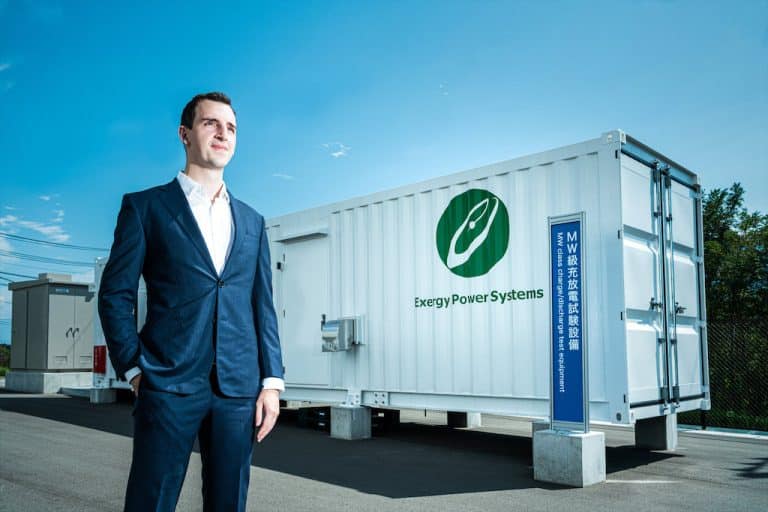
Sustainable energy tech company, Exergy Solutions, has launched a European hub in Manchester – to support the UK’s transition to new power sources and renewable energy.

It is the UK-based operations of Japanese-founded company, Exergy Power Systems, the spinout from The University of Tokyo that has developed a unique high power battery energy storage system (BESS). Designed to rapidly respond to electricity network fluctuations caused among others, by the less predictable nature of renewables, the technology can be retrofitted to give existing power assets, such as back-up generators, new abilities to perform in a hybrid system.

Bringing 6 specialist jobs to the city region with sights set on further expansion, it is one of a growing number of specialist energy and environment companies to confirm a move to Manchester – with collaborations now underway to develop its grid control software and existing technology for the UK and European markets.

Dr Mike Musil, CEO of the UK-based operations – Exergy Solutions Limited, said: “We chose Manchester as our European base because of the clear vision it has for its own net zero future and the specialist digital and engineering talent the city attracts. It also provides us with the opportunity to establish the right partnerships, being in the North West.

“The sectors move to renewables has brought with it new challenges for reliable energy transition – with unpredictability of power supply and many assets too slow to react to grid disturbances. The Dynamic Containment (DC) market requires very fast reaction times from providers and the requirements are too challenging for some assets, such as back-up generators and fuel cells. Our team has developed a battery energy storage system with a patented cell design and chemistry, to provide fast power supply to support both the grid through DC provision and large power consumers through uninterruptible power supply (UPS) services thanks to our small capacity, high power battery, these capabilities can be provided with a lower environmental impact and at a lower cost. We are therefore developing an energy management system to hybridise our BESS with any other assets to maximise the capabilities thereof.”

It is also collaborating with The University of Sheffield, an expert in maximising the capabilities of BESS, to develop its 1 MW containerised system with funding from Tokyo Metropolitan Government and Tokyo Gas. It will simulate the hybrid operation in a virtual power plant and demonstrate how the system can participate in the Dynamic Containment (DC) market.

Tim Newns, Chief Executive of MIDAS Greater Manchester’s inward investment agency, which supports significant expansion and relocations into Greater Manchester, said: “Manchester saw significant growth in the energy and environment sector last year – and Exergy Solutions is a powerful example of the green innovation happening here. As a city region, we are taking important steps towards Greater Manchester’s own net carbon neutral 2038 target – as well as seeing major moves by companies developing the innovation to support a greener economy here in the UK and internationally.

MIDAS, in collaboration with the Greater Manchester Combined Authority is hosting a virtual conference on 9th February 2022, highlighting the low carbon business opportunities for Japanese companies. Guests will hear directly from Exergy Power Systems and Kansai Electric Power Company about their experiences and how they’re capitalising on the opportunities presented by the city region.

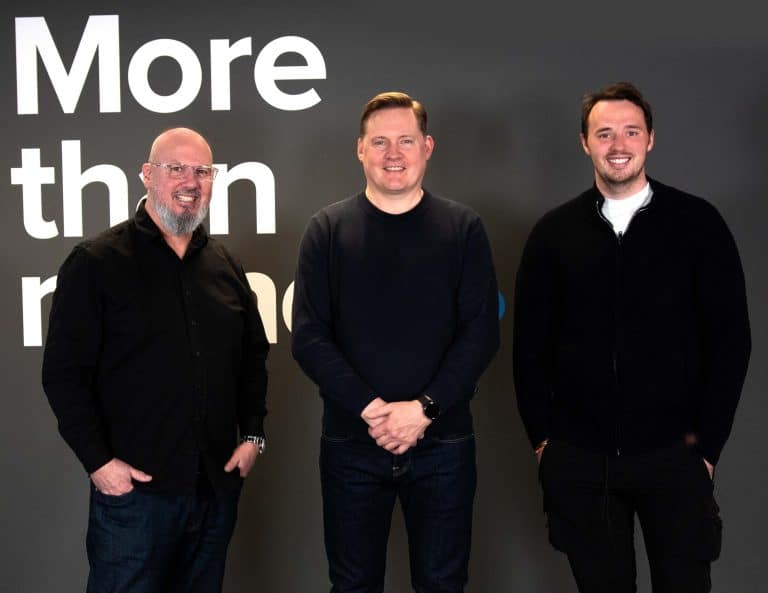
Ex-Apple executive, Social Chain co-founder and Praetura Ventures back pioneering AdTech business

Apple’s former director of US consumer retail, and the co-founder of Social Chain have been named as investors in Illuma, an AdTech business that’s spearheading the future of advertising, alongside venture capital investor, Praetura Ventures.

The company, which is already disrupting the digital advertising industry with its unique GDPR-compliant AI platform, uses contextual signals from live advertising campaigns to help brands make better decisions about where to place ads in real time, without using personal data or cookies, which are being phased out.

As well as investing alongside Praetura Ventures, Colin, who is responsible for supporting Praetura’s portfolio companies and founders as an operational partner, will also join the Illuma Technology board, bringing decades of global technology and enterprise experience.

Fellow operational partner Dominic McGregor, who is also investing through Praetura Ventures, will work with Illuma as a consultant to aid the company’s expansion into social, after he and Dragons’ Den newcomer Steven Bartlett grew Social Chain into a global agency which debuted on the Frankfurt Stock Exchange.

Illuma, which works with several of the world’s biggest brands and advertising platforms, is expecting to capitalise on Google’s plan to end cookies support on Chrome by 2023, as more and more global brands look to re-route their ad spend.

In an industry first, advertisers using Illuma can maximise their return on investment (ROI) by considering sophisticated details about best-performing contexts, such as article sentiment and reader mindset. Using these insights, they can then expand campaigns in real time, reaching relevant new audiences at scale.

Illuma plans to use the investment to expand beyond display ads and into connected TV, audio and social media. The company is also planning to grow its technology, business development and client services teams as well as increase its presence in the US. Financial details of the investment are undisclosed.

On Illuma’s impact, Colin Greene said: “Having worked for over a decade at one of the biggest technology companies in the world responsible for the elimination of cookies, I know how important the privacy debate has been in completely reshaping the market. Illuma, like all great disruptors, has not only seen an opportunity to shift the needle but is also having an immense amount of success doing so, which isn’t always easy in a space that’s as established as advertising.”

Reflecting on the opportunity for advertisers, Dominic McGregor said: “Illuma Technology’s ad platform is an incredibly exciting prospect for advertisers, who are constantly looking for innovative ways to improve ROI and reach audiences they may not be targeting currently. With ongoing conversations around privacy and the future of advertising after cookies, Illuma is well poised to disrupt the industry and do something incredibly unique and exciting.”

Peter Mason, co-founder and CEO of Illuma, said: “Illuma has the privilege of being the right technology at the exact right moment in time, and we are excited to be offering a solution to the greatest challenge in digital advertising. Bolstered by this new investment from Praetura and with the unparalleled expertise of Colin Greene and Dominic McGregor guiding our next steps, the future looks very bright indeed for Illuma and the brands we work with.”