23.8 C
Manchester
Friday, May 1, 2026
Home Blog Page 489

Major restructure and rebrand at It’s Gone Viral geared towards future growth

0

It’s Gone Viral – the Manchester headquartered social media marketing company – has restructured to become a two divisional agency business consisting of dedicated social media and marketing teams. It has also rebranded to KOMI group under which each of these offerings fall.

Under the KOMI group umbrella is: KOMI Media, which creates and builds bespoke social channels; and KOMI Social, which focusses on content production, content distribution and social media management for brands.

The decision to restructure and rebrand follows a lengthy strategic review process and aims to both simplify its offering in the minds of clients and to help grow its market share in each of its two core areas. The firm’s dedicated gaming and sports communities are also being expanded and branded KOMI Gaming and KOMI Sport respectively.

After careful consideration and analysis, KOMI was selected for the group’s new name. It was inspired by the Haitian Creole word ‘kominote’ which translates to ‘community’ in English. Creating engaged communities that make a difference, that bring people together, and build brands that audiences love and are a force for good are at the very core of the business.

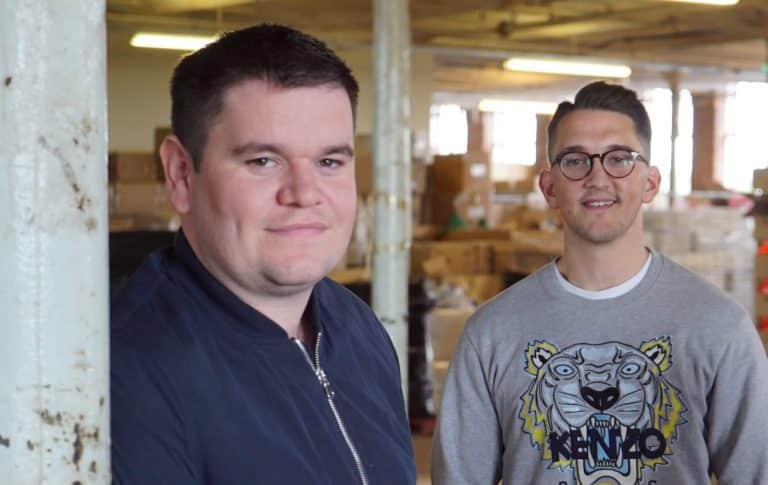
It’s Gone Viral, now the KOMI group, was founded in 2016 and is led by Andrew Trotman and Ryan Williams. Over the past four years, its team of content creators, analysts and video producers have made and then distributed video content and viral campaign adverts for international brands such as BBC Films, O2, Universal, Bud Light and Disney.

Content has been shared across Facebook, YouTube, Twitter, TikTok, Instagram and LinkedIn accounts including the It’s Gone Viral main page, which will be retained and is dedicated to relatable, informative and educational content; as well as Go Fetch, a platform for dog lovers to connect with one another; Happiest, which focusses on bringing the most entertaining and uplifting content and real life stories; and Ultimate DIY which is all about sharing fascinating and clever DIY, crafts and hacks followers can do at home.

The last six months has seen the company reach various milestones including delivering over six billion across its portfolio of pages, relocating its HQ to Beehive Mill in Ancoats, reporting its highest ever NewsWhip results, acquiring social media brand Happiest Media Ltd and appointing Urban Splash’s Sam Lenehan as its new non-exec director.

Andrew Trotman said: “It’s Gone Viral’s trajectory has been fantastic since we launched. However, we realised that we needed to adapt the business if we wanted to work with more brands and to deliver sustained and real growth. I’m confident this new group structure will allow us to do just that.

Andrew continued: Our ability to make people fall in love with brands is what truly sets us apart. We are here to build real, engaged communities that make a difference, to bring people together and to help build brands which audiences love and are a force for good. We are proud that we can utilise our communities to drive real measurable change to brands online. This is done by identifying opportunities that enable us to create innovative, creative and effective campaigns.

Andrew concluded: The rebrand and our new group structure is a pivotal moment in our journey and will, I’m sure, act as the nucleus for the company’s expansion over the coming years.”


Healthcare brand consultancy expands

0

Strategic North that works with global healthcare and pharmaceutical clients, has over the last three years outgrown its existing offices at Westgate, Hale Road and has taken a further 2,756 sq ft in Richmond House, Hale. It has agreed a three year lease on a first floor suite in this three storey office building in the centre of Hale Village.

Steve Padgett, Managing Partner, Strategic North, said: “Ten years ago, Strategic North began with 4 partners. Today, we are delighted to move into this light, bright, extra space which provides more room for our growing team of 50 with new space to meet clients and an environment to inspire our thinking about healthcare brands.

“The location is ideal, with quick access to Manchester airport to connect with our global clients, just 20 minutes into the business, cultural and scientific hub of central Manchester and no doubt we’ll once again be enjoying the local buzz of Hale in the not too distant future!”

Daniel Lee, director, Regional Property Solutions, who acted on behalf of the landlord CBRE Global Investors, said: “This letting was agreed and in solicitors hands pre-Covid so it’s very positive news that it was completed during lockdown.

“Encouraging though this deal is the lockdown by the government has arguably been the most serious threat to business in a generation and could conceivably be worse than the 2008 financial crisis.

“As a firm of commercial surveyors with a management portfolio of over 100 buildings and estates we saw an element of panic from some tenants before any government announcements so it was fundamental not to rush into decisions.

“One of my first sentiments as this pandemic evolved was that both tenants and landlords must share some pain along the way to come out of this successfully and with a business intact. To open up lines of discussion of we have been communicating regularly with those involved which is proving a key element in allowing all parties to arrive at a mutually sensible position.

“The assistance from central government has been plentiful, with the grants for rateable business premises, rates holidays, furlough, tax deferment and sensible loan schemes all of which have been made available to a multitude of businesses up and down the country and given businesses time to reflect, reconsider and adjust their business plans.

“However, the hurdles for the retail, hospitality and leisure sectors are the hardest to resolve and a safe and successful strategy for the easing of the lockdown restrictions for this sector to open up is crucial.

“On a more positive note in the last fortnight or so, we have experienced improved activity levels, albeit nowhere near normal or what we would like them to be, but we are hopeful these will continue and grow over the course of the year.”

SEASHELL SIGNS DEAL WITH BLOOR HOMES FOR NEW HOMES IN CHEADLE HULME

0

Seashell has today announced that it has agreed the sale of land to housebuilders Bloor Homes who are to build new homes in Cheadle Hulme.

The Trust, which last month secured planning permission for a new school, campus and 325 new homes following an appeal to the Secretary of State, has agreed a deal which will see Bloor Homes buy a piece of land owned by the Trust and develop the houses on the site.

The land sale will allow Seashell to press ahead with plans for the redevelopment of the school and campus for their children and young people with profound special needs. It will also see the development of new, high-quality homes in Cheadle Hulme and sporting facilities which will be shared with the local community.

Jolanta McCall, Seashell Chief Executive and Principal, said of the news: “I am absolutely delighted to announce that we have reached an agreement with Bloor Homes which will not only provide a significant funding boost to Seashell’s school and campus redevelopment project, but will also see a development of quality, local homes.

“The sale of the land for housing was always absolutely central to our plans to redevelop our desperately outdated school and campus because we were not able to raise all the funds ourselves and despite our best efforts, we couldn’t secure the funds from anywhere else. This sale allows us to start work on our exciting transformation project and offers a bright future for our children and young people.

“It is, however, important to stress that today’s news is not the end of the story. We still need to raise a further £12 million for the transformation project to deliver the school and campus our community needs and deserves.”

Rhys Nicholson, Regional Managing Director of Bloor Homes said: “This land acquisition is great news for Bloor Homes and we are delighted to be associated with such a worthy project as the Trust’s essential redevelopment. Cheadle Hulme is a highly desirable residential area and a natural fit for Bloor Homes’ expanding portfolio of high-quality family homes in first rate locations. We will be working closely with the community and Stockport Council to agree the detail of the scheme and to press on with the delivery of these important new homes as quickly as possible.”

Bloor Homes will be consulting on the specific details of the plans for the new homes in the coming weeks.

Pugh’s rolls out national estate agent partnership network

0

Manchester-based national property auctioneer Pugh & Co has launched an initiative that will see the firm partner with estate agents across the UK.

Via the new network Pugh’s will work on a formal basis with agents, enabling them to securely sell properties that are unsuitable for sale by private treaty or require an immediate, unconditional sale.
The service is designed to provide agents with a client-focused partnership and additional revenue stream via an online or in-room auction, supported by Pugh’s 11 UK offices.

Pugh’s associate director Will Thompson, who heads the new network, said: “Whilst covid-19 has inevitably presented challenges, successfully moving our entire auction function to our pre-existing online platform during lockdown is a great source of pride for our team. The fantastic results of our recent online auctions have proved we can truly offer our partner estate agents a flexible and reliable auction partnership.

“Pugh’s has been providing a reputable auction service to estate agents for years now, and by formalising the arrangements we’re aiming to provide the best service possible. With more than 40,000 investors subscribing to our auction alerts, the sales we have generated for
our clients, even during lockdown, are a testament to our success.”

He added: “Due to our consistently strong performances, we are able to tailor bespoke agreements with agents that suit their business models and requirements. We recognise that estate agents have had to overcome an array of challenges during lockdown and that reaffirms our commitment to flexibility and collaboration when forming our auction partnerships: enforcing a one-size-fits-all approach doesn’t work.”

Pugh’s reported sales of £5m for its April property auctions, which were switched from auction rooms in Manchester and Leeds to its online platform after the introduction of social distancing regulations in March. In 2019 it offered more than 1,000 lots for sale, generating more than £90m for clients including private individuals, charities, corporates and public sector organisations.

Acquired in 2016 by property consultant Eddisons, Pugh’s was founded in 1992 and has grown to
become the largest commercial auctioneer in the UK, selling residential and commercial properties as well as land.

FW Capital Debt Finance hits £20M investment milestone in Manchester

FW Capital has announced it has now invested £20M to support Greater Manchester-based businesses through NPIF – FW Capital Debt Finance which launched in 2017.

This brings NPIF’s total Microfinance, Debt and Equity investments in Greater Manchester to £45.3m, with 176 investments into a total of 141 businesses across the region. Additional investment from private sectors investors alongside the NPIF investment amounts to an additional £51.2m bringing the total amount to £96.5m

Businesses across a range of sectors, including manufacturing, creative and life sciences, have all benefited from the debt fund. However, its Manchester’s thriving technology-sector which has seen the most significant investment. Many of these businesses are based in Manchester’s Northern Quarter, a hub for new and growing technology businesses.

Notable investments include Radio.co which offers internet-based services to radio station broadcasters. The cloud-based platform allows anyone to create a radio station easily. The company initially received £300,000 NPIF loan which allowed them to develop and launch a podcasting platform with tools that allow the customer to record, upload and publish on demand podcasts. The podcasting platform, podcast.co, was launched in June 19 and created seven jobs with another six planned.

In December 2019 Radio.co, which now employs 24 staff, received a follow-on loan of £240,000 for working capital to support the business through its next growth phase.

Userconversion, a company that works with e-commerce and retail clients to improve their website conversion rates, received a £250,000 loan in 2018 which it used to recruit new staff and move to bigger premises to accommodate its growing team. The company now has a turnover of £1.6m and employs 24 staff.

Gary Guest, fund director at FW Capital North West said: “£20m invested in the Greater Manchester area alone is a significant achievement and it’s really encouraging to see the positive impact it’s having on the local economy.

“There is a strong and vibrant technology sector here in Manchester and as an important part of the local economy we are keen to support it. We are finding many businesses need finance to recruit new talent or move to bigger workspaces which sits right within NPIF’s remit.

“When making lending decisions we look at whether there is a good business model in place with growth potential. This is particularly important for technology companies, especially younger ones, as they can find it difficult to get debt funding from traditional sources because many do not have physical assets to pledge as security or are unable to provide evidence of years of strong performance.

James Mulvaney managing director of Radio.co said: “Without the funding from NPIF-FW Capital Debt Finance we would not be where we are today. We didn’t want to give up equity and wanted to work with a lender that understood us and the industry. Another technology business we work with recommended them to us and we knew straight away that they were the perfect investment partner. The process was quick and transparent and the follow-on support we’ve received has been invaluable.”

Gary continued, “We are currently in an unprecedented situation and we want businesses to know that we are here to support them and that we are still investing. It’s really important that lenders and the business support community continue to work together to ensure that Abusinesses have the vital support they need. I’d like to thank the team, the businesses and the intermediaries we work with who have helped us achieve this milestone.”

Grant Peggie, Director at the British Business Bank said: “I’m delighted to see that FW Capital has reached this milestone in Greater Manchester, bringing NPIF’s total investment to over £45m with additional private sector investment of £51m . The hard work and dedication shown by our fund managers mean that we have been able to support over 140 businesses, ensuring the regional economy can reap the rewards of increased job opportunities and a more prosperous economy in the long term. In the current environment, it is important that businesses across Greater Manchester know they can approach NPIF in order to gain capital to safeguard their business and prepare for future growth.”

The Northern Powerhouse Investment Fund project is supported financially by the European Union using funding from the European Regional Development Fund (ERDF) as part of the European Structural and Investment Funds Growth Programme 2014-2020 and the European Investment Bank.

UK regional rebalancing may be boosted by COVID-19 response

0

The COVID-19 pandemic may have boosted the Government’s regional rebalancing strategy to benefit areas including the North West, according to the UK chief economist at global commercial property services company Colliers International.

Speaking at a Northern Powerhouse Regional Economic Briefing webinar, which is part of a series around the UK regions focussing upon his paper ‘Regional Revolution III: Rise of Cross Border Investment’, Dr Walter Boettcher said: “Regional rebalancing that lies at the heart of Government economic planning may have just received an unexpected, but decisive boost.”

The webinar was hosted by Michael Hawkins, Manchester-based director at Colliers International, and head of National Office Agency and Development UK Regions.

Michael believed that cross-border investment in the Northern Powerhouse cities of Manchester, Liverpool, Leeds, Sheffield and Newcastle will continue to be attracted by key factors including an educated workforce created by the quality of ‘international talent’ emerging from universities; foreign ownership of the region’s football teams from which follows investment; the ongoing appeal of infrastructure to overseas investors such as the Chinese and the ability of forward-thinking and proactive local authorities to secure private investment in developments across a range of sectors such as residential, hotels and logistics.

“These cities continue to attract investment from around the globe because they are cosmopolitan cities in cosmopolitan parts of the country – the cities have vibrancy and the intellect of their communities,” he explained.

Michael also believed the Government’s commitment to rebalance the economy by investing in Northern cities will ‘continue unabated’ – with further significant regeneration schemes started and completed before the next general election.

“I am upbeat because although we face great challenges, we also have great resilience and great UK institutions that continue to commit to regional cities alongside the global investment appetite in these cities. All of the cities and local authorities have continued to work during the pandemic and encouraged investment in their cities,” he added.

Explaining that while many investors viewed the coronavirus crisis as a temporary interruption of pre-pandemic trends, Dr Boettcher said others perceived ‘the beginning of a large-scale change in the patterns of commercial activity and use of real estate”.

Some London occupiers may seek to grow their existing regional footprints or establish new regional footprints altogether, in order to reduce the density of their existing office use.

Dr Boettcher, whose paper explores cross border investment into the UK regions and possible future trends, told the webinar audience that while Government investment in the regions would be an essential part of the Covid recovery, this could be ‘supercharged’ if supplemented with private investment, especially cross border investment. Furthermore, the positive signs are already evident.

He highlighted the fact that the COVID-19 emergency measures included a substantial fiscal stimulus designed to work in tandem with monetary stimulus, and that this was in addition to the £600 billion of investment over five years in the regions announced by the Government shortly before the pandemic reached the UK.

“In net terms, public investment is set to be the highest since 1955 in real terms,” he said, although he cautioned that until the delayed National Infrastructure Strategy was published, details of capital allocations would remain uncertain.

Dr Boettcher added: “Let us hope that the resolve to push these plans ahead is not dissipated by any further delays. In many ways, the years of austerity were years of lost opportunity. Now is the time to push forward. Regional Revolution!”

In his paper ‘Regional Revolution III: Rise of Cross Border Investment’, Dr Boettcher pointed out that prior to the coronavirus pandemic, the UK regions such as the North West were attracting increasing attention from commercial property investors, and in particular cross border investors.

He said: “In the early to mid-2000s, regional investment was the province of large UK pension and insurance funds, as well as the odd German fund, but by the late 2010s, the regional investor base expanded to include a wider range of investors, especially cross-border investors.

“While the COVID-19 pandemic suggests that these regional gains could be reversed as transactions decline and risk perception rises, in fact, the North West and other regions are well positioned for a post-pandemic recovery.”

Dr Boettcher added: “Clearly, UK government resources are limited and the scale of the necessary investment required to ‘rebalance the UK economy’ and to ‘improve productivity across the regions’ goes well beyond central government’s financial capacity to deliver.

“The heavy lifting in the regions, as contemplated by central government, can only be achieved in tandem with cross-border investors and UK institutions who have the required depth of capital. The task of central government is one of direction, seed funding and focusing on providing an adequate infrastructure framework to support the necessary development.

“Perhaps the most crucial and indispensable task is left to local governments and, especially local stakeholders, to envision and bring to market projects of sufficient scale to attract investors and to enable their engagement. It is in this way that the UK regions will benefit from the much vaunted regional rebalancing, that is at the least, one generation overdue.

“Furthermore, general investment in the UK, unlike Government investment, is not a zero-sum game. Given the weight of global and domestic institutional capital, there are sufficient resources to float all the boats across London and the UK regions without any region being left behind.”

AO EXPANDS LOGISTICS OPERATION WITH THE OPENING OF NEW WAREHOUSE

Online electricals retailer, AO has opened a new distribution warehouse in Crewe, its third in the town, to make sure its growing number of customers get what they need when they need it.

The new warehouse adds a further 110ksq ft of distribution space giving AO just under 1,000,000 sq ft in Crewe with more on the way as AO actively searches for more warehouse capacity to manage demand for its products and services.

As well as enabling inbound retail sales, this latest warehouse will also help AO to grow its third-party logistics business, which has seen meaningful increased demand over the last two years, as major new clients including Aldi, The Cotswold Company, Simba and Keter benefit from AO levels of delivery service and proposition.

David Ashwell, MD of AO Logistics, said: “This is a great measure of the confidence that our third party clients have in AO. During the Covid-19 pandemic our amazing team has been delivering safely and efficiently, providing a lifeline for AO.com’s customers which in turn, third party clients have benefitted from. As five years of channel shift from stores to online condensed into five weeks, I’m really proud of how the team has adapted to necessary changes without missing a single day of delivery with record net promoter scores over the last three months.”

“We’re proud to share our AO service capability with other retailers and third party clients particularly during this difficult time when, thanks to AO, their customers have been able to rely on them. We’re keen to continue to build long-term relationships with retailers and clients who understand the value of an expert, national two-person delivery network.”

The new warehouse has been named after the late Alan Latchford, a co-founder of DRL which went on to become AO.

John Roberts, Founder and CEO of AO, said: “Latchford is named after Alan Latchford, who passed away in March. He was on the other side of the famous £1 that led to the creation of AO. On Christmas Eve 1999, he bet me £1 that we couldn’t use the internet to transform how people buy white goods. Twenty years on, the opening of our Latchford warehouse is a lasting tribute to Alan.”

Crewe is also home to AO Logistics’ head office and two distribution centres, Alpha & Omega. AO acquired the two-person delivery company in 2009, and it now offers delivery seven days a week on all items.

TRIO MAKE PARTNER AT BRABNERS

Independent law firm Brabners has promoted three of its lawyers to partner across its healthcare, charity and family practices.

Nicola Lomas leads Brabners’ work in the dental industry and joined the firm in 2016. Her practice forms part of the firm’s healthcare sector specialist team that has grown rapidly over the last two years.

Graeme Hughes is an experienced charity lawyer and has specialised in the third sector since 2010. He is recognised by the Legal 500 as a ‘Leading Individual’ in the industry and acts for well-known local and national charities including Youth Federation, United Kingdom Islamic Mission, Turner Home, the British Friends of the Hebrew University in Jerusalem and several charitable foundations associated with professional football clubs.

Natalie Dickson joined Brabners in 2007 and is a highly regarded family lawyer. She is a member of Resolution, former Secretary of Merseyside Young Professionals and committee member of both Merseyside Women’s Lawyers Division and Liverpool Ladies Network. She is also a trustee of the Brabners Foundation, the firm’s charitable arm.

The three partner announcements come as Brabners also confirmed promotions for 23 other lawyers – five to legal director, eight to senior associate and ten to associate.

Nik White, managing partner at Brabners, said: “We are only as strong as our people and 26 promotions across the firm is indicative of the quality of the lawyers we have onboard. We will always seek to attract the best externally but looking after the colleagues we already have in the business and nurturing their development and progress is just as vital to our continued growth.

“Despite the difficult times we’re all living through, I’m determined that we will never be a business that stands still. Recognising and celebrating the exceptional talent in our firm is even more important now as we look to push forward, maintain the momentum and continue to build during the challenging economic conditions.”

International Timber rebrands and is open for business

International Timber, one of the largest timber suppliers in the UK, with branches in Manchester, the South West, South East and Scotland has undertaken a company-wide rebrand, expanding their offering and making several significant changes to the business.

With an increased focus on the future needs of merchants and manufacturers, a new corporate identity and digital presence has been implemented in order to enhance growth.

To support the constantly evolving timber market, as demand increases in terms of sustainability, specification knowledge and added value services, International Timber has introduced dedicated sales teams to support their key merchant and manufacturing customer groups.

Additionally, the timber giant has introduced new ranges, enhanced their engineered, modified and laminated timber offering, and increased milling capacity across their six UK sites.

Kerry Wardle of International Timber said: “International Timber has a depth of knowledge that we believe is unsurpassed in the industry. We like to think we set a high standard.

“We feel that our newly refreshed corporate identity, supported by the launch of a new website, maintains that standard. We are focused on delivering a clear, simple set of tools that give our customers the information they need, as quickly and effectively as possible.

“Following COVID19, all of our sites are now back open, adhering to strict government guidelines in terms of social distancing and health and safety. This ensures the needs of our staff are met, as well as keeping us on hand to help our customers with all of their timber requirements.”

The rebrand comes off the back of the company launching their brand new, direct pack sales offer ‘International Timber Direct (ITD)’ to deliver volume product to those who need it.

Manchester site to permanently close

It is with real sadness that we have come to the very difficult decision to close our Manchester site and will not be reopening when current government restrictions are lifted (this does not affect the Liverpool restaurants in Hanover street and Albert Dock and our online business).  The impact of Covid-19 has been profound on our business and we cannot survive the future with three restaurant sites.  As soon as we partially open with space restrictions, the losses that we will collectively make will be too great to sustain across all three sites and risk bringing the whole company down.  No matter what projections we do and what actions we try, sadly we cannot find a way to make it all work.

We have been in discussions with our Manchester landlord, our lenders and government agencies trying to secure additional funding and support which could help, but we have been unsuccessful in most of this, and there is no option that we can find that means Lunya Manchester can be viable.

In the close to five years that we have been open, Lunya has been taken to heart by Mancunians, supporting us every step of the way. Our highlights being awarded the MEN City Life restaurant of the Year in our first year of opening and being listed in the Good Food Guide for every year we have been open. We have been successful on so many levels and have loved every minute of it.

The last two years since the Brexit referendum have presented additional challenges for everyone in the hospitality industry, and especially us as a hugely import-focused business.  With declining consumer confidence, a huge drop in the Euro exchange rate and large increases in business rates, generalcosts and overheads, this has meant significant cost pressures and taken together with the devastating impact of the closure from the Coronavirus, it has made Lunya Manchester financially untenable, and our current site too expensive to operate from for as long as we can see.

Our two Liverpool sites are the profitable sites and to protect those, we have had to take the very painful decision to close Manchester to give our remaining businesses in Liverpool a chance and minimise the losses that we will build up as we partially open our Liverpool sites.  We think that we can manage with two sites opening with partial covers, whenever the government allows us to, and certainly with the fantastic support our customers have shown us so far, we are as confident as you can be.

We will, via our Hanover Street operation be maintaining our service to customers in Manchester, selling online and delivering locally, providing a click and collect service at a venue to be determined and even putting on some of our events with partner venues.  We think there is a way for Lunya to have a ‘virtual’ presence in Manchester, but sadly not operating as a restaurant, deli and bar in Barton Arcade. We are already in discussions with potential partners about a central venue for a click and collect service.  And in the future, if we can find a smaller, and more cost-effective site we may well be back in years to come.

All of our Manchester staff are furloughed and we will maintain this for as long as possible.  Given the changes to the furlough scheme in coming months, we envisage our staff finishing at the very end of August, when all of our staff are likely to me made redundant as the contributory costs to furlough are not tenable without income.  We have started a statutory redundancy consultation with all of our 30 strong team.  We would urge any other restaurant operators who are seeking talented chefs, waiters, retail staff, bar staff and managers to consider the huge talent that our staff have as they seek to recruit to their teams.  We have looked at opportunities for redeployment in Lunya Liverpool and Lunyalita into operational posts, but we have no vacancies in either of those sites.

We think there will be many more closures such as this across the country. We have not qualified for any government support grant, and possibly with that, we may have been able to risk carrying on.  We have insurance cover for pandemics, business interruption and forced closure, but as so many restaurant operators are discovering, insurers are denying claims and we will continue to fight for ours, but even if it is successful, it will now be too late.

In March, I wrote an impassioned letter to the Prime Minister (copied in annex) about action the government needed to take to support businesses.  Whilst some things improved, the government response was not enough.  We tweeted that letter out and it was seen by just on 2 million people (nearly 1 in 30 of the UK population), that produced so much support for Lunya, outpouring of love and expressions of empathy. It worries us that if we cannot get through this without a site closure, how will the rest of the industry.  We are a strong and successful business. Here is our Tweet and message https://twitter.com/lunya/status/1240262938927280132?lang=en

On a personal level, we are terribly sad and disappointed that it has come to this.  Anyone who knows us and the business will know we have thrown everything at it, are very proud, passionate and active owners and work every day in our restaurants.  We have grown a fabulous restaurant, bar and deli in Manchester, we have made some great friendships and had some really good times working with our team and giving our customers the very best of Catalan and Spanish food. The memories of this and the positive impact we have made on the Manchester gastronomy scene, we will never lose.  We have wonderful customers and hope through our online, local deliveries and other events we will still enjoy their support and serve them – just in a different way. It will be more ‘hasta pronto’ rather than ‘adios’. Manchester hasn’t seen the last of us.

Peter & Elaine Kinsella