12.7 C
Manchester
Sunday, May 3, 2026
Home Blog Page 458

Rochdale manufacturer unveils new £3m assembly centre

0

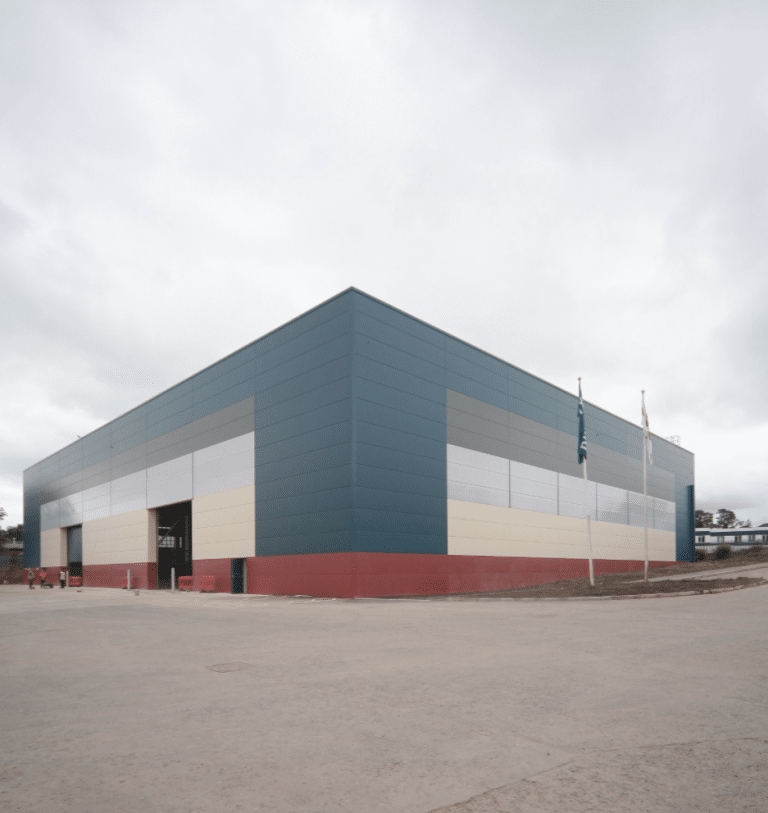
The family-owned business, which specialises in the design, manufacture, installation and maintenance of combustion equipment and boiler rooms across the world, described construction of the 35,000 sq ft unit as a ‘landmark day’ in their 56-year history.

The two-bay industrial unit was built by Heywood-based PLP Construction while the four 60 tonne cranes were supplied by another Rochdale business in Granada Material Handling.

Eddie Kuligowski, operations director at Dunphy, said the company had been ‘bulging at the seams’ until construction of the new assembly centre.

“Previously we’d had a fabrications centre and assembly area under one roof,” he said. “The R&D facility completed in 2015 has allowed us to expand the bio energy centre side of the business. This new centre will allow us to double our capacity.

“Until now we’ve had to turn down work. There’s nothing worse than taking an order and not being able to deliver it so we turned work down.

“Around 50 per cent of our work goes to export and this opens up new markets for us. This is a long-term investment for us.”

Dunphy employ 110 people and have an annual turnover of £14m. Customers include Shell and Rolls Royce. The new building is expected to be open in October.

Kuligowski said he was delighted to have been able to use two other Rochdale companies in the project.

“Like us, PLP Construction and Granada Material Handling are long-established Rochdale businesses,” he said. “Rochdale is a good place to do business. We have the welders, electricians, fabricators and fitters to be able to do everything that we need.”

Laurie Bradley is the construction director of PLP Construction, which directly employs 45 people and has a £15m turnover. By coincidence he was in the same class at school in Rochdale as Kuligowski.

He said: “We had a three-week delay because of Covid-19 so it took 43 weeks in total but other than that it was relatively straightforward. Also we had to leave elements of the roof open so we could bring the cranes in through the roof.

“As a local business it’s great to be involved in schemes like this in Rochdale.”

Richard Lewis is the sales engineer at Granada Material Handling, which designs, manufactures and installs heavy duty lifting equipment. The company is 40 years old, employs 90 people and has a £20m turnover.

He said: “Our customers would typically be anyone who lifts heavy loads. It could be a car manufacturing plant or a company in the aerospace sector.

“We’ve installed four 60 tonne cranes into the new Dunphy building across two bays. The cranes work in tandem so can lift as much as 120 tonnes.

“The cranes were only manufactured a mile away so it’s fantastic that something as impressive as this can be delivered 100 per cent by Rochdale businesses.”

Fast-growing businesses in Greater Manchester are vital to its economic future

0

Greater Manchester is now home to 1,375 fast growing companies that can help the area overcome the economic challenges created by Covid-19.

Their importance to the local economy is underscored by the fact that they are employing a total of 143,623 staff and generating £24.9bn in turnover, according to the ScaleUp Institute’s analysis of the most recent official data.

These 1,375 are part of an innovative and productive scaleup community across the UK of businesses that have grown their turnover or employment by 20% a year over a three-year period.

However, with headwinds created by COVID-19 and Brexit these scaleups need effective support to remove a range of barriers that could challenge their long-term growth and the role they can play in helping Greater Manchester flourish economically.

ScaleUp Institute Chief Executive Irene Graham said: “Scaleups have remained resilient in the face of the Covid-19 emergency and continue to be critical to local economies with many still planning to grow.”

“But this is no time for complacency, with scaleups citing challenges on accessing markets and appropriate finance dialing up, as they face into the uncertainties that Covid and Brexit create. We must double down on efforts to create a supportive environment or risk losing the benefit of their enterprise and productivity.”

“And that would be a huge loss as scaleups are 54% more productive than other businesses, twice as likely to offer apprenticeships, are more than twice as innovative, and, significantly, they create high quality jobs.”

“Now is the time to also bring on those firms that are in the ‘pipeline’ – whose performance puts them just outside the definition of a scaleup – of which there are 700 in Greater Manchester.”

“In Greater Manchester scaleup leaders particularly highlight access to talent, access to UK markets, and access to infrastructure/ premises and broadband as key issues. We recognise that Greater Manchester offers a number of services for scaleups, which we will continue to monitor in how they are addressing their concerns.”

The ScaleUp Institute has also carried out research with Arup to understand what factors most influenced the local growth of scaleups. Using a range of variables and regression analysis this research has shown 3 key local factors make a vital difference: access to equity finance (growth capital), access to skills and the existence of sectoral clusters.

Richard Jeffery, Director of Business Growth, The Growth Company said: “Through GC Business Growth Hub we are proud to support Greater Manchester’s scaleup community through programmes like Global Scale Up, Creative Scale Up and Greater Connected.

“Even during lockdown, we have been able to continue offering these services remotely and have seen the impact that they are having on businesses in our region. We’ve empowered them to grow in incredibly challenging circumstances by reaching new markets national and globally, pivoting to meet the needs of these times.

“As we move out of lockdown, we will see the positive impact that Greater Manchester’s scaleup businesses will have in helping the economy to recover from the effects of Covid-19.”

Legacie Developments announce plans for £40million residential scheme at Salford Quays

0

Prominent North West developer and construction company Legacie Developments have secured a deal to acquire a landmark site close to Salford Quays for a £40million residential scheme.

The new development will see Legacie, who have delivered a variety of successful residential developments in Liverpool, expand operations into Greater Manchester.
The site which is located on the junction of Ordsall Lane and Dyer Street and adjacent to the River Irwell, has already been granted planning permission for 196 residential apartments and a commercial unit.
The multi-million pound development, which will complement the significant investment already underway in the burgeoning Salford Quays district, will be known as ‘Merchant’s Wharf’ in a nod to the industrial heritage of the area.
John Morley, Managing Director of Legacie Developments, said:
“We are incredibly excited to announce plans for Merchant’s Wharf. The area between Salford Quays and Manchester City centre is experiencing a real renaissance with huge investment and regeneration underway and we are pleased to be playing our part. Our development, comprising 196 state-of-the art apartments, will add further quality to the residential offer in the area. This is Legacie’s first development in Greater Manchester and we are looking forward to starting work.”
Legacie Developments is partnering on the project with investment consultancy RWinvest. Together they have developed a long-term strategy that will see them targeting further development opportunities in Greater Manchester in the coming years.
Michael Gledhill, Director at RWinvest, said:
“Merchant’s Wharf will be a high-quality project delivered in partnership with Legacie Developments, who have an excellent track record of completing their developments in good time.
Our long-term strategic vision is to expand our activities in Greater Manchester. The target for our partnership with Legacie is to commence construction for 2,000 units in the area within the next three years. We have been active in the local market since 2012 and will be opening a new office in MediaCityUK shortly to add to our existing offices in Central London and Liverpool. We are in a very strong position to ramp up our activities in this area.”
Salford has seen the second highest population growth in Greater Manchester over the last 30 years and is becoming an increasingly more desirable place to live. Billion-pound developments like MediaCityUK Phase 2 are drawing in countless young professionals and creatives. Large-scale developments such as Merchant’s Wharf play an essential part in supporting the area to meet its goals for accommodation as this growth continues.

“How Taking an Optimistic Approach Helped Us Thrive During Covid-19”


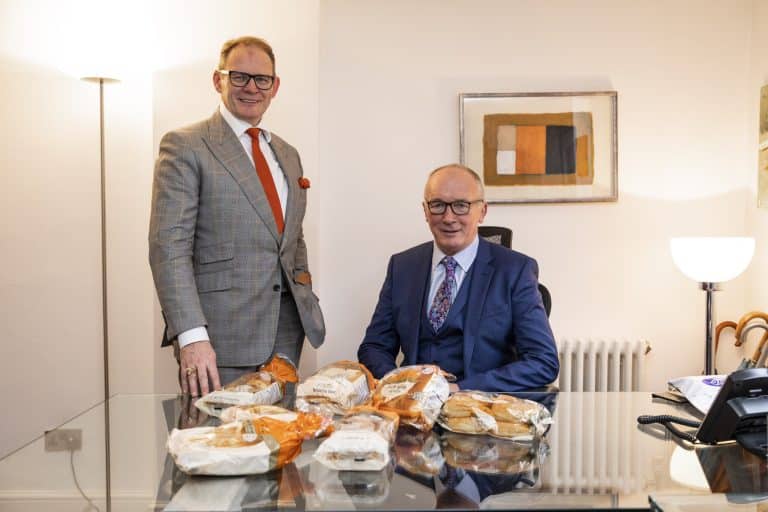
st pierre group 500 x 500 250x250 1Paul Baker, founder of St Pierre Groupe, explains: “How Taking an Optimistic Approach Helped Us Thrive During Covid-19”

International bakery business, St Pierre Groupe, has grown its team by 33% during lockdown. The Manchester-based company recently became the UK’s fastest growing branded bakery supplier, with Baker Street, Paul Hollywood and St Pierre in its portfolio (52w/e May 2020, Nielsen data for the UK’s Top 10 Branded Bakery Suppliers). Founder, Paul Baker, shares his insight into growing a business and a team amidst a global pandemic.

We faced new challenges thanks to the global health crisis. COVID-19 didn’t come with a manual and so, like everyone else, we had no choice but to face issues head on. We’re an ambitious company with big plans, so in order to maintain our pace of growth, we adapted quickly. From leadership styles, operations and communications, we decided to make the best of a bad situation, using the crisis to take a step back and look at the business overall. What could we learn from this situation to improve our company? This optimistic approach is part of the reason our business and brands have continued to thrive

Since lockdown began in March, we reported an increase in sales. Consumers were looking for comforting, convenient foods which meant an uplift for all three of our brands. This increase in demand meant that it was more important than ever to work strategically with all of our suppliers, ensuring that our most popular products were readily available for customers. As a result, we reviewed our processes across the business and decided to streamline our offering. This had a knock-on effect with production partners, haulage companies’ warehouses and customers, reinforcing the need for team work, which already plays a huge role in our company culture. 

As an international company with teams in the UK, France, the US and beyond, we were already utilising video calling methods but responding to COVID-19 meant that we took time to dig deeper into how we could use our systems more efficiently.

We enjoyed significant growth of 30% year-on-year in 2019 and despite COVID-19 we knew it was vital to continue our investment in good people. Restrictions meant we were unable to hold face-to-face interviews and whilst in-person has always been our preference, we were already set up to recruit via video calls. You actually get a little more insight into a person when they’re relaxed in their own environment and video interviews with potential new team members meant we had the type of conversation starters that you can’t prepare for. Microsoft Teams had the added benefit of being able to share documents so candidates were able to present to us as they would normally. We also conducted office tours and inductions via video link which provided a new perspective for us. We relocated just before lockdown, so our video tours gave us a chance to show off our new space too. We’re keen to show candidates that we’re a great place to work and being able to demonstrate the benefits of our new Didsbury premises gave us a renewed excitement about our new home!

Over lockdown, we actually hired 18 new candidates. It’s testament to the team we already have in place that we were able to continue adding more talent and now we’re looking forward to a big reunion as soon as possible.

When I take stock of the past few months and the challenges we’ve overcome, I’m prouder than ever. Businesses who made sure they were flexible in their approach before COVID-19 will now be in the strongest position when life begins to return to normal. Remaining agile is key – pandemic or not – to building a strong, dynamic team who can drive new thinking. These are the vital ingredients that businesses must have if they are to achieve future growth. We’re as excited as ever about what the future holds.

Testimonials:

Scott Oakes, Commercial Manager at St Pierre Groupe, started in April, said: “Starting a new job at the beginning of April during a global pandemic and a national lockdown I was obviously nervous and for a short while I was apprehensive that the role would still be going ahead, but everyone at St Pierre Groupe has been amazing. All induction programmes went ahead online, within a week I had ‘virtually’ met the entire team and all fears were gone. It was clear from the first teams call that there is a real family closeness at St Pierre Groupe and a feeling that everyone is in this together. Working in the Food service sector the lows have been clear for everyone to see, entire industry sectors closed, unable to have face to face meetings with key buyers etc. In a positive reaction to this though it has enabled us to adapt and pivot to a new way of working, focus on new different markets and opportunities, as well as plan for the future and how we tackle the new normal.”

Sam Elmidoro, Social, Content & Community Manager at St Pierre Groupe, started in June, said: “Starting a new job during the pandemic has been surreal and daunting to say the least, but St Pierre Groupe has made the whole process very smooth. Not only have they approached this from a practical angle, but they are extremely conscious of the emotional impacts of joining a new company during lockdown. 

“They’re very aware that it’s not a normal situation and it may be affecting people in different ways. But they’re extremely supportive and I think that’s testament to the company culture and something that’s encouraged from the top down. It has also been really refreshing to be told to take the time and space to do what I need to do, to learn what’s important in the early days of a new job and to get my head around the company. Regular chats with my line manager and the rest of the team to talk about both work and life has felt reassuring that they are looking out for you as a new team member. I’m looking forward to a point when we can all eventually work together in the office and celebrate the growing team.”


st pierre group 500 x 500 250x250 1

St Pierre Groupe


Healthcare investment firm acquires vulnerable care provider

A Manchester-based healthcare investment company has acquired a £4.5m care and education provider as part of its ongoing growth strategy.

Tristone Healthcare, a subsidiary of Tristone Capital, has acquired Southampton-based Sportfit Support Services which offers care and education services to vulnerable young people including those with learning disabilities and requiring supported living.

The acquisition is one of a number planned this year as Tristone targets £35m revenues and £7.5m EBITDA in the next 18 months through its buy, build and hold strategy. The deal increases the number of vulnerable young people currently supported by Tristone businesses to 98.

Tristone was advised by business advisory and accountancy firm MHA Moore and Smalley’s Corporate Finance and Tax Advisory teams who provided financial and taxation due diligence support alongside wider deal advisory services.

Tristone founder and CEO, Yannis Loucopoulos, said: “Sportfit is a fantastic business that perfectly aligns with our values and helps us further deliver on our purpose of providing safe, essential care, while enriching lives through education for vulnerable children, young people and adults.

“It’s an excellent example of our strategy of acquiring profitable social care businesses with a track record of success and a strong management team.”

As part of the acquisition, Sportfit founder and managing director Ashley Vickers will retain a minority shareholding and continue to manage the business.

MHA Moore and Smalley’s acquisition team was led by tax partner David Bennett and corporate finance director Simon Carruthers.

Simon Carruthers said: “The Tristone team are passionate in their plan to build a significant social care group delivering positive social change through the alignment of commercial returns with social impact.

“Assisting the team to shape and deliver a transaction that will help Sportfit progress to the next level and provide exceptional support for even more disadvantaged young people has been extremely pleasing.

“This is the second transaction in the social care sector that our Corporate Finance team has helped deliver from start to finish during lockdown, based on the team’s deep understanding of and strong credentials in children’s and young person’s services in particular.”

University of Manchester’s first virtual Enterprise School to help accelerate social enterprise revolution

The University of Manchester’s first virtual Enterprise School has named the winner of its newly launched entrepreneurship programme.

Twenty curious and enthusiastic students enrolled on the entrepreneurship programme that took place throughout July. University of Manchester students from all around the world were able to participate in this co-curricular activity that introduced the concept of enterprise and entrepreneurship whilst addressing urgent social issues in Manchester.

Woking in teams, students identified opportunities, spoke to key stakeholders, and designed a business plan before pitching their solutions to a panel of judges on the final day. They were guided by tutors from the Masood Enterprise Centre at the Alliance Manchester Business School (AMBS) and were mentored by local social enterprise experts and company founders such as Emma Stanmore, founder of Keep On Keep Up; Haleh Moravej, founder of MetMunch; Nicola Dickins, Trustech; and Lisa McMullen, The Women’s Organisation.

The winning team pitched their idea of using AI chat bots to relieve loneliness having discovered that 96% of students had suffered some form of this whilst at university. Other groups suggested a reward scheme for removing plastic waste from the city’s waterways, having found that plastic is more than half of the polluting material; a vegan food truck with an eco-friendly supply chain; a platform for improving the diet and fitness of South Asian women; and skills and networking workshops for the 63,000 young people who live in deprived areas of Greater Manchester.

Dr Robert Phillips, Senior Lecturer at the Masood Enterprise Centre at AMBS and Director of the Enterprise School activity said: “With Mayor Andy Burnham declaring he wants a social enterprise revolution to match that of Manchester’s Industrial Revolution, the University is contributing to this agenda by producing graduates who are not only aware of social issues, but are capable of putting their creative solutions into action.

“COVID-19 has only magnified existing social problems, which has proved a timely opportunity to upskill our highly motivated students who are interested in social enterprise to improve the community and environment of the Greater Manchester area.”

The Enterprise School also hosted multiple leading social entrepreneurs based within Greater Manchester, who shared their insights into the sector during a speaker panel chaired by Liz Allen, Chair of 42nd Street and board member of Social Enterprise UK.

Student participant Mira Moore, who was part of the winning team, commented: “The whole programme was a fantastic, empowering and motivating experience, teaching us skills for life. The support was inclusive, and tireless. It was great to meet other students with different academic backgrounds, combining our knowledge and interests to create something so meaningful and promising. All the social entrepreneurs who gave their important time to speak with us were incredibly encouraging and inspirational; their invaluable input has set us on value-driven directions anew.

She added: “I would highly recommend this programme to any driven student who wants to learn how to make a real impact, be challenged, learn more about the world of enterprise and take that first step to actualise their dream!”

The Enterprise School is aimed at all students at The University of Manchester with an interest and desire to learn more about enterprise whilst developing their skill-set. The programme introduces the concept of entrepreneurship, and what it takes to start a business.

Clough & Willis lawyers celebrate double exams success and firm welcomes new starter

Two solicitors at Clough & Willis – the Bury and Bolton based law firm – are celebrating after successfully completing two of the legal profession’s main qualifications. The firm has also recruited a new paralegal.

Rhianna Bateson – who is an associate solicitor in the Private Client team – has successfully completed the Society of Trust and Estate Practioners (STEP) Diploma. The Diploma is a highly prestigious industry standard that develops a practical understanding of the law and the procedures involved in trust and estate administration, tax and accounting.
Each of the four modules – Administration of Trusts; Administration of Estates; Taxation of Trusts & Estates and Trust & Estate Accounting – required Rhianna to undertake individual rounds of six months of home study followed by written exams. Holding the STEP Diploma means Rhianna can help her clients in various ways including being able to provide detailed knowledge and advice on the most up-to-date issues affecting trusts and estates.

Sarah Greene, who is a solicitor in the Private Client team, has completed the Solicitors for the Elderly qualification. Solicitors for the Elderly is an independent organisation, made up of solicitors, barristers and legal executives who provide specialist legal advice to elderly and vulnerable people. Founded in 1999, it was the brainchild of a small group of lawyers who recognised that the UK’s ageing population was leading to an increasing number of enquiries from older clients. Today the organisation has more than 1,000 members nationwide.

Clough & Willis has also appointed Joshua Beattie as a paralegal in the Litigation team. Joshua will be working with the department’s senior team as well as shadowing colleagues in the Employment, Personal Injury and Dispute Resolution teams. He will also be studying for his Legal Practice Course part-time.

Lee Marston – managing partner at Clough & Willis – said: “As a firm, we strongly advocate nurturing and developing talent from within, so Rhianna and Sarah’s achievements are testament to that approach. We are also delighted to welcome Joshua to the team who, I’m sure, will add real value to the business and our clients over the coming years.”

More than 250 businesses (virtually) attend inaugural Creative Leaders Festival

The Creative Leaders Festival was developed by the Growth Company and delivered by GC Business Growth Hub in collaboration with Boost Business Lancashire and Liverpool Growth Platform, as a response to the challenging circumstances that DCT businesses have been facing as a result of the COVID-19 pandemic.

Sarah Novotny, DCT lead for GC Business Growth Hub said: “Our inaugural Creative Leaders Festival has been an opportunity to re-energise and reconnect the North West’s creative community in its hour of need. It’s fantastic that so many businesses and DCT leaders have come together to show solidarity and determination to rise to the challenges and help mitigate the negative impact of inactivity that has been caused by this year’s lockdown measures.”

Lou Cordwell OBE, Co Chair of Greater Manchester’s Local Enterprise Partnership and CEO of Magnetic North, said: “Recent research commissioned by the Creative Industries Federation has found the DCT sector could be hit twice as hard as other industries in 2020, with projected shortfalls of up to £29 billion in economic output.

“As home to the UK’s largest creative clusters outside of London, areas such as Greater Manchester, Liverpool City Region and Lancashire, have a vital role to play in keeping the sector resilient and finding tangible solutions for some of its key challenges.  The great turnout for the Creative Leaders Festival demonstrates the creative community’s desire to collaborate and share best practice as they begin to turn attention towards recovery.”

With keynote speeches and panel discussion from 40+ guest speakers including industry experts and political leaders (including attendance from Susannah Storey, Director General, Department for Digital, Culture, Media and Sport), as well as sector specific roundtable sessions; the Creative Leaders Festival focused on a range of issues from understanding intellectual property, to unlocking finance and investment, scaling up operations for growth, and accessing support for the self-employed.

Speaking of her experience of attending, Helen Palmer, Director for CTConsults, said: “We’ve seen a wide variety of talent, skills and expertise on show during the Creative Leaders Festival and it’s been great that our business has been able to participate in a panel session looking at the future of publishing. Any opportunity to showcase the depth and breadth of our sector, as well as to provide practical support and advice in a free and easy to access way, has to be applauded.”

“The North West’s creative industries are a vital contributor to the UK’s economy and while many companies have suffered greatly during Covid-19, we must leverage opportunities like this festival to shape a strong future for the sector.  We’re certainly seeing the benefits from this and from being part of the Creative Scale-Up programme through its practical support and mentoring.”

Those who missed the festival can still benefit from much of the information, advice and support that was made available on the day. The event has been recorded and is available to view here https://www.youtube.com/playlist?list=PLRICs8-plMlsWyCyzhKWpZ68kSebGQj24

GC Business Growth Hub continues to deliver a number of ongoing support programmes for DCT businesses based in the North West. They include:

  • Creative Scale-Up

Fully funded by the Department for Digital Culture Media and Sport (DCMS) and designed to empower creative businesses in the Greater Manchester region to realise their full growth potential and gain investment to take their business to the next level. Applications for Creative Scale-Up are open until 31st August https://www.businessgrowthhub.com/creative-scale-up-programme

  • Exceed  

Exceed supports the full leadership teams of medium sized businesses to adapt as necessary to the current economic circumstances and thrive. It provides a strategic layer of support to help businesses make key decisions around how they grow and underpins this with modular support on a range of areas.

For more information about the Hub’s DCT support services:

businessgrowthhub.com/dct

BCN Group more than doubles turnover to £24m

0

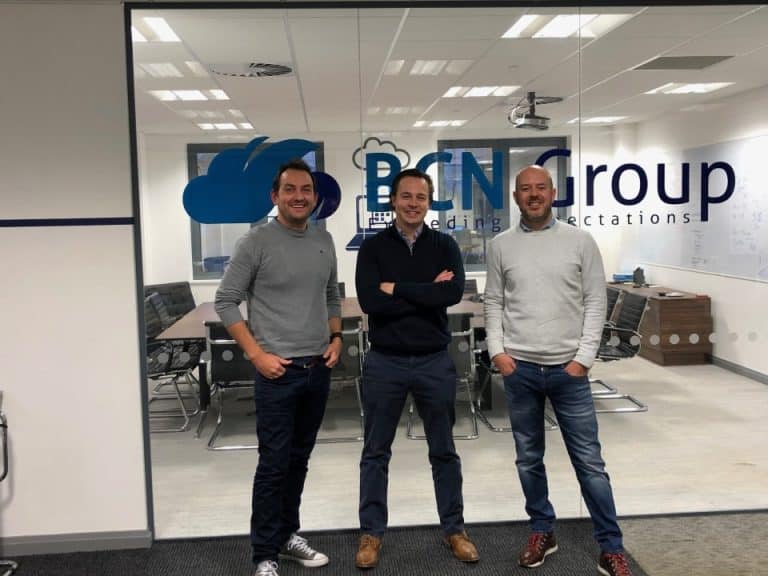
BCN Group, an IT managed services and digital transformation company, has seen reported turnover increase 110% year on year in FY19/20.

The substantial growth saw turnover more than double from £11.3m in FY18/19 to £23.8m in FY19/20, with the impressive trajectory set to continue for FY20/21 with an expected turnover of £30m+.

While growth was enjoyed across the business, BCN Group’s “as a service” division posted the biggest increase with recurring revenue up 29% year on year.

Growth was driven by onboarding 64 new clients during the 12-month period, with BCN Group now providing services to more than 1,000 organisations and supporting more than 30,000 users in the UK.

The results include BCN Group’s acquisition of Polymorph Ltd in February and also reflects the first full year of contributions from its acquisition of Leeds-based Blue Logic in 2019.

Simon Kelf, CEO of BCN Group, said: “It has been an incredible year for BCN Group that has included a major acquisition and the onboarding of more than 60 new clients.

“We have ambitious growth plans and are delivering on these plans faster and more effectively than we could ever have wished for and are delighted with the growth we are seeing.

“Ultimately this is driven by our market-leading product and service offering, and the incredible talents and skills of our growing team of specialists and experts.

“While it has been a tough start to the current financial year, we have continued to grow rapidly since March and have been working more closely than ever before with our 1,000+ customers.

“This has not only helped them survive Covid and prepare for the “new normal” but it has put BCN Group in the driving seat to reach and surpass its own targets once again.

“I’d like to thank each and every member of the team for their dedication and passion, and to our partners for continuing to take advantage of our best in class product and service offering.”

Other highlights from the year include seven key appointments across technical, support and business development including Rob Davies joining as Group Sales and Marketing Director who has a wealth of knowledge and experience in Cloud Services.

BCN is now undertaking a further recruitment drive with fourteen roles open across finance, operations, project management, technical, support and business development.

To accommodate its growing workforce, BCN Group will move into new headquarters at the Manchester Green Business Park in September and also has offices in Leeds, Runcorn and Chorley.

Manchester Data Centre Reports Record Growth

0

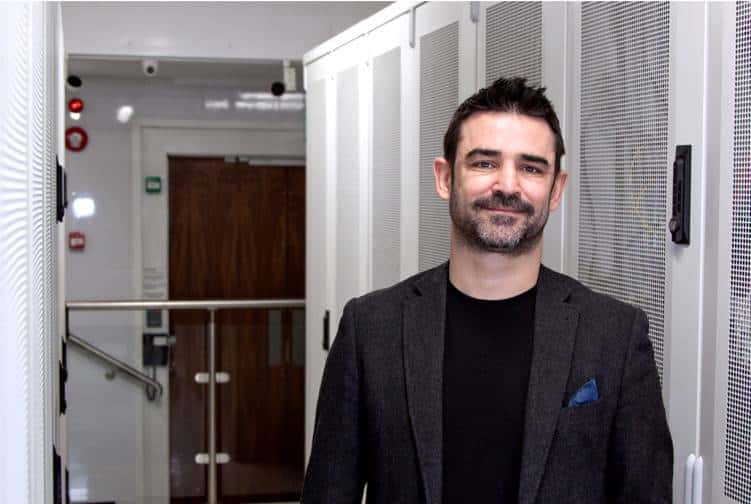
Manchester data centre operator, TeleData, has reported 28% growth in recurring contract revenues during the first half of 2020, setting the firm on track to hit record revenues this year.

This has seen the company’s well established colocation services increase by 15%, while cloud revenue from both public and private cloud hosting solutions has grown 48%. The firm, which was traditionally a colocation provider but evolved to provide both colocation and cloud services in 2019, says that its cloud platform revenue now represents 16% of total recurring contract revenues.

The announcement comes on the back of a period of significant investment for the Wythenshawe based firm, which recently began work on a £2 Million expansion project which will increase the company’s data centre footprint by 7000ft2 and bring up to 200 server racks online to enhance their colocation offering.

TeleData also invested over £1.8 Million into resilience, energy efficiencies and cloud product development during 2019, expanding the business’s product portfolio and strengthening its proposition as a serious player in the data centre hosting and cloud services sector.

These investments are attracting not only new customers to TeleData, but also additional fibre providers which are investing heavily into the expansion of their own networks to deliver diverse solutions to network intensive clients hosted at the carrier neutral facility. This is increasing high capacity connectivity and dark fibre options for TeleData’s customers, boosting the company’s service offering and enabling TeleData to provide consistently resilient and competitive options for both cloud and colocation clients.

Commercial Director Matthew Edgley said: “It’s been positive to see that despite the many challenges 2020 has brought, our earlier investments into connectivity and capacity are starting to reap dividends. Covid19 brought significant hardship to a great many businesses, but as a result digital transformation has accelerated, driving the market forward as companies realise the benefits of a resilient, agile and scalable IT infrastructure.

“It’s our job now to continue to provide robust and reliable solutions for our clients, making additional investments into capacity and emerging technologies where required, to enable our customers to continue to run their businesses with peace of mind that their IT infrastructures are secure and business continuity is guaranteed.”

TeleData, which reported 40% growth in its cloud computing platform back in May, was also listed in this year’s GP Bullhound Northern Tech Awards Top 100 Fastest Growing technology companies and is Manchester’s only premium, independently owned data centre.

Founded in 2007, the firm provides colocation, cloud hosting, workplace recovery and data centre services to businesses across the UK.