7.8 C
Manchester
Friday, May 8, 2026
Home Blog Page 369

Always thinking ahead: In Conversation with ISM Waste

Peter Allen, Director of Bury-based waste management firm ISM Waste, shares his thoughts about the future of waste and how ISM has always kept ahead of the environmental agenda.

Founded back in 1965 by Peter’s parents with reputedly £9 to their name, ISM Waste has developed from a small scrap metal operation into a leading regional waste management and recycling company that employs 45 people.

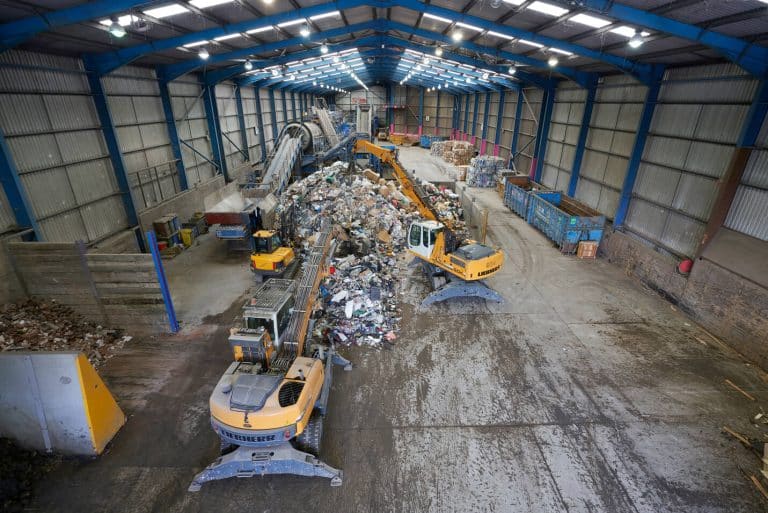
Thanks to state-of-the-art facilities following a multi-million-pound investment, ISM recycles 90% of all the waste it collects. The remaining waste is transformed into refuse-derived fuel (RDF) to be recovered in waste-to-energy plants.

The company has been working closely with Environmental Business Advisor Rebecca Chedd to maximise the energy efficiency of its site, which already incorporates a rooftop solar PV system. In 2020, ISM received an Energy Efficiency Grant towards the cost of upgrading lighting across its site to LEDs, achieving annual cost saving of over £13,700.

ISM was founded over half a century ago. When did recycling and sustainability become a key part of the business?

It’s been there in one form or another right from the beginning. When my dad set the business up, he was effectively dismantling old machinery from the industrial mills that were being decommissioned around Lancashire. He passed on what he could recover to scrap metal smelters and foundries over in Sheffield. We now call this ‘recycling’, but back then that word didn’t even exist!

As the business grew, my parents spotted an opportunity to move into general waste as well. Before long, they realised that this waste, like the scrap metal, wasn’t just waste – it was made up of materials of varying value that could be extracted. So in the late 1970s we moved to the site we still have today and began focusing on materials recycling, which was a very bold move at the time because landfill was so cheap.

Mum and dad could see what was coming. In 1996, the government introduced the Landfill Tax. Despite being a slow burner at first, the cost of landfilling gradually rose from around £7 a tonne to the £96.70 it is today. So we were ahead of the game.

How does the business operate today?

In 2000, we began significantly expanding our facilities after recognising that we needed to up our game even more. We invested around £5 million to create a fully mechanised plant that could capture more recycling and prepare the rest to be recovered as energy.

I describe it as a ‘waste transformation factory’ – we take a raw ingredient in the form of waste that would otherwise go to landfill and turn it into a useable commodity.

What measures have you taken to improve the environmental impact of your operations?

We installed solar PV on our rooftop in 2015 which generates a comparable amount of energy to our electrical use on-site, so in effect our electricity usage is carbon neutral with any excess generation going back onto the national grid as green energy. It’s all cleaver stuff and a smarter way of working.


More recently, we’ve had the benefit of the Growth Hub’s input to change all our lighting to LEDs, which turned out to be a really good energy reduction project thanks to the grant we received.

We’ve also taken action to reduce diesel emissions from our trucks. We discovered many years ago that our trucks spent quite a lot of time idling on customer sites. So we spoke to Volvo, who installed technology that cut the ignition after a given period of time. That alone saved us around £25,000 a year in fuel, and we’re still enjoying that saving today. Start-stop technology is normal nowadays, but it’s another example where we were ahead of the game before the millennium beckoned.

We’re also passionate about reusing waste wherever we can. Several years before we built our new facility, a local customer told me they had thousands of Teflon coated solid wood panels that they needed to recycle. I knew I was going to need wall protection in the new site, so I asked the business to hold onto them. When the time came, we designed a solution to bolt the panels together to create interlocking wall protectors that we use all the way around the inside of our building. That saved us at least £25,000 in concrete costs. So it’s not just about recycling; we’re always looking to reuse resources when we can.

How are you responding to Greater Manchester’s forthcoming Clean Air Zone? 

We identified three years ago that we needed to invest in upgrading our fleet ahead of air quality requirements being brought in. It’s going to cost us around £1.5 million to bring our trucks up to the required emissions standard, but it’s the right thing to do and the penalty of not doing so would be significant.

We’ve had new trucks on order for the last two or three years and only received the first one recently, which just shows you always need to be thinking ahead. If you’re not in early, you’re going to be behind the queue, and that goes for the environmental agenda in general.

What other environmental improvements are you exploring next?

The tax increase for red diesel is going to add considerable costs to our business, so in the long-term we are looking at options to electrify our plant. The next step for us is to expand our solar array, which is something we’re exploring with Rebecca at the Hub.

The work is never done; there is always something new to look at, like whether we’re wasting energy on compressed air. Again, we benefitted from the Hub on that with a compressed air leak survey. I’m also keen to explore rainwater harvesting on our roof for washing our trucks.

How useful has the Hub’s support been?

Rebecca has been absolutely fantastic. The support we received in calculating the energy and carbon reduction of the LED lighting investment and what it would mean in real terms, as well as the grant funding, really put the case forward. Without the Hub, we wouldn’t have got that over the line.

We’re certainly not finished there. I’m looking forward to speaking to Rebecca about expanding our solar, electrifying our plant and looking at our carbon footprint. We have to rely on expert help from the likes of Rebecca and her connections to decide what the best options are.

There’s a wealth of knowledge and connections to call upon. You could do a hell of a lot worse than picking the phone up and having a chat with Rebecca about what you are thinking of doing.


The waste industry faces a lot of challenges as we transition to a sustainable, zero carbon economy. What will we have to respond to over the coming years?

It’s quite clear to me that waste producers and the waste industry have to change. Increasingly, we’re going to see that waste producers and their suppliers will have to make sure they’re not using materials in a way that prevents reuse or recycling.

Take laminated plastics. We cannot recycle a product that is made of two different plastics stuck onto each other. We’ve got to overcome these challenges in society to ensure that materials can all go back into the system. We have to start seeing waste as a resource.

No business can afford to be a commercial dinosaur; everybody has got to play a part. If you don’t, you’re going to be penalised for it. I’d like to think we are playing a part in that shift with our humble efforts here in Ramsbottom. I try to see things that are coming, like my parents did, and promote that mindset to our customers. When we all start thinking like that, we’re getting into a better place.


This article was first published on the GC Business Growth Hub website. GC Business Growth Hub is part-financed by the European Regional Development Fund (ERDF) as part of a project designed to help ambitious SME businesses achieve growth and increase employment in Greater Manchester. The Hub is also supported by the Greater Manchester Combined Authority and Greater Manchester local authorities.

 

Four Ways That Your Business Can Save Time This Summer


If there’s one thing that no business has enough of, it’s time. The pandemic pushed us all to our breaking points in every imaginable way. We struggled to make our budgets stretch to get us through to the end of each month. We had to find a way to accommodate our employees when they needed to take time away from work. We had to figure out how we were going to juggle our personal responsibilities with our professional ones. At certain points we had to learn how we were going to work from home while home-schooling our kids. It’s been a long stretch of gritting our teeth and looking for ways to keep moving forward.


Now that we have a few more reasons to be cheerful and we’re starting to think more positively about our futures, we still need to look for ways that we can make our businesses more agile. There is no telling what the future will hold, and we all need to be using this period of greater breathing room to think carefully about how we can be more resilient in future. Creating more time for your business will stand you in good stead for whatever is coming on the horizon, and here are just a few of the ways that you can take back control of your days.


Start By Getting Organised

It doesn’t matter what business you’re in. If you are looking for ways to improve your timekeeping, you need to start by getting organised. Create a schedule for each day and look for those tasks that have turned into drains on your time. Look at what each employee and colleague is doing with their day and ask them to create a schedule of their own. Look for opportunities to share tasks and look to see if there is any way that you can lighten the load for yourself or anyone else. Once you have a crystal-clear idea of how everyone is spending their days, you can start improving efficiency.


Make Sure Everyone Is Communicating

Maintaining open lines of communication has been one of the biggest challenges for all businesses during the course of the pandemic. Once everyone started working from home, we became increasingly reliant on unreliable ways of checking in. We spent a lot of time merely hoping that everyone was getting on with their tasks because the alternative was to spend the whole time worrying.


If you want to make sure that everyone is using their time as productively as possible, you need to find the happy medium between leaving your employees to get on with their work and making sure that they are actually doing so. You don’t want to be hovering over their shoulders all the time, but you also need to know that the work is getting done. Start by establishing communication channels for each of your employees and set regular check in times. Ask for status updates at regular intervals.


Invest In Software That Saves You Time

Saving time doesn’t just have to be eating lunch at your desk. Over the last few years, we’re seeing the amazing results that have come from businesses utilising software to cut out a lot of time-consuming tasks. A new platform can help you with your HR management, making it easier for employees to register things like absence and sick days and leaving the HR team with more time to deal with the more important issues.


It can streamline your employee performance management, offering real time performance feedback and logging achievements met for quarterly employee reviews. It can also, as we mentioned in the point above, help you to establish clear and open lines of communication between management and employees to ensure that tasks are being completed on time and that progress is visible to everyone. If you want to make this investment, StaffCircle can work with you to customise their multi-layered platform to help your business be more efficient and stay focused on the big picture.


Trust Your Employees To Know What They’re Doing

As we mentioned earlier, there is a fine line between making sure that your teams are getting everything done and getting so involved in their workdays that they actually start falling behind. A common mistake that a lot of businesses made in the early days of lockdown was that they overcompensated for the lack of in-office communication. It was driven by panic, and that’s how you end up with an hour-long check-in meeting in the morning, an hour-long wrap-up meeting in the evening, and several video calls throughout the day to confirm that what was talked about in the morning meeting was getting done.


Now that UK restrictions are lifting, a lot of businesses are thinking of returning to the office in the near future. Many others will continue to work remotely. Either way, one of the best ways that you can improve your efficiency is to think carefully about how much time you need to spend talking to your teams, and how much time would be gained by letting them do their jobs.

Eight Tips to Prevent Workplace Injuries

It’s written into UK law that all employers have a responsibility for their staff’s health and safety. If they fail in that duty, their employees risk suffering serious injury, illness and in some cases even death.

The consequences can be devastating – both for the victim and for the company – so it’s vital that businesses do everything in their power to protect the physical and mental wellbeing of their people. But just how common are workplace injuries, and how can we prevent them?


How common are workplace injuries?

Data from the Health and Safety Executive reveals that in Great Britain in 2019-20 there were 700,000 non-fatal and 111 fatal injuries suffered by workers. Below, we’ve put together eight tips that can help to mitigate against these risks.


Introduce a safety and wellness plan

All employees should have access to a plan that outlines the company’s safety protocols and offers tips and guidance on how staff will be supported if they are struggling physically, emotionally or mentally.

Educate employees

Staff at all levels – including those in management – should be put through mandatory training courses about the various workplace hazards, how to identify them and what can be done in response. These courses should be regularly refreshed so that all employees are kept up to date with any new requirements or legislative changes.

Research areas of risk

Businesses should take the time to analyse the most common risks in their industry – whether it be trips and falls, burnout or anything else. Understanding what is most likely to affect their workforce will help them to prevent those problems arising.

Provide proper equipment

This will vary depending on the sector and the nature of the job. For example, those working with electrical circuits will need lockouts to protect themselves from shock, while those operating on busy construction sites will require various PPE such as high-visibility clothing, hard hats, gloves and goggles.

Deploy adequate staffing levels

There should always be enough employees on hand to take care of any tasks. For example in factory or warehouse settings where heavy lifting may be involved, it’s imperative that multiple staff are on hand to prevent one individual undertaking too much on their own.


Don’t take shortcuts

It can be tempting to cut corners in an attempt to reduce costs, but if such an approach results in an injury to a member of staff then the consequences can be far more serious.

Monitor safety measures

Risk assessments and safety protocols should be regularly reassessed to ensure that the measures being deployed remain effective. If neglected over an extended period, businesses may find that the processes previously put in place can no longer guarantee the wellbeing of staff.

Maintain an orderly workplace

The likes of loose cables, spillages and faulty air conditioning units should all be dealt with immediately, while staff should be encouraged to maintain a tidy desk policy to further reduce the risk of any hazards – both to themselves and to others.

Beware the Gap – Post-Brexit Trade Deals and What This Means for the GBP


If you’re someone who tends to read article headlines rather than their detail, you will have been impressed to see the UK strike trade agreements in principle with India and Australia so far in 2021.

In particular, the proposed agreement with Australia has been celebrated as a huge success,  after five years of tentative discussions following the Brexit referendum vote in June 2016.

However, there are significant questions about the true content and impact of these trade deals. So, are they what they seem and what exactly do they mean for the GBP?


The Deals Struck so Far


A number of trade agreements have been confirmed so far since the UK’s formal exit from the EU, although it should be said that many of these represent a continuation of the terms agreed as part of the single bloc.


Even the Indian trade deal has simply looked to remove selected tariffs (on both imports and exports) and build on the existing £23 billion trade between the two nations, although the recently confirmed partnership has proposed to double the value of UK-India trade by the year 2030.


The recent trade deal with Australia appears to be a far more comprehensive deal, while it’s certainly significant for its historic symbolism. Currently an Agreement in Principle that comprises more than 1,200 pages, it’s expected to be finalised shortly before being rolled out in 2022.


While the UK has been reluctant to release full details of the agreement, it has been confirmed that tariffs will be removed on up to £4.3 billion worth of UK exports, with all tariffs on cars and whisky to be eliminated immediately.


Similarly, the deal will liberalise Australian imports into the UK, with 99% of Aussie goods including Australian wine entering the region duty free from 2022 onwards.


In ten years time, it’s thought that all tariffs on Australian beef and sheep meat (which is central to the commodity-driven Aussie economy) will be removed completely within 10 years. This is perhaps the single biggest headline to emerge from the agreement, and one that has caused some initial debate amongst economists.


Are These Deals Good News for the Economy?


So far, the news of the deal has yet to impact the British pound positively, with the MT4 platform reporting a sustained decline in the value of the GBP/USD and the depreciation of the pound against the Aussie dollar.


While this trend is being underpinned by the relative strength of the dollar and a new wave of Covid-19 infections in the UK, some have also argued that it has more to do with the actual detail of the trade deal struck with Australia.


Certainly, initial analysis of the deal has suggested that this represents a significant win for Australia rather than the UK, while Aussie consumers will also benefit from cheaper products almost immediately.


From an economic perspective, it may not even deliver the 0.02% boost to UK GDP that was forecast before the final deal was struck, with some suggesting that the true financial impact could be closer to zero.


Not only this, but the future influx of tariff-free agricultural produce into the UK could decimate the farming industry on these shores, while lowering food standards and taking another slice out of the national GDP.


This has yet to be seen, of course, but there’s no doubt that this and similar post-Brexit trade deals may not necessarily be as impressive as the government is currently suggesting.


Forever Manchester celebrates 5th anniversary of the Auto Trader Community Fund

0

Forever Manchester are celebrating the 5th anniversary of the Auto Trader Community Fund at Forever Manchester that provides support for a wide range of volunteer-led community projects across Greater Manchester.
In 2016, Auto Trader decided to demonstrate a commitment to supporting its staff and the wider community by working with Forever Manchester to “make a difference” in their local community.

The results have seen a team of Auto Trader colleagues meet on a regular basis to consider a range of funding applications while enjoying the benefits of supporting local projects. They have occasionally visited, volunteered and even made films with some of the groups to capture the impact of their support of some of the amazing work that goes on in our communities.

As a result, the Auto Trader Community Fund has supported some great groups and achieved some fantastic results with awards of £256,428 delivered to support 276 projects and benefitting 118,271 people

The social investment from Auto Trader delivers meaningful social impact to a wide range of grassroot community projects. These range from support for Reach Out to the Community who assists homeless and rough sleepers to access help, Can-Survive, a cancer support group for Black, Asian and other ethnically diverse communities, Forget Me Not Buddies who support those living with dementia, Wythenshawe Good Neighbours scheme and Cycling without Age amongst many receiving funding awards.

The team at Auto Trader also regularly participate in Forever Manchester fundraising events such as running the Great Manchester 10k, taking part in our spooky Halloween quiz, holding delicious cake bakes, undertaking speaking engagements for each other and supporting sponsorship opportunities.

Featured in the above photo are Auto Trader’s Helen Robinson (Diversity, Inclusion and Community Engagement Manager) alongside Christos Tsaprounis, Head of People and Culture who said:

“Our business purpose it to Drive Change Together, Responsibly and our community strategy is led by our passionate colleagues. Our partnership with Forever Manchester has provided us with the opportunity to connect with grassroot projects and support their incredible work. Every time we review the funding applications we are always amazed with the determination, creativity and community spirit that shines across Greater Manchester”


Four surprising facts about vinyl banner advertising


The marketing industry has been heavily digitalised, and traditional techniques are often forgotten. However, tangible marketing materials like banners, posters and business cards are still effective and much more affordable than the digital route. Vinyl banners are an excellent way to catch attention and advertise your business without blowing your budget.


Here are some surprising facts about vinyl banners and how you can use them for marketing your business.


They are cost effective

You can order vinyl banners in bulk and use them for different events, stores and locations. You can often get a discount on bulk orders to save yourself a few pennies and make sure you have backups if one gets damaged. Vinyl banners are also cheaper than most signage formats – making them perfect for those just starting up in the business world and for local independent businesses.


Great for reoccurring events

Vinyl banners can be stored easily and used for different events. They look professional and attractive to potential customers with the right design and layout.


They can be heavily customised

Vinyl banners are customisable so you can choose the graphics, layout, colours, and size. You can make your banner as straightforward or as busy as you like. Some businesses opt for a simple design to catch the consumer’s attention without overwhelming them. In comparison, others opt for a colourful banner to stand out against the crowd at networking events.

Your marketing materials should feature the same colour palette of up to three tones from your brand style, a logo, contact information and a summary of what your company is about. You need to create a sense of brand cohesion and a strong visual identity so that consumers will remember you. Make sure these colours are used in your vinyl banner and that you include the necessary information.


Brand recognition is an essential part of any business. Make sure you customise your banner with the needs of your company in mind. You could even include a hint of the company values in the banner, such as using a green shade to represent your interest in eco-friendly practices.


You should also consider where the information is placed on the banner. The most important information, like your brand name and social media handle, should be clear and bold. Your brand description, event details, and contact details should also stand out amongst the banner’s colour and graphics. Make sure everything is clear and legible.


They are extremely durable

You don’t need to worry about the weather conditions with a vinyl banner. They can withstand extended periods outside as they are made from highly durable materials. They are also lightweight and easy to transport around.

Invest in some branded vinyl banners to market your business with flair this year!

MANCHESTER BASED HAIR EXTENSION RETAILER REVEALS US EXPANSION

0

Manchester based hair extension retailer reveals plans to expand into US market
Expansion comes after a record year in 2020, despite the pandemic
Independently owned business by 31-year-old entrepreneur, Laura Smith

Manchester based online hair extension retailer, LullaBellz, reveals plans to launch into the US market. With its core customer base situated in the UK, France and Germany, this will be the company’s first international expansion outside of Europe.

The multi-million pound business specialises in synthetic and human clip-in hair extensions, providing its customers with quick and easy transformations. As one of the market leaders for 6 years, LullaBellz continues to see growth, recording a 48% increase in turnover in 2020.

Founded by 31-year-old entrepreneur, Laura Smith, LullaBellz has gone from strength to strength. Starting in a small university bedroom, LullaBellz now has marketing, product and operations teams across two sites. Stocked on major retailers Prettylittlething.com, Misguided, ASOS and BooHoo.com, LullaBellz shows no signs of slowing down.

When asked about the expansion, Laura said: “The US has always been a source of inspiration for LullaBellz. Our recent business trips to LA shooting our summer campaigns confirmed the thirst from the US consumer. Seeking affordable yet premium quality, we provide quick and easy solutions for women wanting to change their look to follow the latest celebrity and influencer hair trends.

“LullaBellz has a strong positioning to stand out amongst the current US hair extension market. We currently have a wealth of social media influencers with audiences in California and Florida, and have seen strong sales organically coming from the US, so we know there’s a desire for LullaBellz products that can be taken to the next level.”

Laura added: “We pride ourselves on delivering the latest hair fashion trends to customers quicker than the rest, our new drop launching later this month is an example of this.”

LullaBellz focuses primarily on influencer marketing, digital advertorial and social media marketing, with a combined social audience of just under one million.

With plans to follow a similar strategy in the US, Marketing Manager, Steph Linton claims the last three campaigns shot in LA will help further tap into the market through content in line with the LA and Miami market.

Steph added: “Despite the pandemic we have continued to grow successfully, and I’m looking forward to seeing how the US market will respond to the brand.”

Lean, Six Sigma and Leadership courses re-launching at TMI

The Manufacturing Institute (TMI), one of GC Business Growth Hub’s sister organisations, is restarting its popular range of training courses for manufacturers in September.  

Part of the Growth Company group alongside GC Business Growth Hub, TMI offers high-impact training and development courses to help UK manufacturers gain the skills and knowledge they need to overcome challenges and increase their competitiveness in the 21st century.

Having paused its face-to-face training courses during the COVID-19 pandemic, a number of popular programmes are restarting again from September, along with TMI’s successful online bootcamps.

Adrian Healey, Head of Business Development at TMI, said:“Now is a particularly good time for manufacturers to look at upskilling their staff as we build back from COVID-19. Jobs are being created again, and new people coming into businesses is a good opportunity to embed Lean, Six Sigma, and manufacturing leadership skills as part of the induction or training process.

“Our twice-yearly face-to-face courses haven’t been running during the pandemic, so now is the perfect time to get booked in as they restart in September. Many of our courses will also continue to be available in a virtual format.”

Accelerated Route to Lean Manufacturing (Starting September 2021)

A 10-week course designed for managers responsible for productivity and performance. Delegates spend one day a week away from work, taking part in a range of sessions covering:

The core principles of lean manufacturing
A visit to a world-class manufacturing site
Creating tangible and sustainable benefits from efficient procedures
Transferring skills within their organisation to improve practices across the board
Understanding links between culture change and continuous improvement
Increasing standing with suppliers and customers by attaining a Lean Manufacturing Fellowship.


“[Our team] found six or seven things that saved us between £30-40k straight away.”

Alistair Toward, ACDC Lighting


Six Sigma Yellow, Green and Black Belt (Starting September/October 2021)

A range of tailored courses designed to help delegates achieve practical, real-world application of the renowned Six Sigma methodology first coined by Motorola in the 1980s. The courses are split across three certification levels:

Yellow Belt: A 2-day introduction to Six Sigma that covers the basic tools of variation reduction, problem-solving and quality improvement. Suitable for anyone looking to gain a base understanding of the Six Sigma process and increasing the efficiency of their operations.
Green Belt: A 10-day practical course for those wishing to lead successful Six Sigma project teams. Delegates will gain the skills to apply sophisticated improvement tools, change behaviours and transform business performance, typically generating savings of £25,000-250,000 through the projects they implement.
Black Belt: Delivered over six full days for those looking to reach expert practitioner level. Delegates will be able to apply advanced problem-solving techniques and facilitate workshops, lead teams and train others in the Six Sigma process.

“Very good at showing you how to look at data to see how you are going wrong, and how you can interpret it, make improvements and fix processes.”

Lee Maddock, Nutricia

Leadership Development Programme (Starting October/November 2021)

An 8-day programme to transform first line managers into confident leaders through a combination of lean manufacturing techniques and interpersonal skills. Delegates will gain:

Effective skills for managing and motivating people
Lean manufacturing basics and other improvement techniques
Communication and influencing skills
Performance measurement and time management expertise
Knowledge of employment law and health & safety.


“The Leadership Development Programme has pushed me on in my career. I now manage production meetings, capacity meetings and have a lot more confidence than I used to.”

Paul Cresswell, James Briggs Ltd

MSc Manufacturing Leadership (Starting January 2022)

An elite Master’s degree designed for current and future business leaders looking to gain the essential knowledge needed to develop a world-class manufacturing business. The course is delivered virtually through six modules and a dissertation over a 33-month period. Graduates will:

Develop a multi-disciplinary approach to manufacturing enterprise management
Introduce world-class manufacturing principles and leading-edge thinking from companies such as Jaguar Land Rover, BAE Systems and Rolls-Royce into their business
Implement seven in-house business improvement projects
Gain a deep and comprehensive understanding of supply chain and internal process management.

Self Study Online Lean Practitioner (Start Now)

A self-paced study programme for those wanting to acquire knowledge of lean principles. Delegates can start and finish as they choose and build their own manual tailored to their organisation.

Priced at £500+VAT, this course is particularly popular with smaller manufacturers. Adrian explained:

“The self study practitioner course has proven very popular with SME manufacturers. It’s an online course you can start whenever you like which bridges the gap between our four main programmes, and it dovetails nicely with the fully funded support available to SMEs in Greater Manchester from the Hub’s Manufacturing Service.”

For further information on all of the courses available through TMI, visit www.manufacturinginstitute.co.uk.

AGENT ACADEMY TO CREATE GREATER MANCHESTER’S NEXT GENERATION OF CREATIVE AND DIGITAL TALENT

Agent Academy, an award-winning social enterprise that provides industry-designed training for people to enter the creative and digital industry, is launching a brand-new programme in Greater Manchester.

Established in 2014 in the Liverpool City Region, Agent Academy, the sister social enterprise of full-service brand and communications agency, Agent, has helped create over 200 long term jobs for the sector. Theorganisation has generated £15 million in accumulative salaries, helping young people to secure sustainable careers in the creative and digital industry, and supporting businesses to find talent. Previous graduates ofAgent Academy’s training programme have gone on to work for household brands, including Sony Music,LFC Foundation, BBC, JD Sports and Just Eat.

Launching in September, the new programme has been designed in direct response to the demand in Greater Manchester for talent in the creative and digital industry, complementing other programmes thatalready exist in the city region.

The free programme will follow an industry-designed curriculum, giving learners the opportunity to meet withpotential employers and industry leaders from across the region, work on real projects, receive mentoring anddevelop their skills.

Through its programmes, Agent Academy is committed to ensuring all young people are given the opportunity to succeed, ensuring that regardless of postcode, education or background, their place in the industry isfound.

Zoe Wallace, Director at Agent Academy, said:

“The success that we’ve seen so far is due to the fact that Agent Academy really does bring together the very best of business and ambitious, talented young people. Through our programme, which runs for two days a week over a 12-week period, we’ve been able to demonstrate how effective the Agent Academy model is, generating hundreds of meaningful jobs in the creative and digital industry.

“In order for the North to level up, we need to make sure that everyone who wants to, has the opportunity to access great career prospects in this important industry. We want to play our role in making this a reality.

“We can’t wait to make our mark in Greater Manchester and encourage universities, colleges, businesses and social enterprises who are passionate about creating opportunities for all young people, to join us on ourmission.

Councillor Andrew Western, GMCA, Lead for Digital, Work & Skills, said:

“We have a growing creative and digital industry in Greater Manchester, and we need a diverse and future-proofed digital talent pipeline to ensure the sector continues to flourish. Programmes such as those ran by Agent Academy are vital in helping learners from all backgrounds secure jobs in these sectors.

“This programme forms part of Greater Manchester’s Local Industrial Strategy, which sets out a number of measures to support business, good employment and sector strengths in the city-region. We have a thriving digital skills ecosystem in Greater Manchester and have made significant investments in recent years, including £5m into digital retraining and bootcamp opportunities.”

Henri Murison, Director of the Norther Powerhouse Partnerships, said:

“It’s vital to recognise the economic importance of the creative and digital industry to the Northern Powerhouse.

“As we come out of the pandemic, we need to make sure we’re equipping young people with the skills they need to find well-paid, productive jobs. This is critical to closing the productivity gap at the root of the North-South divide.”

If you are under 30 and want to apply or find out more about the programme, or if you’re an organisation inGreater Manchester committed to supporting young people, visit www.agentacademy.org.uk, or emailinfo@agentacademy.org.uk.

Applications for the programme and will close on August 20th 2021.

How the North West can make the most of the government’s ‘levelling up’ agenda

Hazel Jones Manchester Market Principal and Head of Health at Made Tech 261x300 1

Hazel Jones, Manchester Market Principle, Made Tech

Made Tech Logo 300x37 1


Devolution and regional investment are subjects that have come centre stage in 2021 and will be a topic of keen interest going forward, in the North West and beyond.


In March, the government announced a series of policies in its Spring Budget in order to address regional inequality and the centralisation of services. These included the ‘Levelling Up Fund’, which will see £4.6bn invested in infrastructure, regenerating town centres, upgrading local transport, and investing in cultural and heritage assets, as well as the Towns Funds, where £1bn will be divided between 45 regions to help them ‘level up’ and aid their recovery from the pandemic.


Another part of the government’s strategy appears to be establishing more public bodies away from London. We have seen this with the announcement of new departments like the National Infrastructure Bank being established in Leeds, while the Ministry of Housing, Communities and Local Government, an established public body, is being relocated to Wolverhampton.


With the government looking to diversify the locations of public sector organisations, combined with increased investment, this could provide a huge opportunity to the North West.


Attracting public sector organisations to the region will bring a wide range of benefits. These bodies require large amounts of staff in order to function and implement policies and, while some staff will relocate, they will bring with them a diverse range of job opportunities for people in the region.


At the same time, the opportunity to secure public sector contracts will encourage private businesses to follow these bodies to new locations, again bringing with them employment opportunities and finances into the region. Made Tech is a good example of this. We have offices across the country, including in Manchester, so we can work with public sector organisations around the UK. This means we are able to provide a range of jobs to the North West and also invest in the local economy.


With the benefits laid out, the question for the North West is what needs to be done to encourage more public sector organisations to come to the region? Firstly, having the right infrastructure, especially digital infrastructure, is key. In many ways public sector bodies are just like private business and, as such, they need access to high-level services such as ultra fast broadband and widely available network service. Councils in the region need to be looking at where their digital capabilities are weak and investing in solutions that will bring them up to scratch, which will then encourage public bodies, as well as other businesses, to consider their town or city as a potential hub.


Third party expertise can be a valuable tool in this process. Partners with technological expertise can help local councils and authorities through providing services such as digital discoveries, identifying where weaknesses lie and providing the right solutions to bring them up to standard.


However, it is not just down to local authorities to attract these organisations, businesses in the region need to get involved as well. While in time they will attract firms to a region, public bodies need to be confident they are coming to an area where there are already  companies who can support them when they need services. This means that businesses need to ensure they can offer support and have the highly trained staff to do so. Public/private collaboration can again help in this through working to develop and provide the right training to people in the North West so they gain the necessary skills to be able to meet the needs of public sector organisations.


Addressing regional inequalities has been needed for some time and it is good to see the Government trying to address this with investment and the devolution of services. If the North West wants to make the most of this opportunity, local councils and businesses need to work together to ensure the infrastructure and skills are in place to provide a suitable home to these public bodies, creating a bright future for the region in the process.


Made Tech Logo 300x37 1