17.1 C
Manchester
Wednesday, April 29, 2026
Home Blog Page 521

Russell Homes secures planning in Oldham

0

Russell Homes has secured outline planning approval for a new 265-home scheme in Lees, Oldham. Full planning permission has also been granted for a £3.5million link road between Knowls Lane and Ashbrook Road as part of the hybrid application.

The 39-acre site at Knowls Lane has been allocated for housing since 2006 under Oldham’s local plan. Delivery of the new link road to ease congestion for the town – a long-held ambition for the local authority – will be one of the benefits of the new development.

Planning and design support for Russell Homes was provided by Barton Wilmore and IBI Group. Procurement and construction of the road will be managed by Russell Homes’ sister company Russells Construction, and is expected to begin in January 2020.

A detailed planning submission is due to be submitted in early 2020 which will outline the housing mix, of which around 60 homes – 23 per cent – will be affordable. Subject to permission and conditions, construction would begin later that year.

A site of just under an acre to the south east of the site will be transferred to the adjacent St Agnes CE Primary School to allow for any future expansion of the school. The development will also incorporate an area of enhanced public open space and a children’s play area.

Daniel Kershaw, Russell Homes director, said: “This development will provide a much needed supply of new homes for the area, helping many local families get onto the property ladder for the first time. There will be a mix of sizes and styles to cater for a variety of requirements from people wanting to move up, and we will be working with a housing association to provide a mixture of tenures including homes for rent and shared ownership.

“The development will also unlock funding for the link road, which has long been an ambition of the local authority and will serve to ease pressure on the town centre. This scheme will deliver that amenity at no cost to the taxpayer.”

The approval adds to the Russell Homes’ upcoming pipeline which also includes a 96-home scheme at Littlebrough in Rochdale. Construction of Stubley Meadows off New Lane is due to start on site later this year with homes released for sale towards the end of 2020.

Russell Homes is currently on site with four North West housing developments delivering a total of 300 properties: Saltersford Gardens in Holmes Chapel; Cedar Gardens in Heywood; Greenbooth Village in Norden; and Bower Brook Gardens 2 in Widnes, which is a joint venture with Halton Housing.

Daniel Kershaw added: “We’re very pleased to be bringing forward two new Russell Homes sites at Littleborough and now Lees, to add to our current developments in Rochdale and Cheshire.

“The business is building for the future, putting together the right team to help us to deliver high quality new build homes in locations people really want to live, and we are always looking for new development opportunities right across the North West.”

Equitus Engineering founder delivers Industry 4.0 talk at manufacturing event

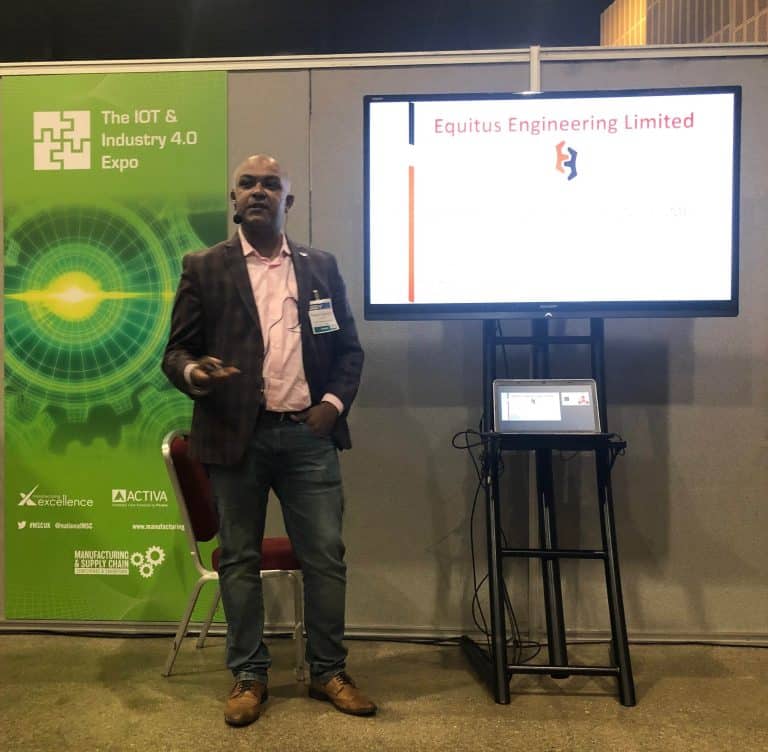
Raam Shanker, the founder of Greater Manchester-based, Equitus Engineering, has delivered a thought-leading talk on Industry 4.0, at the recent Manufacturing & Supply Chain Conference & Exhibition.

Taking place at the Arena MK, Milton Keynes, the Manufacturing & Supply Chain Conference & Exhibition showcased the latest manufacturing and supply chain innovations and developments, as well as welcoming industry leaders from across Europe.

During his presentation, Raam articulated how SMEs can benefit and thrive through the adoption of industry 4.0 and how to implement techniques, in an affordable and people focused way.

Equitus Engineering utilises a people-centric approach when designing, developing and investigatingengineering solutions for a range of businesses, including The European Space Agency, Autodesk ands playground equipment manufacturer, Wicksteed. The company helps SMEs cost-effectively grow and streamline manufacturing through implementation of industry 4.0 technologies and techniques.

Raam, said: “SMEs are getting a torrent of information regarding industry 4.0. Some of it negative, some of it positive, as a result, my talk provided an unbiased and case study focused approach on how industry 4.0 can help SMEs grow.

“Adopting digital technologies into the manufacturing process has helped the businesses Equitus Engineeringworks with, to streamline production and cut long-term costs. Manufacturing has progressed from steam to CNC machines and the next major development is implementing internet and digital technologies.”

The University of Manchester and Trilogy Education launch Coding Boot Camp

The University of Manchester today announced the launch of its first Coding Boot Camp in partnership with leading US workforce accelerator, Trilogy Education.

The University of Manchester is the exclusive provider of the programme based in the North West and is one of the first universities in the UK to offer the Coding Boot Camp.

Geared towards adult learners in the North West of England, The University of Manchester Coding Boot Camp is a non-degree programme that teaches the front-end and back-end skills necessary for a career in coding and web development.

The 24-week, part-time programme begins on 22 October 2019, with two three-hour evening classes during the week (6:30 to 9:30pm) and a four-hour class on Saturdays (10am to 2pm). The curriculum is strategically designed to teach people across varying proficiency levels, from absolute beginners to those with existing coding experience.

Professor Robert Stevens, Head of the School of Computer Science at The University said: “We are delighted to be offering a pioneering new style of learning here at our University, which has an unrivalled heritage in the field of Computer Science. The accessible nature of the programme brings opportunities for technical development to a new audience of adult learners across the North West region; whether they’re parents with flexible study needs, or people looking for a career change into an exciting industry.

“Our new Coding Boot Camp delivered in partnership with Trilogy Education is taught by industry professionals, with a course curriculum guided by our own academics in computer science; providing participants with high quality academic support and career coaching to help them make the transition into a technology career.”

Successful developer ‘checks in’ to Manchester with proposed hotel scheme

0

International hotel operator Meininger has announced plans to open its first hotel in the north of England, on a prominent site in Manchester city centre, which will be developed by award winning property and development company S Harrison.

The central 0.182 hectare site, which fronts onto Great Ancoats Street in the New Islington area of the city, is just a ten-minute walk from Manchester Piccadilly station. A planning application will be submitted during August, and following approval, York based S Harrison will deliver the modern, 12 storey, 212-bedroom hybrid-hotel scheme by January 2022.

The development is designed by 3D Reid, the architects behind several other hotel schemes in the city, including the Principal, Indigo and Manchester Marriott Victoria & Albert hotels.

S Harrison’s managing director, Ann Scott, said: “This is our first development in Manchester and we have worked closely with respected Manchester based planning consultants Turley, and architects 3D Reid, to bring the scheme forward. It’s expected that 21 new full time jobs will be created once the hotel is complete.

“The wider site, which continues up to Pollard Street, is already home to a 150-bedroom Ibis hotel and the striking 20,000 sq ft Grade A office, known as Fabrica. Our development will complement these existing buildings and complete the regeneration of this larger site which formerly housed two retail warehouses and car parking, and was originally the home of Caledon Cotton Mill in the 1800s.

“This area of Manchester, with its rich textile heritage, has recently undergone significant regeneration with the support of the local council, and we are delighted to bring our expertise in the hotel and leisure sector to this popular part of the city.”

The 212-bedroom Meininger hotel will have 785 beds in total, in a mix of rooms including classic doubles, private multiple-bed rooms and dormitories. A key player in the hybrid hotel market, all Meininger hotels have their own individual style and offer flexible and affordable modern accommodation alongside a reception, lobby, lounge, breakfast room and bar as well as a guest kitchen and games zone. The Manchester hotel will have a taxi drop off area, disabled parking and secure cycle store.

Last year S Harrison, which has an enviable track record for delivering high quality hotel schemes, completed a 46-bedroom Hotel du Vin in Stratford and an award winning 127-bedroom Travelodge in Lincoln. It is currently transforming two Grade A listed classic Georgian town houses, known as Buchan House, in Edinburgh’s New Town into a prestigious 72 en suite bedroom Malmaison hotel.

Ann added: “We are actively looking for more sites in the North West and are focussing on identifying off-market opportunities. Our independence, cash reserves and sound financial standing allow us to move quickly and decisively, often bringing to fruition schemes where others have seen no potential, or where others have tried and stalled.”

F-LEX enjoys growth

0

Legal technology provider, F-LEX is celebrating its most successful year yet as the business continues to build its reputation for offering a flexible and affordable solution to recruitment.

The three-year-old company, which recently opened a Northern Hub in Manchester Technology Centre, has enjoyed year-on-year growth of 160 per cent. The first quarter of 2019 saw a 54 per cent increase in the number of paralegals placed and a 97 per cent rise in the number of clients using F-LEX’s platform.

F-LEX offers quick access to highly qualified, pre-approved paralegals and can provide individuals through to entire teams to boost resource for projects or one-off pieces of work. These include litigation support, document review, GDPR-related administration, contracts and compliance.

Eimear McCann, head of F-LEX’s Northern Hub, said: “The last twelve months have been fantastic for F-LEX; growing our team and our presence in the North.”

“The legal sector is becoming more and more receptive to new innovations. Firms are beginning to recognise that the introduction of technology not only provides solutions to common issues, such as recruitment, but also futureproofs their business in a digital world.”

F-LEX offers placements at law firms, legal tech companies and within in-house teams to ensure junior lawyers and paralegals gain the skills needed to succeed throughout their career.

Eimear continued: “It’s great to be a part of an exciting shift within the industry, providing on-demand services to a wide range of different legal providers whilst developing an exciting career path for junior lawyers in the process. We have had such fantastic success stories from our paralegals, who have had amazing opportunities through F-LEX, from training contracts to secondments to Brazil.”

Launch of ground-breaking accelerator to help businesses adopt industry 4.0 technologies

0

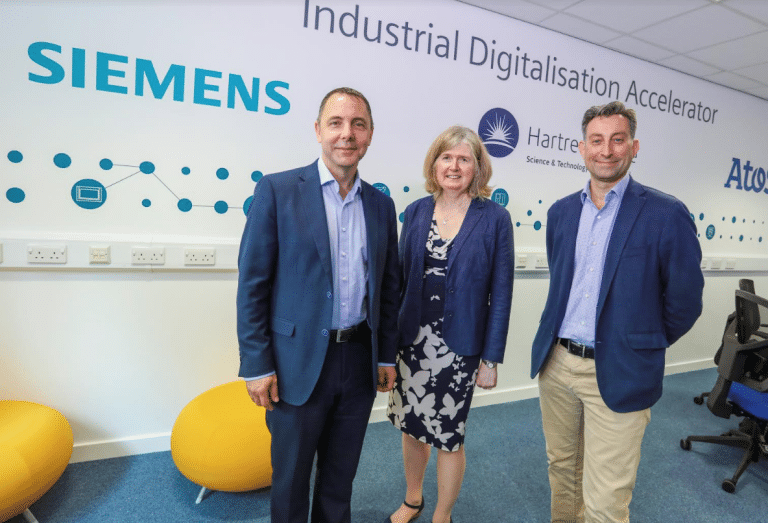
Siemens Digital Industries together with Atos and the Science and Technology Facilities Council (STFC) Hartree Centre has launched a ground-breaking Industrial Digitalisation Accelerator (IDA) to offer businesses a practical, collaborative space to explore Industry 4.0 technologies.

The Industry 4.0 collaboration space will be based at the Hartree Centre at STFC’s Daresbury Laboratory, at Sci-Tech Daresbury.

It is the first time that three distinct and yet complementary experts in the field of computing (STFC Hartree Centre), analytics (Atos Codex) and IoT solutions (MindSphere) have come together and combined their expertise to offer industry the opportunity to discover new pathways to growth.

The accelerator program is offering businesses of all sizes the chance to produce proof of concepts, mentorship to help them acquire Industry 4.0 technologies like big data analytics, Internet of Things (IoT), modelling, simulation and sensor technology through the Made Smarter programme, and the opportunity to develop end-to-end digital solutions.

The IDA will also sign-post firms to external funding programmes such as Innovate and the Industrial Strategy Challenge Fund.

Brian Holliday, Executive Management Board of Siemens plc and Managing Director for Siemens Digital Industries, said: “Staying competitive in the evolving technology landscape isn’t easy, yet the opportunity to drive productivity has never been greater.

“By harnessing the combined power of these three partners the IDA has a mandate to do just this; increase industrial productivity providing new pathways to growth.

“Combining the unique capabilities of Siemens, Atos and the STFC Hartree Centre in one accelerated environment, we aim to cut through the noise to help businesses overcome their own digitalisation challenges and realise the opportunities presented within Industry 4.0.”

Adrian Gregory, Senior Executive Vice president and CEO, Atos UK and Ireland: “This facility will deliver new levels of data-driven insight and opportunity in direct alignment with the challenges set out in the Made Smarter Review. Through our continued partnership we are pleased to support the Hartree Centre as a beacon of innovation, where the enormous potential of digital technologies can be harnessed and applied, helping businesses to remain fit for Britain’s digital future.”

Alison Kennedy, Director of the STFC Hartree Centre, said: “At the Hartree Centre we work with companies in a wide range of industries to help them benefit from advanced digital technologies like supercomputing, big data analytics and AI. We’re thrilled to be able to offer our expertise in this exciting and unique partnership which will offer UK companies a practical, collaborative space to accelerate the exploration and integration of Industry 4.0 technologies and improve productivity.”

Wok to Walk opens new Manchester restaurant with support from HSBC UK

0

Global fast-food chain, Wok to Walk, has launched a new restaurant in Manchester with support from a seven-funding package from HSBC UK.

The popular Asian restaurant group opened its new 950 sq. ft. Barton Arcade Deansgate restaurant to the public this week. The eatery gives diners the opportunity to choose from a three-step menu, with the fresh, affordable meal stir-fried in front of them in minutes and served in its instantly recognisable orange takeaway boxes. Customers are given the choice of sitting in its 44 seat restaurant or buying a meal to takeaway.

The new restaurant will create up to 15 new jobs and an anticipated £800,000 of sales in the next 12 months.

Ismail Adam, Co-Director of the Leeds and Manchester Wok to Walks, said: “This is the North West’s second Wok to Walk, and it is a privilege to bring it to the heart of Manchester. The reason why the restaurant is so popular right around the world is simple, we give our customers tasty, healthy and affordable food. The franchise offers the ability to create our own stamp on the business and we see great potential for further expansion across the North West with the support of HSBC UK.”

Andrew Holgate, Relationship Manager for Greater Manchester, HSBC UK, added: “With the help of our funding package, we’re proud help bring Wok to Walk to Manchester. The brand has increasingly become synonymous with delicious and unpretentious food, for both a working lunch and a weekend treat for the family. Matched with the experience of Ismail and his team, we believe that the new restaurant will be a roaring success.”

Clothes2order invests £1m 

Fast-expanding Clothes2order has boosted capacity with a £1m investment in new digital t-shirt printing machinery, helping it to keep pace with what chairman Michael Conway calls a UK fashion retailing ‘revolution’.

Clothes2order is one of the first companies in the world to take delivery of a heavy-duty, direct-to-garment printer launched earlier this year by NASDAQ-listed Kornit Digital.

The machine, called the Atlas, can produce up to 160 prints per hour and uses newly-developed inks which are non-hazardous, non-toxic and biodegradable in a waterless printing process.

It is optimised for on-demand printing, a growing part of Clothes2order’s business which involves supplying fashion retailers and brands so they can offer new lines in real-time without the risk of piling up stock which may be wasted.

The arrival of the Atlas alongside other new equipment takes the company’s investment in machinery to over £2.5m in the past few years.

Clothes2order operates from a state-of-the-art production and distribution facility in Trafford Park, Greater Manchester, where it employs 160 staff.

Its core business is creating custom-branded clothing for businesses, teams and communities by printing or embroidering logos and designs on to t-shirts, polo shirts, hoodies, sweatshirts, caps and other items.

Revenues have soared from £4.4m in 2013 to over £12m in 2018, and the business is looking to double in size over the next few years.

Michael said: “The face of UK retail is changing rapidly. Sustainability, speed and flexibility rather than price have become the key drivers for stores and brands alike, which is transforming the fashion retail supply chain.

“For many years, we’ve seen garments being made in factories in Asia but nowadays, thanks to digital technology and having manufacturing and processing in the UK, retailers and brands are able to operate with minimal stock.”

Beever and Struthers close to perfect 50-50 split on gender pay

0

Accountants and business advisors Beever and Struthers have achieved an almost perfect 50-50 split in pay balance for male and female colleagues.

Research undertaken by the firm across its offices in Manchester, Blackburn and London showed there was a near equal 50-50 division in pay between male and female staff within each quartile of the gender pay gap report.

Employing a total of 81 men and 72 women for gender pay gap reporting criteria across its office network, the firm’s calculations showed the female mean hourly pay rate for 2019 was minus 2.1 per cent lower than that of men. So, when comparing mean hourly rates, women earned £1.02 for every £1 earned by men.

In terms of the median hourly rate, the hourly rate for women was 1.4 per cent lower than that of their male counterparts, equating to women earning £0.98p for each £1 earned by males.

The conclusions for 2019 showed an improvement on the same calculations for 2018 when the mean hourly rate for women was minus 5.5 per cent lower for women than their male counterparts, with the median hourly rate for women being minus 1 per cent lower than that for men.

Jo Rigby, HR director at Beever and Struthers said: “Our split of female to male pay has improved from the previous 12 months to an almost perfect 50-50 split in each quartile

“Whilst Beever and Struthers is not legally required to report on the gender pay gap because we employ less than 250 people, the firm places a strong focus on equality and found the pay gap report to be a helpful way of understanding why there is a gap and how to make changes to ensure that equality is present across the firm.

“We are a progressive and modern employer and while we’re very proud of these results, our fundamental aim continues to be to recruit the right person for the right role regardless of gender or any other characteristic under the Equality Act and to provide equal opportunity for all.”

Siemens launches Industry 4.0 curriculum for UK universities

0

Manchester-based Siemens Digital Industries has announced a new academic teaching programme called Connected Curriculum, 18 months after launching its MindSphere Innovation Network (MINe), in partnership with higher education providers,

The University of Sheffield, Liverpool John Moores, Middlesex University, Newcastle University and Manchester Metropolitan Universityhave all already signed-up to the initiative. As a result, each institution will work closely with Siemens to bring advanced industrial tools, data and approaches into their respective apprenticeship, undergraduate and masters courses.   Festo, the global supplier of automation technology and provider of industrial training and education programs is a key delivery partner for the new curriculum.

At the heart of the Connected Curriculum is Siemens Digital Industries world-leading industrial software portfolio and cloud-based IoT platform MindSphere. MindSphere is a highly secure operating system which connects industrial machines and devices via IoT protocols. It allows data from multiple sources to be captured and analysed simultaneously, creating a real-time picture of the whole production process via a single, powerful and intuitive interface.

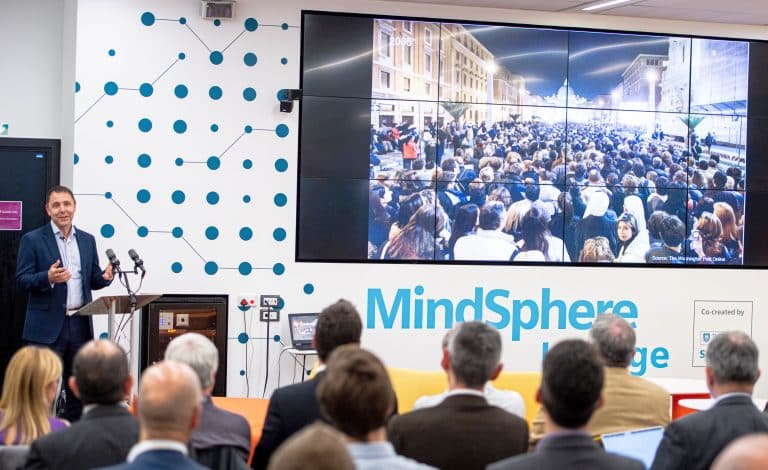
The Connected Curriculum announcement was made by Brian Holliday, Managing Director of Siemens Digital Industries, at the 2019 MindSphere Innovation Network (MINe) Symposium last week. Hosted at the University of Sheffield, the two-day event saw 15 academic institutions explore the potential for collaborating with Siemens, each other, and other companies, across Industry 4.0 projects and technologies including Industrial IoT.

Brian Holliday, Siemens Digital Industries Managing Director, said: “Collaboration is central to delivering successful, robust and secure industrial IoT projects. Universities can be key partners in this process, often having expertise industry doesn’t such as data science, visualisation and insights into human behaviour including how people engage with technology.

“This is why Siemens developed the MindSphere Innovation Network in partnership with several universities two years ago, which in turn has informed the Connected Curriculum we have announced this week. I am now looking forward to working with Sheffield, John Moores, Middlesex and Manchester Metropolitan universities to help explore the full potential of Industrial IoT with our MindSphere platform at the heart of the process.”

Manchester Metropolitan University will be the partner university in the Connected Curriculum that will focus on delivery to postgraduate students, embedding the programme in its new Industry 4.0 Masters courses in the Faculty of Science and Engineering that are launching in September to bridge the Industry 4.0 skills gap.

Professor Andy Gibson, Pro-Vice-Chancellor of the Faculty of Science and Engineering at Manchester Metropolitan University, said: “Manchester Metropolitan is focused on bridging the Industry 4.0 skills gap by equipping students with the skills for the new digital economy.

“We are delighted to be collaborating with Siemens on the Connected Curriculum as our students and academic colleagues will benefit immensely from working with such a pioneering and transformational technology company.  Our partnership will ensure that we remain at the cutting edge of the digital revolution and continue to lead the way in innovation in postgraduate education, such as with the suite of six new Industry 4.0 masters degree courses launching in September.”