8 C
Manchester
Friday, May 1, 2026
Home Blog Page 495

Student trials delivery platform during crisis

0

The lockdown of Manchester city centre in the wake of COVID-19 has turned into an opportunity for Alliance MBS student Mohammad Afridi to trial his on-demand delivery platform while also helping vulnerable people across the city.

The final year BSc Accounting student from India has spent the past couple of years researching and planning his peer to peer delivery platform DeliKart which aims to deliver any item across Manchester city centre direct to a customer’s door.

The idea first came to him when he once ran out of TV remote batteries on a cold, wintry evening in his flat and wondered why there wasn’t a home delivery service in the city centre for goods other than groceries and take-out food.

Pandemic

When the pandemic struck he quickly realised it was an opportunity to trial his business idea, strictly on a not-for-profit basis, by working with charities across the city to help deliver groceries to the elderly and those self-isolating so that they didn’t have to venture outside.

As he explains: “I had been researching the idea for a couple of years and had already built the website and a prototype of the basic app, so had the infrastructure I needed to see if it could work. I approached charities across the city including Human Relief Foundation, We Feel Good Club and FareShare which agreed to spread the word about our website and app and then let their volunteers act as couriers who could go out and buy the groceries and deliver them. I also enrolled student friends to help with making deliveries too.

“Because at the moment we are running it as not-for-profit we’ve deliberately not been taking any delivery fee from customers, although some people have still insisted on giving us a fee which we have simply been passing on to charity.

“At the end of the day this has not been about making money. Instead we’ve simply been using our model to help the people of Manchester during this difficult time. But it has been a testing ground for me to see if the model works, and I’ve been learning every day.”

Potential

Since the lockdown started in March DeliKart has now made more than 800 deliveries across the city centre, and Afridi sees huge potential in the future for a business like his which is typically built around making a profit via the delivery fee.

“Once I graduate this summer my plan is to apply for an entrepreneur visa which, if successful, will allow me to stay in the UK and launch the business with the team I have already put together, while I’ll then also look to secure external seed round investment to scale it up. I would like to thank my co-founder Mohammad Elsarraj and my tech team of Lewis and Nathan who have supported me and helped me in executing the plan.”
Afridi thinks in the future there will continue to be strong demand for the kind of service he is offering because the effects of this crisis are set to last for many years. “People will go out less for shopping and use apps and online services more and more to buy goods online and direct.”

He says the success of companies such as Postmates, a pioneer of on-demand delivery which now operates in thousands of US cities, shows the potential of the model. However Afridi stresses that the social mission of DeliKart will always remain important. “Our vision is to connect lives between strangers, where every member of the community can help each other, and that is something we have really seen during this crisis.”


New virtual workshops aim to help Greater Manchester SMEs strive and thrive

WITH the UK now taking its first tentative steps away from lockdown and towards a new kind of normality, SMEs in Greater Manchester looking for a strategy to help them bounce back from COVID-19 can receive help from a new series of fully funded virtual workshops.

The Strive and Thrive workshops have been designed to help businesses deal with the immediate challenges of the situation but also to enable them to create a robust strategy for the long term so they can again thrive.

These workshops form part of the work being done to support SMEs in the Greater Manchester region by GC Business Growth Hub, part of The Growth Company and part-funded by the European Regional Development Fund. This work continues to be crucial as the region starts to move towards the recovery phase.

The six Strive and Thrive workshops will be run by specialist industry experts from the Hub and have been tailored specially for local SMEs and cover the following topics:

  • Strategy
  • Finance
  • Marketing Strategy
  • Digital Marketing
  • Leadership Through Challenging Times
  • Supply Chain

Issues that will be discussed include fundraising during a pandemic, how to use digital marketing tools, staff engagement and communication, health and wellbeing and understanding and exploiting the benefits of supply chain digitalisation.

The workshops are free to attend and in keeping with Government guidelines on social distancing, they will be delivered virtually in small groups of up to 12 people, while still encouraging peer to peer learning and the chance to engage with other business that are facing similar challenges.

Janine Smith, Head of Specialist Services for GC Business Growth Hub, said: “We’re now entering a crucial time for local businesses as they look at ways to safely get workers back to workplaces and find some new sense of normality. Our Strive and Thrive workshops will help with these processes, as well as discussing and decoding the latest Government guidance.

“The workshops will be led by expert Hub advisors, tailored to the needs of Greater Manchester SMEs and will be full of practical and implementable measures to protect against the impacts of COVID-19 and strategies to enable future growth as we reach the recovery phase. Whether it’s identifying funding opportunities or rebuilding supply chains, you will come out of the workshops ready to tackle your challenges and get ready to thrive again.”

The Strive and Thrive workshops will begin on the 19th May and there are a limited number of spaces available for eligible businesses to sign up for the subjects they feel will be of most benefit for them at the GC Business Growth Hub website.

Businesses looking to access specialist support can visit www.businessgrowthhub.com for more information about the organisation’s extensive range of services. This and other GC Business Growth Hub projects are part-financed by the European Regional Development Fund (ERDF) as part of the GM Business Growth Hub project designed to help ambitious SME businesses achieve growth and increase employment in Greater Manchester. The Hub is also supported by the Greater Manchester Combined Authority and Greater Manchester local authorities.

MICHELLE KEEGAN, DENISE VAN OUTEN AND FRIENDS JOIN ‘THE STRICTLY LOCKDOWN QUIZ’ IN SUPPORT OF MANCHESTER-BASED CHARITY

0

SEASHELL TRUST looked to leading Manchester events company Make Events on Saturday to provide innovative fundraising in the current climate. With so many events being cancelled this year, meaning a drop in vital funds for the charity, the team at Seashell Trust have had to get creative with their fundraising and Make Events was the first port of call.

They lived up to their name by hosting a celeb-packed Strictly themed fundraising quiz over Zoom, pulled together in under a week. Make Events founder Holly Moore brainstormed the idea to raise funds for Seashell Trust – a charity which supports children and young adults with profound disabilities and additional communication needs.

The Strictly Lockdown quiz – hosted by TV presenter Gethin Jones – replaced the Trust’s Annual Ball, ‘Strictly Seashell’, which had to be cancelled following the Covid-19 outbreak.

Events supremo Holly managed to call on a host of famous faces, using her famous little black book of celebrities’ numbers to ensure the evening was strictly a success, raising more than £10,000 for the trust.

Famous names taking part were TV’s Vernon Kay, funnyman Justin Moorhouse, actor Kelvin Fletcher and guest appearances from TV stars Michelle Keegan, Gemma Atkinson and Samia Longchambon.

Also making a guest appearance was Strictly star Denise van Outen who encouraged viewers to dance along to a DJ set.

Senior Manager Rachel McCrystal from Seashell Trust said “We can’t thank Gethin and Holly Moore and her team enough for pulling together to deliver a fantastic virtual event to raise valuable funds for Seashell Trust, but also to bring our community of supporters together on what would have been our major fundraising event of the year.”

After the event, Gethin said: “Firstly I was blown away by how much we were able to raise for Seashell Trust by playing a quiz.

It says a lot about the generosity of people during these tough times. Through Make Events’ efforts it was also an insight into how company events might be run in the immediate future.”

Holly from Make Events, whose team has worked on the event for the last two years, added: “We were devastated when we had to cancel the event after the success of last year and after the team had worked so hard to make this year’s just as good.

In all my years in the industry I have never cancelled an event so I held a virtual meeting with the team and the Strictly Lockdown quiz was the result.

I was so happy when the Trust agreed we should go ahead with it and I cannot thank enough everyone who took part and donated.”

Strictly Seashell has been rescheduled to 20 March 2021.

Healthy Investment makes donation to local food bank as demand doubles during lockdown

0

Healthy Investment, the mutually owned provider of savings and investments based in Bury, Greater Manchester, has donated £500 to Porch Boxes, a local food bank. The charity has seen demand for its crisis packs more than double since the beginning of the Covid-19 lockdown.

Healthy Investment is a friendly society that provides savings and investments to more than 110,000 members, who are also its owners. It traces its history back to the religiously inspired temperance movement of the early Nineteenth Century and has been an advocate of ethical investment for more than 180 years.

Porch Boxes operates from premises in Bury’s Radcliffe neighbourhood. It collects donations of non-perishable goods and toiletries which are distributed to vulnerable households around the borough by a range of partner organisations.

Peter Green, chief executive of Healthy Investment, said, “Food banks are feeling even more pressure on their resources as they try to meet the huge increase in demand for their services caused by the Coronavirus outbreak. Porch Boxes is a local charity we have supported in the past and we are pleased to be able to do so again at a time of such great need.

“Hopefully things will start to return to normal soon but until then we know that a lot of families in the communities around our office are struggling and need some extra help during these difficult times. Our members trust us to invest their money in an ethical way and I am sure they would also approve of us supporting such a worthy cause on their behalf.”

Julia Rowlands, chair of Porch Boxes, said, “We are extremely grateful to Healthy Investment for their generous donation, which comes at a time when there has been a huge increase in demand for our assistance. We have delivered more than 1,300 food parcels to the local community in the last six weeks alone, which is more than double the number we would usually expect to provide.”

Venditan Secure Payments Partnership with Fintech Firm Judopay

0

Manchester based Venditan have announced a new partnership with leading mobile-first payment provider, Judopay. The move will see the eCommerce and retail software specialists integrate Judopay’s payment gateway solution into their retail trading platform, Venditan Commerce.

Working closely with big names such as Visa, Mastercard, Discover, Apple and Google, Judopay have become the market leader in mobile-first payments, with a solution designed to drive sales across desktops, smartphones and mobile apps and improve the customer payment experience.

The payment solution includes customisable checkouts, industry leading fraud prevention, and intelligent routing to allow for huge growth in transactions without a single point of failure.

Having launched a platform for native Mobile Apps in 2019, Venditan will also integrate Judopay’s mobile checkout solution into its App framework, as they roll out the solution in 2020.

Venditan Director John Coyne, said of the partnership, “We have been speaking with Judopay for a few months, and we are excited at what their solution can do for our Retail clients eCommerce conversion rate, especially via mobile. It’s a full end-to-end solution, with gateway and acquiring, giving our clients access to over 100 acquiring banks in 190 countries. We are about to embark on a business development campaign to promote our native mobile app solution, and Judopay will play a huge role in that as the payment provider.”

Adam Montgomery, Senior Partnerships Manager of Judopay added, “We’re delighted to partner with Venditan to offer our digital payments solution to their customers. We are really looking forward to helping drive their customers’ digital journey across both web and mobile and we will enhance the great work that they are already doing. We truly believe in their mission to help retailers thrive in this ever-changing environment.”

Growth Company announces new series of Covid-19 business recovery webinars

The Growth Company will host a new series of Business Recovery webinars providing practical advice on navigating the challenges presented by Covid-19.
Webinars in the business recovery series will focus on different work settings, helping employers to implement measures required to ensure that they can operate safely and in line with updated government guidelines.
They can be booked on the GC Business Growth Hub website: https://www.businessgrowthhub.com/coronavirus/business-recovery-webinars
The first webinar in the series, (12.30pm on Monday, May 18) will focus on factories/manufacturing plants and warehouses.

It is being hosted by Hosted by Geoff Crossley, Senior Manufacturing Advisor, GC Business Growth Hub and will also hear from other expert contributors.
Subsequent webinars will continue to look at different workplace settings:
Offices and contact centres (Tuesday, May 19)

Retail and customer-facing businesses (Wednesday, May 26), hosted by Marketing Manchester
Vehicles, fleet and transport (Wednesday, 27 May)

The Business Recovery Series will also feature informative sessions on common issues facing the business community. They are:
Mental Health and Wellbeing in the workplace (Thursday May 21)
Skills and training for businesses in the emerging economy (Thursday 28 May)
Digital Security (Monday 1st June)
Concentrating on the broader economic outlook for Greater Manchester, a Business Recovery – Build Back Better webinar is also scheduled for Thursday 4 June, featuring Growth Company Chief Executive Mark Hughes alongside Greater Manchester Local Enterprise Partnership Co-Chair Lou Cordwell and Greater Manchester Mayor Andy Burnham.
Mark Hughes, Chief Executive of the Growth Company, said: “Now more than ever before, it is of vital importance that we reach out to businesses. Part of our #HereForBusiness campaign, these webinars will provide practical advice on implementing the measures that will be necessary as we begin the process of economic recovery. We want all those who are navigating the challenge of managing their business in the context of Covid-19 to know that we are here for business and here for you.”
The business recovery webinar series forms part of the GC Business Growth Hub #HereForBusiness campaign. It is complemented by a broader range of webinars being delivered by the Growth Company and its partners to support employers and individuals in response to Covid-19.
This includes a forthcoming Disability Confident webinar at 11am on Thursday, May 21 which will examine the way that homeworking during the coronavirus crisis might help to encourage employers to increase diversity and inclusivity in future. Click here to join the Growth Company and its InWorkGM partners for the Disability Confident Webinar.

Visit businessgrowthhub.com/coronavirus or call the Hub on 0161 359 3050 to speak to an advisor. Extended hub opening hours are now Monday to Friday, 8am – 8pm; and Saturday and Sunday 9am – 1pm. Business advisors are working extended hours to support businesses and individuals, while information and advice is available via the GC Business Growth Hub coronavirus support hub.

PRAETURA VENTURES LAUNCHES FIRST EVERGREEN FUND

0

Praetura Ventures, the Manchester-based investor that backs quality businesses in high-value sectors, has launched the Praetura EIS Growth Fund as it continues to see increased demand for capital and support from high-growth businesses.

As an ‘evergreen’ fund, the Praetura EIS Growth Fund is looking to raise up to £30m per annum. It will soft close twice a year and the funds raised will be deployed to support the growth ambitions of businesses in the North and across the UK. This will include early-stage businesses looking for smaller, seed-stage investments as well as capital and support for more developed businesses that are looking to scale.

David Foreman, managing director at Praetura Ventures, said: “We speak to entrepreneurs and business owners that are seeking investment every day of the week and we know there is a huge demand for capital and support, now more than ever. Many entrepreneurs are actively looking for an investment partner that can provide more than just money and work by their side as they plan for the future and navigate their way through the challenges presented by COVID-19.

“Demand is particularly evident in the North of England, and there are some really exciting businesses in sectors as varied as artificial intelligence and healthtech that are looking for support. This, coupled with the positive response we’ve received from our investors after successfully closing and deploying two EIS funds, truly demonstrates the size of the opportunity and ensures we’re well placed to provide that support.”

The launch of the Praetura EIS Growth Fund follows a record 12 months which saw Praetura Ventures respond to increased demand from its network of high net-worth investors and financial advisers by raising more than £22m to invest in entrepreneurial businesses.

This momentum from Praetura Ventures’ network and its appetite to invest meant the firm was able to deploy its record-breaking £15m maiden EIS 2019 fund in just seven months, which was shortly followed by the close of the £7m Praetura EIS 2020 fund.

The remainder of the firm’s EIS 2020 fund will be invested in a number of businesses over the coming months, after almost 70 per cent of the fund was deployed before the end of the 2019/20 tax year. It has already seen Praetura Ventures invest in high-quality businesses such as Patchwork, a rapidly growing healthtech start-up on a mission to solve the NHS staffing crisis, and Inotec AMD, a fast-growing medtech business that has developed an innovative device to heal and treat complex chronic wounds.

Alongside an injection of capital, the investee businesses receive the strategic support and guidance of the 25-strong team at Praetura Ventures, who work closely with the business leaders and management teams.

Jonathan Prescott, business development director at Praetura Ventures, added: “Over the past 12 months we’ve seen a huge increase in the number of advisers recommending our Praetura EIS Funds to their clients, and we believe this is down to the fact that we’re not just an investor of funds, but a strategic partner to our advisers and to our portfolio businesses. At a time when businesses are focused on resilience and growth against a challenging background, more and more advisers are recognising the important role venture capital and EIS can play in portfolio construction and financial planning.

“We also made a conscious decision to put the intermediary market at the heart of our thinking by creating a model that combines speed of deployment and diversity across our portfolio, in addition to making the most of the pricing opportunities in the North of England.”

Praetura was the first to back rapidly growing SaaS delivery management platform, Sorted Group, and in August 2019 participated in the £15m investment round led by Merian Chrysalis Investment Company, which made Sorted Group one of the North West’s fastest growing tech companies.

The firm was also the first to invest in AI and machine learning business, Peak, in 2016, and the business continues to go from strength-to-strength having recently raised £9.7m in an extended Series A funding round led by Praetura Ventures and MMC.

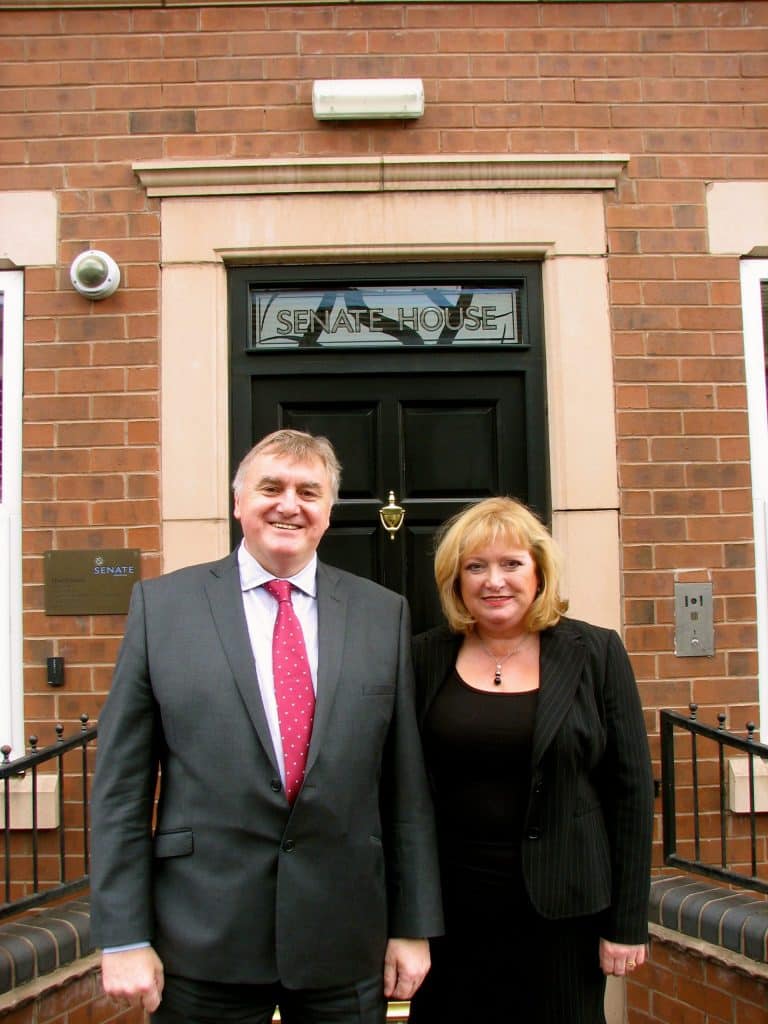
NPIF & CBILS loan provides extra security for family-run business Senate Training

0

Specialist social impact lender, GC Business Finance (GCBF), has provided Senate Training with a CBILS-backed loan through NPIF – BFS & MSIF Microfinance, which is part of the Northern Powerhouse Fund (NPIF),

Alsager-based Senate Training was established 20 years ago by husband and wife Paul Keeling and Janet Keeling. The business operates a Global Security Operations Centre with 24-hour a day CCTV monitoring and alarm receiving for large premises such as corporate buildings, privately owned city centre areas and shopping centres. The firm also provides bespoke training for emergency incident management and business continuity, as well as risk consultancy services to protect businesses against crime, protests and terrorism.

The current lockdown measures imposed by Government have forced the training and consultancy arms of the business to pause for the foreseeable future. The NPIF loan using CBILS backing provided by alternative finance provider GC Business Finance has allowed the Senate Global Security Operations Centre to remain open, meaning clients’ CCTV is still under surveillance and 15 members of staff are still working.

The funding will also support the company’s efforts to diversify its offering to include online training, as it looks to develop virtual classrooms. This could potentially allow for Paul and his team to open back up their training revenue stream in what would typically have been their busiest time, April through November.

Paul Keeling, CEO at Senate Training, said: “Our business has been adversely impacted by the crisis, with the current lockdown measures meaning that two significant revenue streams have suddenly dried up. However, we still have a duty of care to protect our clients from existing and evolving threats, so it was imperative that our Security Operations Centre continued to operate on a 24/7 basis.

“Matt and the Team at GC Business Finance had a refreshingly different approach to the methods used typically by High Street Banks. They gave consideration to exactly how we had been affected by the Conronavirus crisis and focused on understanding our business and its potential. The facility provided by them will help us to navigate this extremely challenging period, and support innovation in terms of the design and launch of a portfolio of digital learning products.”

Matt Robinson, Fund Manager at GC Business Finance, said: “Senate Training is a reputable business with impressive scale, and we are proud to support Paul and his team at a time of dire need. GC Business Finance is committed to helping companies in the North West that have felt the impact of the coronavirus, and we would encourage business owners to consider applying for funding if they require financial support during these unprecedented times.”

Sue Barnard, Senior Manager at British Business Bank said: “In the current climate, it is essential that funds are deployed as quickly and efficiently as possible to ensure the safety of so many impacted businesses. It’s encouraging to see GC Business Finance complete yet another NPIF loan backed by CBILS , and we hope this funding will make a huge difference to Senate Training in these difficult times.”

Clare Hayward MBE DL, Chair of Cheshire and Warrington LEP said: “It’s fantastic to see Senate Training adapting their business to deal with the current challenges Covid-19 presents. The government schemes are a new form of finance and the LEP would urge all businesses to explore their eligibility, using services like the Business Growth Hub. Gaining an NPIF loan backed by CBILS is testament to the work of Paul, Janet and the rest of the team and will ensure they can continue successfully and be in the best possible position moving forward.”

GCBF is committed to supporting North West-based SMEs, providing CBILS loans to those that have been adversely affected by the coronavirus. This scheme builds upon GCBF’s existing range of loans across the alternative finance market, including Microfinance from the Northern Powerhouse Investment Fund, as well as Start Up Loans on behalf of British Business Bank. GCBF is positioned to lend to businesses that otherwise couldn’t access funding from mainstream lenders in a fast and responsible approach to lending.

CBILS provides facilities of up to £5m for smaller businesses who are experiencing lost or deferred revenues, leading to disruptions to their cashflow. Delivered by the British Business Bank, through 40+ accredited lenders and partners, CBILS will support the continued provision of finance to UK smaller businesses during the Covid-19 outbreak.

The Northern Powerhouse Investment Fund project is supported financially by the European Union using funding from the European Regional Development Fund (ERDF) as part of the European Structural and Investment Funds Growth Programme 2014-2020 and the European Investment Bank.

Businesses to strengthen supply chains as confidence hits record low

Business confidence has seen its largest quarterly fall on record, according to Deloitte’s latest CFO Survey. This reversal comes after the Q4 2019 survey showed the largest increase in sentiment in the wake of the general election.

In Q1 2020, 84 per cent of CFOs report that they are less optimistic about the prospects for their company than they were three months ago. This is in stark contrast to Q4 2019, where a majority (53 per cent) of CFOs said they were more optimistic about the financial prospects of their company.

Despite this, 89 per cent of CFOs believe the long-term impact of the crisis will lead to a diversification and strengthening of supply chains.

CFOs are also taking specific actions to address challenges posed by the COVID-19 pandemic. Almost all CFOs (99 per cent) have introduced or are planning to introduce alternative working arrangements such as flexible and remote working, 59 per cent are furloughing employees, 52 per cent are reducing output or shutting down factories and 30 per cent have or intend to access the Bank of England’s COVID Corporate Financing Facility.

The Deloitte CFO Survey for Q1 2020, which gauges sentiment amongst the UK’s largest businesses, took place after the UK was placed into lockdown between 8 and 22 April. A total of 104 CFOs participated in the latest survey, including CFOs of 23 FTSE 100 and 43 FTSE 250 companies. The combined market value of the UK-listed companies that participated is £418 billion, approximately 21 per cent of the UK quoted equity market.

Business sentiment around revenues has also fallen markedly. In Q1, 97 per cent of CFOs say they expect UK corporates’ revenues to decrease in the coming 12 months. CFOs expect their own businesses’ revenues to be 22 per cent lower on average this year, than estimated in their pre-COVID-19 plans.

CFO perceptions of external uncertainty have risen to the highest level in the history of the survey. The majority of CFOs surveyed (89 per cent) now feel there is a high or very high level of uncertainty facing their business, a sharp increase compared to 34 per cent in the previous quarter.

The COVID-19 crisis has taken a heavy toll on economic activity. In Q1, 94 per cent say they are unwilling to take risk onto their balance sheets. This is the second-lowest reading for risk appetite on record, the lowest level having been observed during the 2008 financial crisis.

Amid the COVID-19 pandemic, 53 per cent of CFOs are expecting the UK economy to see a deep and prolonged economic downturn that lasts until the end of 2020. Most CFOs expect demand in their own sectors to start to revive later this year. However, over half (53 per cent) do not expect demand to recover to pre-pandemic levels until after Q2 2021.

Jodi Birkett, partner at Deloitte in the North West, commented: “Finance leaders are facing the toughest challenges in decades but most expect demand to start to come back this year. Leaders are already thinking beyond the downturn and how to adapt and prosper in a changed world, with an increased focus on strengthening the supply chain and planning for future disruption. Almost all finance leaders believe that flexible working will gain ground in the wake of this crisis. We have an opportunity to re-think the future of work in a way that boosts opportunity and innovation.”

BRITISH BUSINESS BANK INCREASES FW CAPITAL’S NPIF ALLOCATION

0

FW Capital has been allocated an additional £40.6m from the Northern Powerhouse Investment Fund (NPIF), taking its new total to £142.6m.

FW Capital was appointed in 2017 to manage NPIF – FW Capital Debt Finance to support businesses through two funds focusing on the North West and the Tees Valley & Cumbria.

The money from the British Business Bank will see North West NPIF fund increase by £30.6m to £81.6m and the FW Capital’s Tees Valley & Cumbria NPIF fund rise by £10m to £61m.

Since 2017, FW Capital has invested more than £50m into 170 businesses across the North and created over 600 jobs. It has expanded to a team of thirty in offices across the North.

The funding is designed to drive innovation and growth and can support the needs of a broad range of sectors as businesses navigate the current challenging trading environment.

Both the NPIF – FW Capital Debt Finance funds provide loans of between £100,000 and £750,000 and offer businesses capital that can be used to adapt and grow throughout the Coronavirus pandemic. Investment can be made in new equipment, premises, staff, systems, product lines and a wide variety of other uses.

Gary Guest, Fund Director at FW Capital North West, said: “Since 2017, hundreds of jobs have been created through NPIF – FW Capital Debt Finance.

“The positive feedback from British Business Bank about our support for SMEs has been welcomed and this additional allocation of funding is testament to its confidence in our provision.

“With this extra allocation of funds, we can continue to help Northern businesses achieve their commercial objectives by making sure they can access the finance they need to grow at a time when the demand for funding is greater than it has ever been.”
Joanne Whitfield, Fund Director at FW Capital North East, said: “We are very pleased to have been given this further allocation of funds, which will allow us to continue to help SMEs trade through this turbulence and work towards their ambitions for the future.

“FW Capital is a long-term growth partner with local teams across the patch ready to offer pragmatic support to our investees. This is particularly relevant given the difficulties currently facing many businesses.

“The extra allocation of funds will allow us to support more clients in this way and to continue to help create and safeguard jobs for our region.”

Grant Peggie, Director at British Business Bank, said: “The Northern Powerhouse Investment Fund plays a vital role in supporting the Northern economy. We have helped innovative business access the vital funding they need to grow, and FW Capital have had a huge part in the Fund’s success to date. This extra injection of capital at this challenging time will enable FW Capital to to support even more of the North’s growing small businesses .”

Operating from the British Business Bank’s Sheffield head office, the Northern Powerhouse Investment Fund provides a mix of debt and equity funding (£25,000 to £2m). It works alongside ten Local Enterprise Partnerships (LEPs), the combined authorities and Growth Hubs, as well as local accountants, fund managers and banks, to support Northern-based SMEs at all stages of their development.

The Northern Powerhouse Investment Fund project is supported financially by the European Union using funding from the European Regional Development Fund (ERDF) as part of the European Structural and Investment Funds Growth Programme 2014-2020 and the European Investment Bank.