9.7 C
Manchester
Friday, May 8, 2026
Home Blog Page 363

Walshaw Road cafe undergoes revamp and offers evening opening, entertainment and a selection of food and alcohol

Just one year on from opening its doors, a Bury café is set to undergo a full refurbishment and reopen as a high end café bar, offering customers evening opening and an exciting menu of beers, wines and sharing platters.
In September 2020 Cosalea launched on Walshaw Road, Bury, as a new place to eat, meet and create. Its aim was to offer great quality food and drinks in a fresh, welcoming social space for the local community to enjoy and it quickly built an enviable reputation as one of the best eateries in the area.
After listening to feedback from customers, after a short refurbishment, Cosalea will reopen in October with a whole new look as a fully licensed café bar – the first licensed premises on Walshaw Road.
Owner Lisa Moore explains:
“Our customers told us time and again that there was a need in the local area for somewhere that opened in the evenings that wasn’t a pub or restaurant, and wasn’t in the centre of town. In response, we’re creating a relaxed café vibe in new, contemporary surroundings with a great choice of beers, wines, spirits and cocktails and live music.
“We’ll be introducing an evening menu with small plate and sharing platters, great to share with friends and family.
Not only does the new evening opening hours mean that customers can enjoy a wider range of food and drinks, it also means that Cosalea’s fantastic social space will also be available for longer.
With an additional room away from the main café, it will offer private dining for a special celebration, a formal meeting area for evening networking, or space for community events and classes.
Despite a turbulent year, which saw Cosalea forced to close its doors soon after opening due to lockdown, the business has gone from strength to strength.

Lisa Moore continued:
“Here at Cosalea, the local community is at the heart of everything single thing we do – being there for our customers is what we love and what we do best.
“We’ve built a loyal base of regular customers who love nothing more than popping in for a coffee, something to eat and chat with our friendly team and one another. We’d like to reassure our customers that with our latest developments, the daytime café will remain the same.
“They can enjoy the same great menu, the same warm atmosphere and the team they know so well will still be serving them. It’s the Cosalea they know and love – just even better!”
Cosalea will celebrate its new look at a launch weekend on the 15th, 16th and 17th October, here customers old and new will have the opportunity to see the refurbishment, soak up the atmosphere and sample the food and drink Cosalea has to offer.

DIGITAL DEMAND DRIVES 90% GROWTH FOR VOICESCAPE

The remote, digital services trend of the pandemic has helped drive 90% growth for Voicescape and led to nine new hires at the public services technology provider.

New demand from local authorities nationwide to enhance the digitisation of services has seen Voicescape grow beyond its social housing heartland to support more councils with compliance, collections, resident feedback and wellbeing requirements.

Expanding services beyond the social housing sector has seen Voicescape create nine new jobs at its Manchester headquarters including two management hires in its customer success team, along with the appointment of a new business development manager and a new account manager. Voicescape has also grown its R&D team with the appointment of a new support engineer and an IT apprentice under the Government’s Kickstart scheme.

As a result, company turnover has increased by 90% in the first half of its financial year, compared to the same period in 2019, and is recruiting for a further two roles across the company.

John Doyle, founder and CEO of Voicescape, comments: “Local authorities have been increasingly embracing digital transformation – a trend that has been accelerated by the impact of the pandemic. This is changing approaches to core operational ways of working and how councils connect with the public and is a sign of long-term evolution in service provision.

“We’ve innovated and diversified our range of services, building on best-practice honed over more than a decade of working in partnership with housing associations to provide local authorities with new ways to work efficiently that also help improve public services and satisfaction.

“Our work has proven that processes can be digitised and automated, allowing valuable resources to be redeployed to other service areas to enrich the ‘human touch’ and create meaningful connections that members of the public really value.”

The past year has seen Voicescape work with local authorities to address the approach to collecting council tax arrears. Using its Collections service – an automated outbound telephone call and management system – councils are able to recover council tax arrears and increase resident engagement with a proactive and positive approach. The automated solution also frees-up resource within teams so it can be allocated to better supporting individuals that may need extra help with repayments, without the need for punitive and costly enforcement action.

John Doyle concludes: “We’ve expanded the team and will continue to make new hires to meet growing demand and to uphold and exceed the high levels of service our housing association clients know us for. There’s a significant Government-led shift towards improving the standards of public and housing services, and we’ll continue to invest in expertise that delivers solutions for meeting changing compliance requirements and enhancing resident satisfaction.”

Rochdale manufacturer opens £750k production line

A Rochdale manufacturer has installed a second £750,000 production line in its factory that will boost its capacity by nearly 50 per cent.

Hanson Springs work extensively with the oil, gas, nuclear, power generation and railway industries and had planned to complete the much-needed production line 18 months ago.

However, because of Covid-19, the investment was delayed and the production line at its facility in Gorrels Way has only just been completed.

Directors John Hanson and Lisa Jenkinson, whose father Malcolm founded the business in 1963 and remains the managing director, said the new addition would help them meet a burgeoning order book.

John Hanson said: “We could previously produce 12 tonnes of springs a day but the new production line will enable us to produce an extra 5 tonnes a day.

“The new production line is the missing piece of the jigsaw and will be able to make larger springs weighing between 30kg and 100kg so it’s a big step forward.

“We’re delighted it’s finally ready as our sales are now higher than they were before the pandemic.”

Hanson Springs is one of the world’s largest independent spring manufacturers and employs 230 people and has an annual turnover of around £26m.

Lisa Jenkinson, who is head of purchasing, said the new production line would mean they’re less reliant on the oil and gas industry.

“Our main market is oil and gas and they’re really busy at the moment,” she said. “This will enable us to broaden our customer base. Our sales are higher than they were before the pandemic and now we have to ramp up our production levels.

“The last 18 months have been very difficult for a lot of companies and we’re no different. The impact of Covid and Brexit has had an impact on recruitment and supply chains but it’s vital we keep investing in the business.”

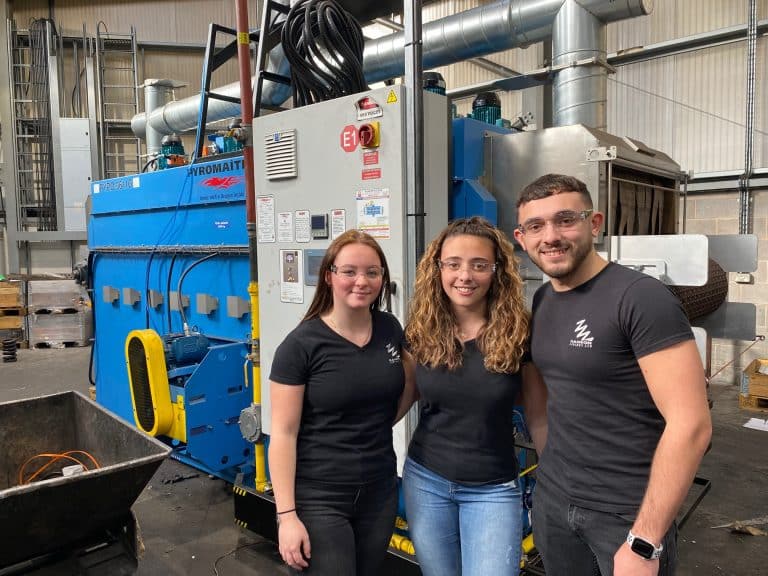
Lisa’s children Luke Jenkinson, 21, and Ellie Jenkinson, 18, along with John’s daughter Amy Hanson, 18, have all recently joined the Rochdale manufacturer.

Lisa said: “We’re proud to be a family business. We’re delighted that Luke, Ellie and Amy have joined but lots of staff also have relatives in the business and that family feel is one of the reasons for our longevity and success.”

As well as two bases in Rochdale the company has a US distribution warehouse in Dallas.

MIF ANNOUNCES NEW FACTORY ACADEMY TRAINING OPPORTUNITIES FOR 2021/22

Manchester International Festival (MIF) has today announced its latest Factory Academy programme for the 2021/22 academic year, providing skills and training programmes for the creative industries for people in Manchester and the wider city region.

Launched in 2018 by MIF, in partnership with a consortium of cultural organisations in the city, the award-winning Factory Academy is a key part of the vision to put skills and training opportunities at the heart of The Factory, Manchester’s landmark new arts space. Over the next five years it will deliver around 1,400 fully funded training opportunities, creating accessible pathways to work in an increasingly important sector and supporting the region’s economic recovery.

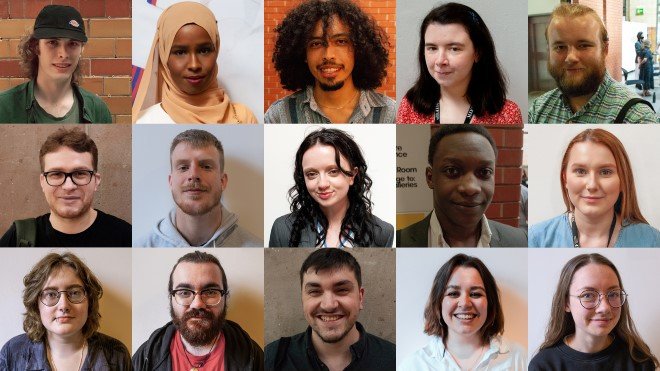
In 2021/22 the Factory Academy will offer places to 250 people across a range of programmes including bespoke pre-employment academies on subjects from construction to broadcast and film production, industry traineeships designed to immerse students in the creative and cultural industries, and opportunities to manage creative projects to develop key skills. Alongside this, it will offer Kickstart Wraparound Support to creative and cultural employers, aligned to the government Kickstart Scheme, combining students’ on-the-job learning and unique opportunities for personal development in a workplace setting.

The latest opportunity is a new 15-day training academy developed in partnership with Laing O’Rourke, Ryder Architecture and other companies who are working to bring The Factory to life. Students will discover what goes on behind the scenes at an innovative construction project, receive first-hand guidance from industry experts and develop new skills for working in construction. The course, which takes place 11-29 October, is fully funded, with no cost to participants, and is open to anyone in Manchester or Greater Manchester aged 19-24 and on Universal Credit. On completion of the academy, students will have the chance to apply for a six-month paid Kickstart role with organisations working on the design and construction of The Factory.

Last year over 150 Greater Manchester residents benefited from the Factory Academy – its first year as an independent training provider. Despite the challenges of the pandemic period, an average of 50% of students have progressed into work or further study within three months of completing the Factory Futures Academy course in the past year. In June 2021, The Factory Academy was awarded the Marquee Award at the inaugural Manchester Adult Education and Skills Awards.

Ten students graduated from the Broadcast and Film Production Traineeship in April, a partnership with Toasted Productions, Near-life, Dock 10, Jist, Title Role, The Gate Films, Delaval, Vision in Colour and Eight Engines. To date, six of the ten graduates have progressed into paid employment with organisations such as Badger and Combes, Toasted Productions, MIF and BBC Studios.

One of the graduates, Daniel Goodchild said: “The access and the resources that The Factory Academy gives to be able to apply for these jobs is just so important. I completed the Broadcast & Film Training Academy and got a BTEC out of it, was selected for a placement at Toasted Productions and then they invited me back so I’m working here full time now. There was nothing else that I had on my resume that could even get me close to a job like this.”

Simon Marsland, Director of Toasted Productions said: “It’s had a really positive impact. Businesses should get involved in The Factory Academy because everyone wins out of it.”

Madison Freeman was one of ten graduates who completed paid internships at Manchester International Festival in the lead up to and during the 2021 festival. Speaking about her experience, she said: “The contacts that I’ve made that can help me in the future has definitely boosted my confidence. It’s just proved to me that there are no boundaries and I can do whatever I want – and think big!”

Gary Briggs, Acting Head of Skills and Training at MIF said: “The Factory Academy creates unique opportunities that aren’t offered elsewhere through the partnerships we’ve developed with employers and the support we offer to help open their doors to trainees. Our courses are bespoke, not off the shelf, developed with industry experts with specialist knowledge and experience from a range of sectors, from illustrators to military trainers, sustainability experts to musicians and arts technicians.

“Our aim is to reach people that wouldn’t usually consider a career in the cultural industries and to remove some of the traditional barriers, including offering open recruitment days instead of written application forms, giving the highest quality experience with a focus on experiential learning and self-development. All the skills and knowledge you’ll acquire at a Factory Futures training programme align to employment within the creative industries and beyond and are transferable across the sector.”

Randel Bryan, Executive Director at Manchester International Festival, said: “The Factory Academy is a key part of our vision to put skills and training opportunities at the heart of The Factory. From 2023, The Factory will become a major training centre for local people wanting to work in a huge range of roles in the creative industries, meaning people can pursue careers, working alongside world-class talents, without having to leave the region. There will also be opportunities for local artists to develop and grow with the support of the MIF and the partners of the Cultural Skills Consortium.”

According to research by the CBI published in the months just before the pandemic hit in March 2020, Manchester is the second largest creative city in Europe after London, at that time bringing in £1.4bn to the city’s economy.

Sir Richard Leese, Leader of Manchester City Council, said: “In Manchester we’ve never doubted the power of culture and creativity to help change lives and this is why we continue to invest in it, and why the city has been recognised as the second largest creative city in Europe after London.

“By providing new and innovative training and development opportunities for local people in the cultural and creative industries the Factory Academy has a key part to play in helping us grow our own highly skilled workforce here in the city and in supporting the continued growth of the sector.”

Applications for the 2021/22 programme open from September. For more information please visit mif.co.uk


9 Essentials You Need When Taking Your Business To The Global Market

Taking your business from a national to an international entity is a challenging task. It can also be very lucrative if done well. There are a lot of steps you need to take to get your business ready for the global market, and you will need to prepare thoroughly for the challenges you will face. It is a good idea to deepen your understanding of business strategy and surround yourself with the most talented people.  

Utilise Communication Technology

When launching an overseas branch of your business, you will need to be in regular communication with teams in multiple locations. Communication technology can be invaluable in helping you stay connected with your team, increasing communication and collaboration.  

You should choose a reliable instant messaging system and make it the centralised form of digital communication across all teams and in all counties. You should also select a reliable video conferencing platform so that you can have regular face to face time with your employees regardless of where they are located.  

Familiarise Yourself With Local Regulations

You should fully understand the local regulations in any country you are setting up a branch in. It is a good idea to get in touch with lawyers familiar with a country’s laws. They will be able to advise you about any potential issues or changes in your practices you may need to make. It may also help to set up a compliance team to keep track of regulations and watch for changes. They can ensure you are compliant with a country’s local regulations.  

Hire Talented Individuals In Target Countries

It is vital to have talented individuals from the countries you are expanding to. Consider the skills that your international teams will need and start recruiting for roles as soon as possible. You should ensure that there is a clear progression path and offer an attractive salary to tempt the most talented candidates.  

Ensure There Is Demand For Your Product

You should carry out your due diligence and ensure there is demand for your product before you open up a branch in another country. You should consider the local competition and be certain that your product will be appealing to a new market. Expanding globally is expensive, and you will need to be confident you are making the right decision for the best reasons.  

Get Your Marketing Materials Professionally Translated

It is crucial that you get marketing and other materials professionally translated. While you could get a basic translation, it is often best to use a marketing translation service that will ensure that your content is translated correctly. The important thing is that the meaning of your content is translated appropriately, and nothing is lost in translation. You can learn more about marketing translation services from Brightlines, industry leaders in providing creative translations for businesses.  

Adapt To Local Culture And Demand

When you open a new branch, you will need to be prepared to be agile and change with the demands of your new market. You should be prepared to adapt your product or service to match the local norms and culture. While you may be able to anticipate a lot of the changes you will need to make, you will still need to be reactive to change.  

Consider The Global Political Climate

It would help if you kept a close watch on the global political climate and how it may impact your business. Things like elections and conflicts can have a significant impact on businesses, so you should have plans in place to deal with any issues that may arise.  

Partner With International Businesses

Partnering with an existing business in your target country can help make the transition easier. You will be able to use their existing knowledge of the country to help you navigate the markets for the first time. You should reach out to businesses in your destination country to find a good fit. It is best to avoid any company that is too similar to your own, as the chances that you will be in direct competition is high.  

Network Effectively

Networking can be invaluable in helping you launch your product in a new market. You should attend international networking events like conferences and conventions to give you the opportunity to meet with other business leaders and professionals. Take the opportunity to discuss your planned expansion and see if you can find any like-minded business people to partner with.  

Conclusion

Expanding internationally is often a logical next step for businesses that have achieved national success. It is crucial that you prepare thoroughly for the difficulties ahead and take steps to mitigate as much of the risk as possible. Surrounding yourself with talented individuals can be a tremendous asset to help you navigate new waters. You should also be prepared to adapt to new customs and cultures.

Beever and Struthers and Pareto Financial Planning announce strategic partnership as they look forward to the future

The two Manchester-based firms will work closely together to ensure staff and clients of Beever and Struthers benefit from tailored and strategic financial advice and support. The partnership means Pareto specialist advisor Chris Colclough will
be based at the head office of Beever and Struthers at St George’s House, Chester Road, Manchester sharing his expertise with staff and national clients of the wider firm covering Blackburn, Birmingham, and London.

Maria Hallows, Executive Partner of Beever and Struthers said: “We look forward to our exciting and progressivepartnership with Pareto Financial Planning, which demonstrates how Beever and Struthers is dedicated to ensuring our
clients benefit from the independent and beneficial advice they require. Through this partnership we will be able to help our clients make informed decisions, reflecting both their personal and business needs, recognising that every client is
different.
“Working with Pareto in this way means we can provide a seamless service, including investment advice,measures to protect wealth, planning for retirement, and more general corporate advice, for example reviewing employee
benefit packages. We recognise that we need to practice what we preach, and so the starting point for this partnership is ensuring our valued staff have access to all the expertise and support Pareto can bring. Chris becoming embedded in our
team is fundamental to the success of this venture. We believe the wider range of services and support offered by Pareto aligns with our strategy of achieving better for, and with, our clients”.

Stuart Carswell, Director at Pareto Financial Planning, said: “We are delighted to be working alongside Beever and Struthers as part of our continued growth plans to work with accountants and provide them with a robust financial services
proposition. We look forward to developing a successful long-term relationship with an ambitious and like-minded professional practice.The partnership exploits the natural synergies between us, offering a holistic approach to financial advice. I believe our
shared focus on ensuring a positive client outcome in everything we do will cement the success of the relationship going forwards.”

Middleton based VITA acquires USLEEP

The Vita Group (or “Vita”), which is based in Middleton, Manchester, and is one of Europe’s leading providers of flexible polyurethane foam, has acquired mattress manufacturer Usleep Limited from Northedge Capital LLP.

Usleep produces a portfolio of foam, spring and hybrid mattresses for a number of the UK’s leading mattress retailers and Bed in the Box (BiB) brands. Usleep’s two sites in Ashton under Lyne and Castle Donnington utilise state-of-the-art machinery to create one of the UK’s most efficient automated mattress production processes.
This will be the 3rd acquisition completed by Vita in 2021 following the acquisitions of IMPE Srl, located in Naples, Italy, in Q1 and UK based Technical Foam Services (TFS) in Q2.
The Usleep acquisition significantly enhances and accelerates Vita’s strategy to grow its bedding business across Europe. Vita has existing mattress production facilities in France, Germany, Romania, The Netherlands, UK and Hungary. Vita has long term strategic relationships with a range of global partners in the bedding sector, building on a wide range of R&D capabilities via its innovation centres in the UK (Bedding) and Lithuania (chemistry/formulation).
Speaking on behalf of The Vita Group, Group CEO Ian Robb said: “We are very excited to have Usleep join the Vita family. Usleep aligns with our values of safety, responsibility, resourcefulness, integrity, and innovation. Together, we look forward to supporting our customers and suppliers. This acquisition will enable collaboration on innovation across the end-to-end service, from unique foam technologies through to innovative mattress design”.
Vita’s Managing Director, Comfort Division Gilbert Davids, added: “The Vita Group’s scale, innovation and operational capabilities complement well with Usleep, and together we will offer a compelling package of differentiated foam, right through to final white label production and fulfilment to consumers. Our commitment to increase our sustainability offering has made significant strides in 2021, and we have the advanced materials capability to enhance our offerings to our customers further.”

The Insights Family expansion continues with search for Managing Director, five new hires and a string of promotions

The Insights Family, the global leaders in kids, parents and family market intelligence, have announced the recruitment of five new team members and that they have started the recruitment process for a Managing Director.

With the company now made up of 63 people, serving more than 100 clients in 18 countries from across the globe, the decision has been made to look to appoint a Managing Director to oversee the businesses continual growth and development. The new role will lead the day-to-day operations of the business and will be based at the company’s Manchester office.

Nick Richardson, Founder & CEO comments,
“We have just signed off our five-year plan as a board. We have some significant expectations as a business, as we look to further establish ourselves in a class of one, when it comes to kids, parents and family research and market intelligence. The appointment of a Managing Director will enable us to further accelerate growth, continue to scale globally, fulfil our purpose, whilst of course, retaining our incredible company culture and values”
The Manchester based business has also announced the appointment of Leyla Marasli as Account Manager and Tasmin Chatha as Data Analyst. Further, Lucy Wilson, Yennah Smart and Yan Jiao join as Client Success Coordinators, as part of the businesses graduate programme, which sees the business further expand to a team of 63.

The company has also promoted George Sarakinis to Client Strategy Director, Georgie Martin to Senior Research Manager, Dan McDonald to Research Manager, Beth Bleathman to Research Manager and Rajan Sundavadra, Sarah Waterhouse and Lucy Holland to Senior Research Executives.

Sarah Mitchell is also taking on the role of Client Success Director and heading up a new department within the business.

Nick Richardson, Founder & CEO adds,
“I am delighted to welcome Leyla, Tasmin, Lucy, Yennah and Kiko to our business. I am so proud and humbled by the quality of individuals that we continue to attract to our business, and who share our commitment to make our vision become a reality. One of the most satisfying parts of my role is seeing talented individuals grow, prosper and succeed in their roles, and I congratulate George, Georgie, Dan, Beth, Rajan, Sarah, Lucy and Sarah for their continued progression within the business”

Easing The Great Return to Work

Top Tips for a Safe and Secure Post-Pandemic Workplace

As rush hour traffic returns to pre-pandemic levels and bosses call time on working from home, Stockport-based and photo ID card specialists Digital ID share a handful of expert tips to help formulate your plan, ease re-entry anxiety and safely manage employees and visitors on their return to the workplace.


Jonathan Fell, group managing director of the company said: “Whilst were seeing businesses offering ‘goodies like breakfast and lunches’, live DJ’s and drinks to persuade staff back to their place of work, safety and security shouldn’t be a last thought. The pandemic has accelerated security risks and vulnerabilities that we have seen first-hand for many years. Lack of photo ID cards, paper-based visitor management systems and natural ventilation in workspaces are just a few that spring to mind.


Fell went on further to say: “combining security measures with employee feedback creates a safe and secure setting, reduces re-entry anxiety and mitigates risk and illness.”


Here are the brand’s top tips on easing the return to work:

  1. Talk to your staff. It sounds simple but so many organisations fail to engage in conversations with staff about how they’re feeling returning to the office. It’s important to ensure a plan or process is in place to gather feedback from employees. Surveys, face to face meetings or even the end of week de-brief is a great place to start and it’s important that employees feel valued and their opinions heard. Many companies are adopting a hybrid approach to office working which in itself throws up some security issues, but there are solutions that can help keep track of who should be where and when.
  2. Create more space. If you have office with breakout areas or sofas it might be time to rearrange the furniture, if only temporarily. Employees that don’t have their own office, or work in open-plan areas, should still have a metre of space on all sides, with the option of a partition or cubicle. This can be at a request of the employee and demonstrates that you are making the first step to ensure their wellness is top priority.
  3. Photo ID. An outdated photo ID card or in the worst-case scenario, no form of photo ID being issued should be unthinkable post pandemic, yet many places of work have little or no security and ID card procedures in place. It’s more important than ever to know who is entering the building, when and how long they’ve been there. ID cards should be issued to employees and visitors as standard, and ID card policies should be updated with photographic ID cards and lanyards should be visible at all times.Staff shouldn’t feel worried if they see another person moving around the building not knowing if they should or shouldn’t be there. Everyone on-site needs to follow the same procedures day in day out.
  4. Limit on-site visits. On-site visits are great to show customers or prospective customers the setup, but while people are readjusting perhaps stop and think if they are necessary. And are they more important than protecting the workforce? As we head towards winter there will be the usual seasonal flu and colds circulating on top of coronavirus, so it’s still going to be important to limit mixing where possible. Again a visitor management system should be in place to keep track of who has been in the building.
  5. Is the workplace well ventilated? Providing natural ventilation and clean air into any workplace or business setting should be high up on the list. Opting for a UV air purifier such as the Atmofizer One is proven to eliminate ultrafine particles and kill small viruses such as COVID-19 with proven efficiency of 99.9%. Opting to invest in new products will significantly ease the anxiety of staff, visitors and customers returning and reduce absenteeism.
  6. Cleaning and Hygiene. Daily office cleans will need to be more frequent and visible efforts shown to put employees’ minds at ease. Think about frequency, products used and more importantly the recording of such activities. Upping the amount of time spent cleaning is great but it should be a tracked and continual effort.

Digital ID specialises in photo ID and access control helping businesses and their employees stay secure. It provides a range of products and services such as ID card printing, bespoke access control solutions, ID card printers and air purifiers to meet the requirements of customers. Visit www.digitalid.co.uk for more information.


Are cyberattacks on the rise?

Our lives have moved increasingly online in recent years. The smartphone is now our bank, retail outlet, TV and cinema.

All of those apps means that a huge amount of your personal data is stored in online spaces – and accessing these details is a huge focus for cybercriminals, who may look to exploit you or profit from selling on sensitive information.

Here we’ll look at the numbers behind cyber crime and investigate what businesses can do to prevent themselves from being at risk.

What the numbers say

According to a recent survey by the UK Government, cyber crime is certainly on the rise.

Almost half of businesses polled (46%) reported cybersecurity breaches in the preceding year
A quarter of charities (26%) reported the same
These figures rocket for medium-sized businesses (68%), large businesses (75%) and high-income charities (57%)

Compared to previous surveys, there is a rise in attacks on charities. Just 19% reported being breached in 2018, for comparison.

Among the companies that reported a breach, 32% said they experienced security concerns at least once a week in 2020, a considerable increase from 22% reporting the same frequency just three years prior.

Different types of cyberattack

Phishing: A type of scam that sees malicious links placed into messages, such as SMS or email. Clicking the link could result in malware being spread to the network or contact details being harvested.
Malware: Malware is a piece of software designed to do harm. You may see some versions referred to as ransomware – this will limit the usability of machines or networks unless a ransom is paid.
Baiting: Similar to phishing, baiting involves tricking a user into downloading something – it may be masquerading as a smartphone app or a video clip – which then infects the device or network being used.

What can be done to stop cyberattacks

Preventing cyberattacks is as much about human action as it is about using technological assistance.

Making sure that your devices are properly password protected or company mobiles have biometrics activated ensures that data cannot be easily accessed if it falls into the wrong hands.

Similarly, remaining vigilant about messages from unexpected sources is key – as is driving these messages home to staff by way of cybersecurity training.

Protection can also be sought by way of taking out specific cyber risk insurance for businesses. This can help you repair the damage if the worst happens, but also provide you with further information on preventing attacks.