18.4 C
Manchester
Saturday, May 2, 2026
Home Blog Page 273

Pearson Property Team Shortlisted as National Favourites

The residential property team at Pearson Solicitors and Financial Advisers have something to smile about this week as they have been shortlisted as Property Team of the Year in a national award.

The seven strong team, based at the Oldham law firm, deal with clients from all over the region, but increasingly are the go-to property experts for a wider range of clients across the country who seem to appreciate their can-do attitude.

Head of Property, Victoria Marshall, says they have had a busy time with a fluctuating property market over the past two or three years.  Now as the market is wondering what will happen next, it’s a great time to look back and reflect on what has been achieved.

As part of the LEAP Modern Law Conveyancing Award, the judges said they were looking for a team which has; operated most effectively as a specialist conveyancing department within a wider firm, been able to demonstrate successes as a result of working together as a team and has achieved tangible benefits for their firm, such as publicity, financial and or reputational success.

Commentating on the success, Victoria, said:

“Our specialist residential property team combine experience, expertise, youth and development opportunity.  We have made a significant contribution to the firm since the pandemic and grown in both size, reputation and experience.

“The residential property team at Pearson are the 2022 power players of the firm.

“House purchases were our most popular service making up 48.98% of work done – no doubt due to the Stamp Duty holiday, but already this year we’re seeing growth in this area.

“Sales made up 37.38% of our business and recently we have more clients coming for advice on remortgaging due to the cost-of-living crisis and interest rate changes.”

The team will find out at a glitzy awards dinner held in Liverpool in November if they have been successful.

“A house is perhaps the most expensive purchase people make so clients deserve the best and that is what we strive to give them, being recognised for our good service is the icing on the cake,” added Victoria.

Medical Negligence Department at Pearson welcome two new lawyers

Two new team members have recently joined the growing medical negligence department at Pearson Solicitors and Financial Advisers, the Oldham based law firm.

With years of experience working with Personal Injury clients, and a wealth of professional knowledge on these types of cases, solicitor, Karen Kenyon, has moved into the medical negligence department. Joedanna Neild, also joins the team working alongside the solicitors as a Paralegal.

Joedanna has recently completed her degree at Manchester Metropolitan University and is looking forward to learning ‘on the job’ as she completes her solicitor’s qualifying exams.

“I am excited to have joined Pearson, I live locally and they have such a good reputation so I’m proud to be part of their team,” says Joedanna.

“It’s been interesting to find out that Pearson also work for clients across the whole of England and I am really looking forward to learning something new every day in my new role.

Joedanna is from the Ashton area and adds:  “It’s important to work where you live as you really get a feel for the area, I know the types of clients locally, and working in medical negligence I know the hospitals they have used and feel that I can empathise with them.  Visualising where your clients have been really does put it all into context.”

Karen also brings with her experience and an empathy for her clients, she has previously worked in Personal Injury and Family and is relishing the challenge of Medical Negligence work.

“I feel the experience gained in other areas of the law will serve me well in medical negligence and I’ll bring something new to the team,” says Karen.

“Dealing with divorcing couples one tends to have a sympathetic approach, but at the same time remain professional and always remember you are there to give the best advice possible. Medical Negligence work is varied and very challenging, from prescription errors right through to the most traumatic and catastrophic birth injuries, or cases of hospital negligence.

“My personal injury and family backgrounds are great preparation for this new challenge and I am looking forward to working with clients not only locally, but interestingly from all over England,” she adds.

Welcoming them to the team, Pearson Head of Clinical Negligence, Jacqueline White, says:  “It’s lovely to have two such different members join the department. Joedanna is right at the very start of her legal career and Karen brings with her a wealth of experience, amazing client care and a fresh steer to the department.

“Our team have never been busier and with every case we strive to make sure lessons are learned, but sadly medical mistakes continue to happen, what we try to do is pick up the pieces and help those clients who need to get the care and compensation they deserve.”

Northern Group continues Ancoats regeneration with mixed-use development One Silk Street

0

Manchester-based Northern Group has delivered the mixed-use, build-to-rent property One Silk Street, which brings nine storeys of cutting-edge apartments and workspaces to Manchester’s city centre. Located in the heart of the former industrial powerhouse of Ancoats, an area that has benefitted greatly from the group’s regeneration works, the building juxtaposes its heritage-honouring design with modern city centre living and, flexible, affordable office spaces.

Made up of 70% high-specification residential apartments and 30% modern coworking spaces, One Silk Street was self-delivered by Northern Group. Its design was carefully considered through feedback from technical consultants, input from heritage experts and extensive dialogue with Manchester City Council. The development adds to the property management company’s growing number of large-scale residential and commercial properties in the city centre, which also includes Flint Glass Wharf, Ice Plant and Jactin House.

Northern Group has built and operated many of the well-known buildings that have aided Ancoats’ recent revival – a movement which the group kickstarted, turning it into one of Manchester’s most sought-after neighbourhoods. One Silk Street sits in the centre of it all, showcasing Northern Group’s desire to continually invest in and expand the area’s commercial and residential infrastructure.

Designed with the city’s young professionals in mind, its coworking spaces are managed by Northern Group’s sister company Colony. In a uniquely collaborative approach to the project, Colony designed the commercial spaces and the working experience it offers members, which Northern Group made a reality. One Silk Street becomes the fourth Colony site that the Northern Group has delivered.

Colony properties are designed to support and develop Manchester’s thriving industries and communities by being more than just a workspace. It hosts networking events, featuring interactive sessions to encourage community and collaboration between tenants and rooftop yoga for mental and physical wellbeing. Membership cards offer exclusive discounts to members, further supporting local businesses. It also runs digital profiles on the businesses of tenants as well as unique guides to the city and its culture.

Northern Group, established in 2008, has built a portfolio an extensive office space alongside 500 residential units in Manchester and the surrounding areas. One Silk Street represents the group’s second-largest city centre development, totalling 110,000 sq ft. The building adds to Northern Group’s extensive investment into Ancoats, helping define it as one of the city’s hotspots for living, working and dining. Ancoat’s regeneration has contributed to Manchester’s 8.9% employment growth with Colony’s expanding network of coworking spaces representing valuable community facilities.

Paul Dobbs, chief operating officer at Northern Group, said: “Demand in the city vastly outweighs the supply of build-to-rent properties, despite Manchester being one of the UK’s biggest build-to-rent hotspots. It makes One Silk Street an important addition for the city’s plethora of creatives and independent businesses, delivering modern working facilities for the next generation of Manchester enterprises.”

“Ancoats is a greatly improving and unique area. Its important facilities like One Silk Street exist to support its professional residents and establish an inclusive community.”

The community environment embedded into Colony’s network offers One Silk Street’s commercial tenants the opportunity to grow their clientele, colleagues, co-workers and collaborators. It’s a model that has a resounding success at Colony’s other sites, facilitating this expansion to its portfolio.

Outside, One Silk Street offers important amenities for the working environment, including 21 Car parking spaces and five EV Charging points. Safe and secure bike storage facilities accommodate sustainable travel for commercial tenants and residents, alongside 27 storage units.

Those amenities are further complimented by both private and communal outdoor spaces, terraces for commercial residents on the first floor and private terraces on the eighth floor. It also boasts a 10,000 sq ft roof terrace, with 360-degree panoramic views of Manchester City Centre, the West Pennines, and the Peak District. They represent major selling points of the property.

Northern Group prides itself in both new builds like One Silk Steet, as well as revitalising historic Manchester sites, creating contemporary build-to-rent spaces which deliver unique, in-demand amenities to the surrounding areas. One Silk Street is no different, with the developers bringing a differentiated product to the fast-rising Ancoats area, attracting new residents and office users alike. One Silk Street’s office space is now 77% occupied, with the rest of the Colony portfolio 80-95% occupied, highlighting the demand for workspaces in the city which support its creative and entrepreneurial communities. The new multi-use development meets a double-edged demand for living and working spaces in the area.

MANCHESTER CHARITY CELEBRATES DOUBLE SUCCESS AT THE SCOTTISHPOWER FOUNDATION AWARDS

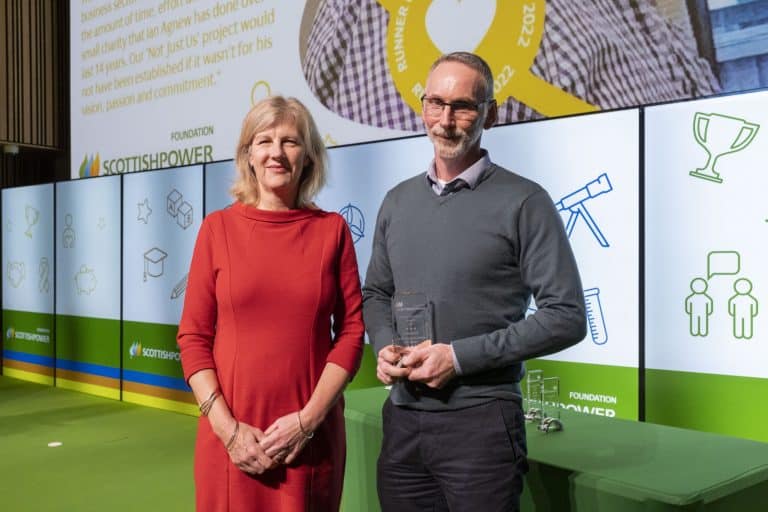
Manchester charity, Lorna Young Foundation, is celebrating after picking up the runner-up spot and additional funding in two categories at this year’s ScottishPower Foundation Awards.

The charity, which uses ethical trading and education to work towards the eradication of poverty, was recognised in both the Charity Champion and Education categories.

Ian Agnew was named Charity Champion runner-up and recognised for his efforts to educate people from disadvantaged backgrounds on ethical business while also creating community-led systems to help combat climate change.

Ian joined Lorna Young Foundation in 2006 as Founding Director after living and working in Namibia for several years for indigenous peoples’ and rights organisations. During his time at the charity, he has led on a number of social enterprise ventures to support marginalised communities and young people.

He has worked on numerous cross-cultural programmes and is a Fellow of the Ariane de Rothschild Fellowship in partnership with Columbia University. In 2018, he was appointed Chairperson of Lorna Young Foundation after 12 years as its Co-Director.

Ian said: “Our charity was named in memory of Lorna Young, a Scottish fairtrade pioneer who challenged the business sector to adopt both ethical policies and practices, so I’m immensely proud that the ScottishPower Foundation recognises our efforts to continue this legacy.

“I’d like to thank the Foundation for all the support it’s shown us and for the additional funding this award provides, which will have such a positive impact for us and the people we work with.”

As well as Ian’s success, the charity was runner-up in the Education category for its ‘Not Just Us’ project which works with Rochdale Borough Housing in Greater Manchester.  The project provided an educational approach on ethical business practices to help tackle global poverty through community-based learning modules using reading, workshops and quizzes.

The programme seeks to give young people and communities the knowledge to change inequality in the world, both as informed consumers and the ethical entrepreneurs of tomorrow.

Participants get the opportunity to become ethical traders. To date, the programme has helped set up 30 new social enterprises in the north of England covering a range of ethical products from coffee sales through to cosmetics, chocolate and t-shirts.

Christina Longden, Director of Lorna Young Foundation, said: “There are few people working in the ethical business sector in the UK today who would give the amount of time, effort and advice to a small charity that Ian Agnew has done over the years.  

“I’m delighted for him and thankful as well for our recognition in the Education Award as we’re very proud of our Not Just Us programme, which helps to educate and inspire so many.

“The ScottishPower Foundation support is very important to us, so it’s great to be recognised by them alongside other worthy winners.”

The double success at this year’s Awards sees Lorna Young Foundation win an additional £5,000 funding.

The ScottishPower Foundation Awards shine a light on projects that make a lasting and positive impact within communities across the country.

The charity projects were judged in five categories this year: Charity Champion, Community Engagement, Education, Innovation and – for 2022 only – the Legacy Award. The special, one-off Legacy Award celebrates the more than £10 million given to charities since the Foundation was set up in 2013.

Melanie Hill, Executive Officer and Trustee at the ScottishPower Foundation, said: “Huge congratulations to both Ian and the wider Lorna Young Foundation team for their respective recognition.

“Ian’s a wonderful example of dedication to helping others and he has given a lifetime of service to making a difference. Alongside this, the Not Just Us programme helps to inspire not only wonderful ideas, but also the next generation to have ethical practices at the front of their thoughts.

“I’m truly impressed by the work Ian and Lorna Young Foundation do and I’m looking forward to continuing to watch their work and seeing them build on their legacy – and ours – for many years to come.”

Further details on the winners and runners-up are available on the ScottishPower Foundation website: www.scottishpowerfoundation.com.

Manchester STEM education provider secures UKRI funding to drive diverse talent pipeline

The Blair Project, a Black-owned STEM education provider based in Manchester, has been named one of the 16 UK-wide projects to share £4 million of funding from the Driving the Electric Revolution challenge, delivered by Innovate UK for UK Research and Innovation (UKRI), to help to create the workforce of the future.

Using the excitement of building, testing and racing electric go-karts, The Blair Project engages underrepresented youth and adults, particularly those from minority ethnic and lower socioeconomic backgrounds, encouraging them to pursue careers in STEM. Its programmes are focused on accelerating the electric revolution, and equipping people with skills in green technology to enable them to tackle climate change.

The funding from UKRI will go towards the development of ProtoEV 4 Skills, a free-to-play immersive gaming app, in partnership with augmented and virtual reality specialists Fuzzy Logic Studio. The app will target players aged 11-19, giving them the opportunity to compete or collaborate to convert virtual petrol go-karts into the fastest, most energy efficient and stylish virtual e-karts.

The app uses gamified augmented reality to teach vehicle design, EV propulsion and invention skills. Extending the reach of The Blair Project’s physical ProtoEV STEM Challenge, the app will engage a larger, more diverse pool of future innovators, providing links to EV careers.

Launched by UKRI, the Driving the Electric Revolution challenge is investing £80 million in electrification technologies including power electronics, electric machines and drives (PEMD). ProtoEV 4 Skills, alongside the other 15 projects awarded funding, will support the UK’s push towards a net-zero carbon economy and contribute to the development of clean technology supply chains, worth £80 billion in gross domestic product by 2050.

Nile Henry, founder and CEO of The Blair Project, said: “We are passionate about growing an army of future innovators, technicians, engineers and ecopreneurs from under-represented groups. This funding award from UKRI for the ProtoEV app, will help to democratise and remove the barriers to participation in innovation. It will allow all young people regardless of age, ability or background to tinker with new technologies, discover talents they never knew they had, learn industry relevant skills, collaborate with others and progress into rewarding careers through the power of gaming.”

Harvey Trent, director of Fuzzy Logic Studio, said: “Immersive technologies, such as Augmented and Virtual Reality, will play an ever-increasing role in closing the future skills gap within the UK. The interactive nature of the final app will enable young people to engage with the world of engineering design and explore the career opportunities that are key to achieving a net-zero carbon economy. We are excited to partner with the team at The Blair Project and build on the phenomenal success of their existing physical STEM challenge.”

Professor Will Drury, Challenge Director for Driving the Electric Revolution at UKRI, said “We’ve known for too long now that there is not only an engineering skills gap in the UK, but a diversity problem too. By creating a free, immersive gaming app the Blair Project has the potential to introduce a new audience to the world of vehicle design, EV propulsion and the joy of invention. I look forward to seeing how the app develops and is deployed.”

Aaron & Partners announces new senior hire as legal firm’s impressive growth continues

Chester legal firm Aaron & Partners has appointed a new Senior Associate as the business’ impressive growth continues.  

Costas Nicolaou has joined the top 200 law firm’s Dispute Resolution team, having previously worked at Escalate Disputes.  

Costas, who said it was an “exciting time” to join the business, had previously been a Senior Associate at DWF, where he spent over 13 years.  

He said: “I’m thrilled to be joining Aaron & Partners – a top firm with an impressive calibre of lawyers and clients, with a very strong regional reputation. 

“I hope to add to Aaron’s enormous wealth of expertise and help grow and further broaden our client base.” 

A litigation solicitor and qualified mediator who works closely with both individuals and businesses, Costas specialises in disputes including commercial matters, contracts, professional negligence, and property transactions. 

As a Wirral resident, he has extensive knowledge of the local area and will play a key role in the firm’s growth at its Birkenhead office, in addition to providing expert legal advice at its head office in Chester. 

Costas added: “I’m proud to be a part of this fantastic team and helping clients secure the right solution. There are some very exciting plans for expansion and development, and that was one of the key factors in my decision to join the firm at this time.” 

His hire comes as Aaron & Partners’ growth continues following a string of high-profile appointments and promotions in recent weeks, including Mark Turner, who has been hired as a Partner in the Planning, Environmental, Energy and Regulatory department.  

The Impact No-Code Will Have On The World

The world has changed a lot since the invention of computers. The way we communicate, work, and live is going through a sea change.

No-code’s impact on the world is that it is an opportunity to do things differently, to create something new and exciting.

If you’re a small business owner, you can still take advantage of the fact that no-code platforms don’t require developers to build their own systems from scratch.

That saves you money and time and gives you access to more options for creating custom solutions for your needs.

Here are some future possibilities of no-code technology and how it can impact business processes in the coming years!

What is No-Code?

No-code platforms are web development tools that help developers build and manage their apps without having to code them themselves.

These platforms use programming languages like Python and JavaScript to create a user interface for the app, but they don’t require developers to write any of the code themselves.

Instead, they provide a set of APIs that developers can use to build their own apps—with no coding required!

These tools have revolutionized how developers build apps and websites for businesses because they make it possible for businesses to get started on projects without having to hire an entire team of developers.

This means that startups and small businesses can get up and running much faster than before—without paying hundreds or thousands of dollars in upfront fees or developer salaries!

Why is it important?

No code platforms, also known as drag-and-drop development platforms, are graphical interfaces that allow developers to build applications without having any programming experience.

They use drag-and-drop features like buttons, checkboxes, and menus to create their apps or websites.

These types of platforms have made it possible for developers who previously had no interest in learning how to code now feel comfortable using them because they don’t have to worry about getting things wrong or having any issues with the syntax of their code.

The drag-and-drop platform will then take care of everything else for you so that you can focus on what matters most: creating great user experiences!

How does no-code impact the world?

1.     It will reduce the amount of time people spend on computers

No-code has been proven to increase productivity among developers.

This is because it allows them to focus on the task rather than spend time and energy learning how to code.

While there are some developers who do not enjoy coding, it is still important for them to be able to do so because it makes them more efficient when it comes to working with others.

In addition, no-code also allows developers to work on projects that were originally too complicated for them, which means they can complete tasks faster than if they had been forced to learn how to code.

2.   It will increase productivity among developers

It will increase productivity among developers because they’ll spend less time debugging issues and more time building new features that users love.

No-code developers are able to share knowledge about how to build products more easily than those who have to write code by hand.

This helps them improve their skills and learn new things, which ultimately means they’re working at a higher efficiency level than before.

3.   It will decrease stress levels among developers

No-code is a way of working that is so simple, so practical, and so effective that it can help you avoid a lot of the stress and frustration that goes along with having to write code.

When you’re able to work without writing code, you have time to think through how the features you want to build will work together—and if there are any problems with those features, then you can fix them without having to write a single line of code.

4.   It will reduce the amount of money companies waste through rework, training, and other things

No-code will reduce the amount of money companies waste through rework, training, and other things that are required when coding is involved (like hiring programmers).

With no-code, these costs are likely to be reduced by almost half because there are fewer people working on creating new solutions (and therefore fewer people required).

5.   Increase in innovation because companies can now create better solutions

With no-code, companies can now create better solutions to their problems. Because they don’t have to worry about writing code to do it, they can focus on finding a solution that works best for their company and its customers.

This means more innovation, which will increase the number of products and services available to consumers as well as make life easier for businesses and employees alike.

How do things work without code?

It’s hard to imagine life without code. But there are lots of people who manage their lives and careers without ever even touching a keyboard or mouse.

No-code developers are skilled at getting things done with very little help from others. They have the ability to build apps, websites, and other tools on their own. This is thanks to the fact that these programs take advantage of the fact that computers can run software without the need for any programming languages or code.

What can be done with no-code?

There are so many possibilities for no-code platforms.

You can also use no-code platforms as an alternative to expensive software applications or plugins that would be too difficult for you to maintain. No-code platforms allow you to create your own site at a fraction of the cost—or even free!

It also give you a lot of flexibility in how they work and what they look like, which means that they can be customized to fit any style or color scheme.

If you’re looking for something really unique, check out [company name]’s platform. They’ve created templates that let users customize their sites with over 1 million colors and styles!

Conclusion

The impact no-code will have on the world is that it will change how software is developed and used throughout the world. It will help companies save money and time by reducing the bugs in their code, leading to lower costs for various products. This can also improve quality because fewer bugs mean less time wasted fixing them and more time spent developing new features and functionality.


Why retailers must reward loyalty to stay profitable

0

Survey of 1500 shoppers reveals why ‘loyalty’ is going to be the differentiator for retailers amid the cost of living crisis.

  • 4 in 5 are part of at least one customer reward scheme
  • 38% actively seek them out and 46% will join up when asked
  • 70% are willing to sign up just to receive discounts
  • BUT, 19% have never been asked to join whilst shopping in a store

As retailers struggle to stay profitable, whilst protecting customers from price hikes, the survey carried out by consumer intelligence experts at Manchester-based Purple found it doesn’t have to be a trade-off between the two.

Two thirds of the respondents said their loyalty to a retailer increases when they’re rewarded for visiting, however, the survey shows that retailers are missing out on an important opportunity to reward loyalty in-store, at a time when it matters the most.

Smart in-store WiFi can be easily utilised by retailers to encourage sign-ups to loyalty schemes and 66% of respondents have joined a free WiFi network when shopping. But the survey found just 16% join every time they shop, and here lies the opportunity.

What’s more, 41% of those surveyed believe that receiving text messages and emails while in store – with information and offers for specific products – helps to improve the customer experience.

Almost half claim promotions or a personalised experience influenced their most recent purchase and 83% are happy to share personal data in exchange for tailored offers.

Gavin Wheeldon, Chief Executive of Purple, commented: “The current economic climate is increasing the pressure on businesses and retailers should be looking to harness the full capabilities of their existing technology to compete with the competition.

“Whilst there isn’t ‘one size fits all’ solution, in-store WiFi technology can help retailers to facilitate real-time dialogue with the customer.”

Purple’s smart WiFi technology can collect real-time data using a captive portal for shoppers to log into the WiFi, using their email address or social media profile.

Furthermore, retailers can trigger communication with their customers directly through the Purple Platform, using a built-in marketing automation tool – or an existing CRM system.

Wheeldon continues: “When a retailer knows their customer is actively shopping in their store, they can access valuable data in an instant to leverage the personalisation consumers desire and enhance the overall shopping experience.”

How To Reinvent Yourself in Response to Digital

Today’s leaders are progressively using technology to build strategies for high performance, improve operational efficiency, achieve fast fulfilment, and expand their reach into global markets. Businesses that invest in digital transformation by changing their strategy enjoy a competitive advantage by maximising efficiency via innovations. Nevertheless, technology and data don’t work like a magic wand to solve all issues, meaning that you must have the necessary capabilities, skills, and customer-centric approaches to deliver value. Small enterprises might feel that going digital is far too expensive or intimidating, yet the willingness to embrace digital transformation can be a lifesaver in the difficult times that lie ahead

Many organisations find digital execution to be complicated, that is, they’re making very little progress in their efforts to turn existing products and services into digital variants. Initiatives can fail for a great many reasons, including but not limited to lack of transformation goals, no change in management’s strategy, and poor adoption of new technologies. The good news is that some businesses have managed to adapt themselves to the technology-driven world, unlocking opportunities and meeting challenges. To embrace the power of technology in your own business, the following steps are crucial to achieving success. 

Have A Coordinated Approach to How to Use Digital Technologies 

Nearly every enterprise in the UK is planning digital transformation initiatives, marked by cultural challenges and the struggle to integrate legacy IT and organisational silos. Employees are moving between different offices but require access to data to complete their tasks proficiently, so creating a seamless transition through digital transformation is of the essence. Every enterprise should have a digital strategy, in other words, a plan for maximising the business benefits of digitalisation. Although it might sound simple enough, a digital strategy requires expertise and experience to be thoroughly implemented. It’s that one thing that’s hard to get right but is critical to success. 

While it’s possible to change the specific tactics you have your mind set on, you must demonstrate a clear commitment to the end goal – digital transformation. For example, if your aim is to enable remote workers to be effective and efficient, data on specific locations is crucial when undergoing risk analysis for new strategies. Understanding how a particular location, say, New York, performs is essential in terms of delivering digitally. In this respect, a digital strategy New York will work well for your brand, as you can make your business operate across multiple locations, reducing inefficiency through digital tools. 

Increase Your Agility and Empower Your Enterprise’s Digital Future

In the face of global challenges, there’s more pressure than ever for businesses to transform and drive better product quality, productivity, speed, customer engagement, and, last but not least, employee retention. Becoming an agile organisation allows you to deliver higher returns to shareholders and adapt to changes in market demands. Agile working isn’t only possible but also a necessary consideration for the long term. An agile enterprise comprises cross-functional and self-managing teams capable of attaining maximum productivity while using fewer resources, meaning everybody works to the best ability. The manager supports the team from the outside, i.e., from the boundary of the team itself. 

Master Digital Platforms to Create New Business Value

The best performers take advantage of digital platforms to create more successful ways of winning business. Many argue that digital platforms have become an absolute necessity in business, so it’s no longer a strategy for newcomers in the digital world. A digital business platform can be defined as a customisable collection of state-of-the-art digital technologies that integrate with the legacy infrastructure. Enterprises can learn from the likes of Amazon or Google how to expedite the process of business model innovation. Digital platforms generate value by uniting and connecting key actors, facilitating interactions and transactions in a multi-sided model. 

At one point or another, service providers leave, and when this happens, the in-house teams must be prepared to take the reins, so the right knowledge has to be transferred. You can leverage many new technologies, such as cloud-native application architecture, event-driven architecture, and so forth. The vast majority of platforms are built in the cloud to minimise costs and go live more quickly, which wouldn’t be possible to achieve in-house. If you’ve not dealt with the cloud before, this is where your biggest hurdle will lie. The wide array of application systems and technology capabilities that flow in and out of the digital business technology platform require effective and secure integration. 

Use Mergers and Acquisitions to Build New Digital Capabilities 

If the lack of digital talent is one of the challenges that your organisation faces, use mergers and acquisitions to fuel digital transformation. There’s a unique opportunity to capture an upskilled workforce before the competition. Just think about it. Wouldn’t it be better to reap the rewards of a strategic partnership and become part of the digital ecosystem? The consequent gains can accelerate innovation, protect technology know-how, and nurture a solid IT workforce. Due diligence is paramount in the merger and acquisition process, so make sure to demarcate the main sources of value and risk. Think about how the skills, capabilities, and technology in question would fit into the combined organisation. 

Final Thoughts 

Regardless of what vision you might have for the future, it must include digital transformation. We’re getting closer and closer to the point where we’re able to create intelligent enterprises that consistently apply advanced technologies and best practices within agile processes. It’s imperative to re-think your existing processes by adopting new best practices and, of course, establish a true digital core so that you can deal with the increased pressure and demands. To be successful, you must adopt an agile mindset, championed and driven from the top down. During transformation, you have the chance to communicate your vision, align leadership, and build an operating model to obtain your desired results. 

All in all, reinventing yourself digitally takes resilience and consistency, so you’ll just have to be patient. Through investment, you can lay the foundation for long-term stamina to future crises. 

69% of small business owners in the North West unprepared for lender demands

0

A new survey by Purbeck Personal Guarantee Insurance of 1000 small business owners/managers across the UK suggests that many are unprepared for lenders’ increasing demands for security in return for business loans.

When asked what it means to be a personal guarantor for a business loan, across the board, only 33% of business owners answered correctly.  The findings have been revealed as new research shows that small business owners are turning to personal loans to fund their business.

17% of respondents to the survey had no idea what a personal guarantee is, 19% were partially right in that it is a promise to the lender to pay off the loan but felt it would simply affect their credit rating if they failed to do so.  17% thought it is just when you allow the lender to assess your personal assets as part of the risk assessment and 14% thought it when you need to sign for the loan in your name rather than the business name.

Looking across the U.K., small businesses in the East Midlands and East Anglia were least likely to know what it means to be a personal guarantor – in fact none of the respondents in the East Midlands knew the correct answer -while those businesses in London and the South East were most likely to know.

In the North West specifically, more small business owners chose the correct answer over any other option provided, but still, only 31% know what it means to be a personal guarantor.  23% thought that if they failed to pay off the loan it would just affect their credit rating. Just 1 in 10 (11%) had no real idea.

More encouragingly, the younger the business, the more clued-up respondents appeared to be over personal guarantees. Drilling down to business age, of those who have been in operation for up to 3 years, 39% knew what it meant to be a personal guarantor and just 10% had no idea.

Todd Davison, MD of Purbeck Personal Guarantee Insurance said: “There is a £22bn funding gap for SMEs in the UK but one of the big hurdles to funding is the personal guarantee. As lenders have become more risk averse, the demand for PGs has increased. More awareness needs to be built around the risks and more importantly, how to mitigate those risks such as through Personal Guarantee Insurance, so that more small businesses have the confidence to access the funding they need to sustain or grow their business.

“We have seen the number of personal guarantee backed finance deals rise 123% on Q3 2021, so the funding is there for many firms but signing a personal guarantee is a big step, particularly in the midst of so much uncertainty.  We would urge directors and owners to prepare for the fact that they will be asked for security if there are not enough assets in the business, know what they are getting into and what they can do to reduce the risks – then there will be no nasty surprises.”